All of Us Are Dead S1E1
This review was commissioned by @toxinvictory
Before starting "All of Us Are Dead," all I knew about it was that it came out in 2022, it's Korean, and it's about zombies. As I loaded it up on Netflix, I also saw that it had the teen coming-of-age genre tag, which had me expecting it to lean in a horror-comedy direction a la "Zombieland" etc. Having now watched the first episode, I can see that I was wrong. This is very much a traditional zombie-horror series, no camp, no self-satire. The teen coming of age aspect is, at least so far, about confronting bleak realities and rising to meet them, rather than the fluffier connotations that that label normally has.
Basically, imagine that George Romero was just starting his thing in the 2020's rather than the 1970's, and also that he was South Korean, and you'll basically have the vibes of this show down.
Horror is often pointed with its social commentary, and zombies have historically been one of the more overtly political monsters. We've seen zombies as consumerism, zombies as religious fanaticism, zombies as failing social infrastructure, zombies as apathy, etc. "All of Us Are Dead" isn't subtle in what it's allegorizing with it's zombies. To the point where it's honestly not even really allegory at all.
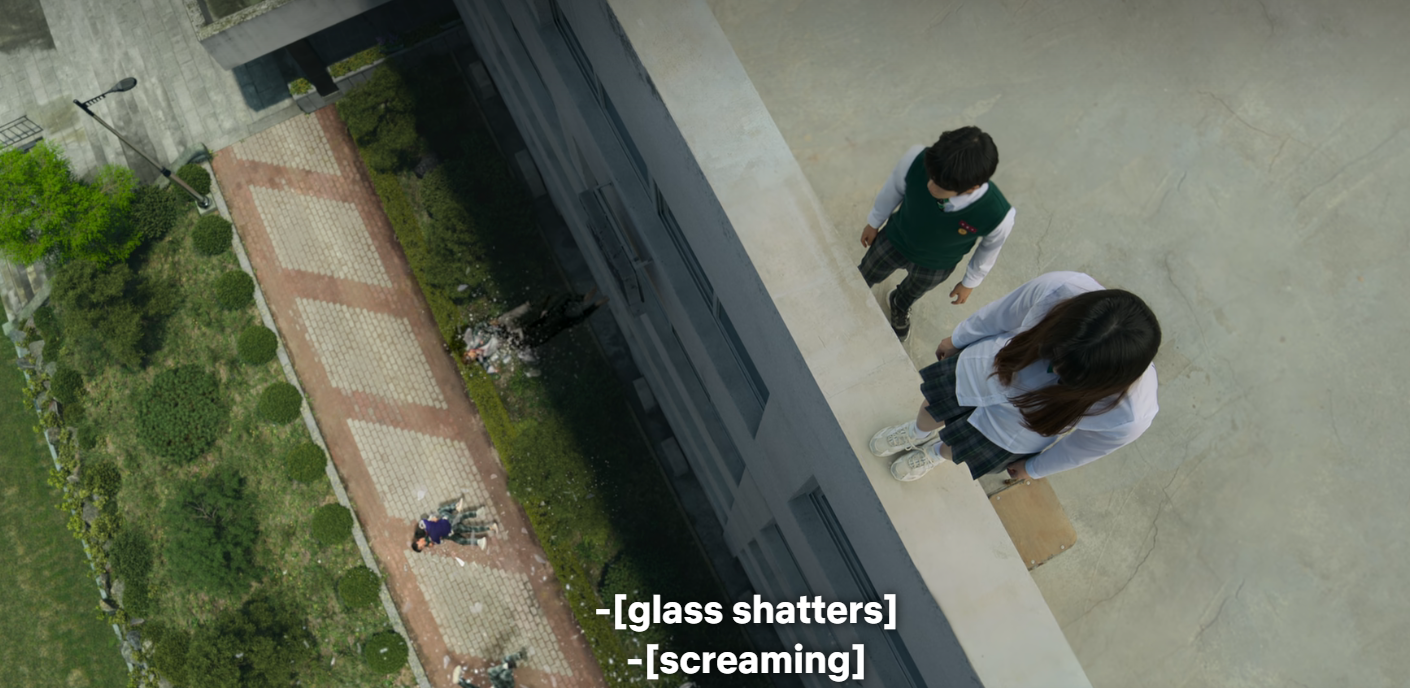
South Korea has the highest suicide rate of any developed nation, easily beating out the more-often discussed suicide problems in Japan and the United States. Suicide is the leading cause of death for young people in South Korea, and it's also rampant among the country's elderly. Economic inequality, disruption of both traditional family-based and civil social safety nets, a culture of high expectations and easily accrued shame, and an ultra-concentrated variant of the loneliness epidemic are all contributors. "All of Us Are Dead" works at least a bit of each of those elements into its reanimation serum.
Despite that, at least to my non-Korean eyes, the show has so far managed to avoid being preachy or pedagogic. While it does cast some blame for the problem at deserving targets, the series' overall attitude is basically "here's the situation that exists, how are we going to get through this?" The bluntness of its message is like a wall that needs scaling, rather than an anvil dropped on the audience's head.
The pilot episode is a slow-burn, at least up until the last few minutes. Much of the runtime is spent introducing the cast of mostly teenaged protagonists and their little soap opera of unrequited crushes and strained friendships, while horrific abuses and tragedies are kept just barely out of sight all around them. The normal teenaged innocence of the four leads is framed like a weed pushing up through a crack onto a busy highway, constantly about to get flattened and surviving only by luck.
I didn't just pull that simile out of a hat, by the way; there's another hilariously unsubtle bit early on in the pilot, when they and their peers are on their way to school, that basically mailed it to me.
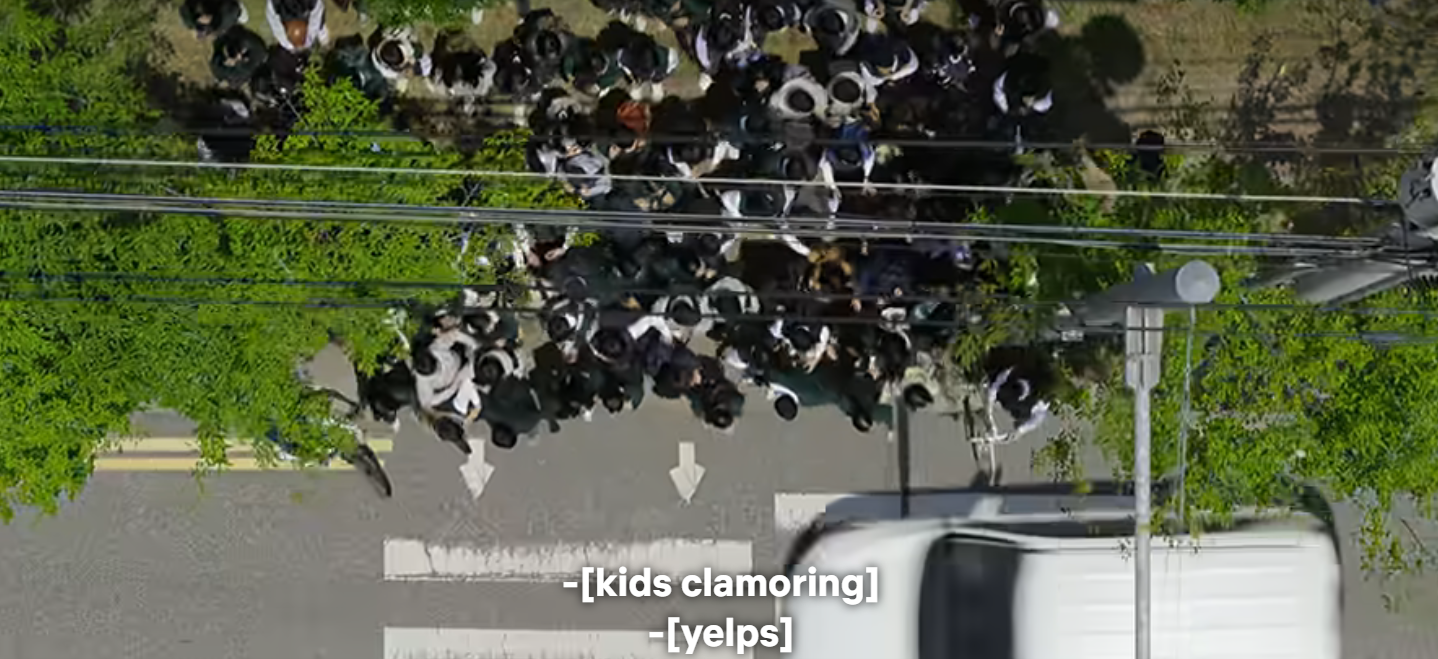
They're all jumping back at the last second to get out of the way of a reckless driver. The direction-arrows pointing the throng right into the car's way is probably the most lol detail of this shot.
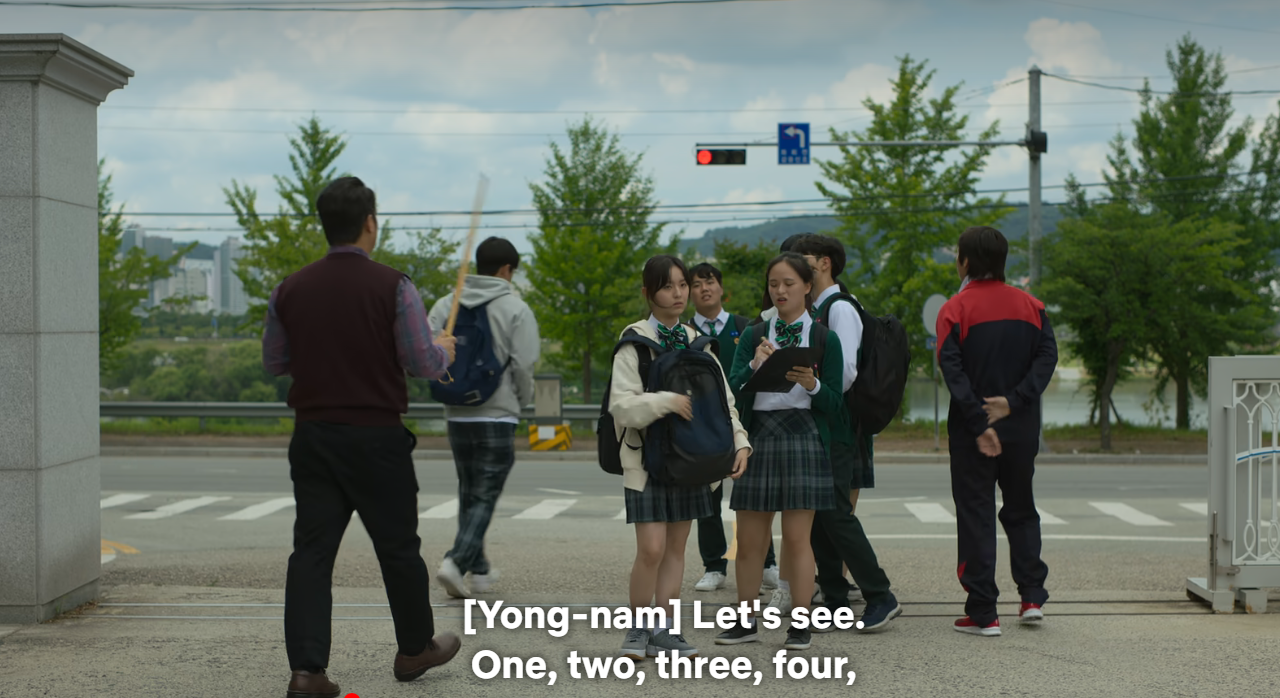
Bird's-eye shots like the above are common throughout the episode, and they effectively frame the kids' environment as a grinding clockwork machine that pumps them from one tube or chamber to the next on a schedule. A broken machine, constantly leaking and clogging and cutting itself open with the people - young people especially - stuck inside. The four main characters are shown hurrying to make it to school before the bell, where uniformed staff wait with their eyes on their watches and hands on the gates to catch any student who hasn't passed the entrance so much as one second after time.
Meanwhile, crammed out of sight behind the valves and stoppers, chaos rots and festers. A gang of delinquents whose depravity falls somewhere between "West Side Story" and "A Clockwork Orange" are terrorizing vulnerable targets throughout the school with physical, emotional, and sexual violence. It's implied that at least one of the gang's members is the son of a rich, influential family, so the school needs to sweep the problem under the rug instead of solving it. To the point where they can openly sexually harass one of their habitual victims (a victim who they've already done more than just sexual harassment to) in class, in front of the teacher, while said teacher just keeps droning on along his lecture. That same teacher being in a lifeless fugue state after those same delinquents pushed his own son to attempt suicide not long ago and the school principle and superintendents tied his hands about. Both because of the delinquent leader's implied family connections, and because the school district is doing a performance evaluation right now and they can't afford something that makes them look this bad on record at the moment.
The delinquents might be the instigators of most of the awfulness, but it's made clear that problems like them are only able to grow and fester because of the social environment.
With the exception of the main four, pretty much all the students are depicted as isolated from both their families and their peers to varying extents, with at most just one or two other people they can reach out to at the best of times. The main four, meanwhile, happen to have a little friend group centered around a restaurant owned by one of their parents, and two of their families being next-door neighbours since before the kids were born.
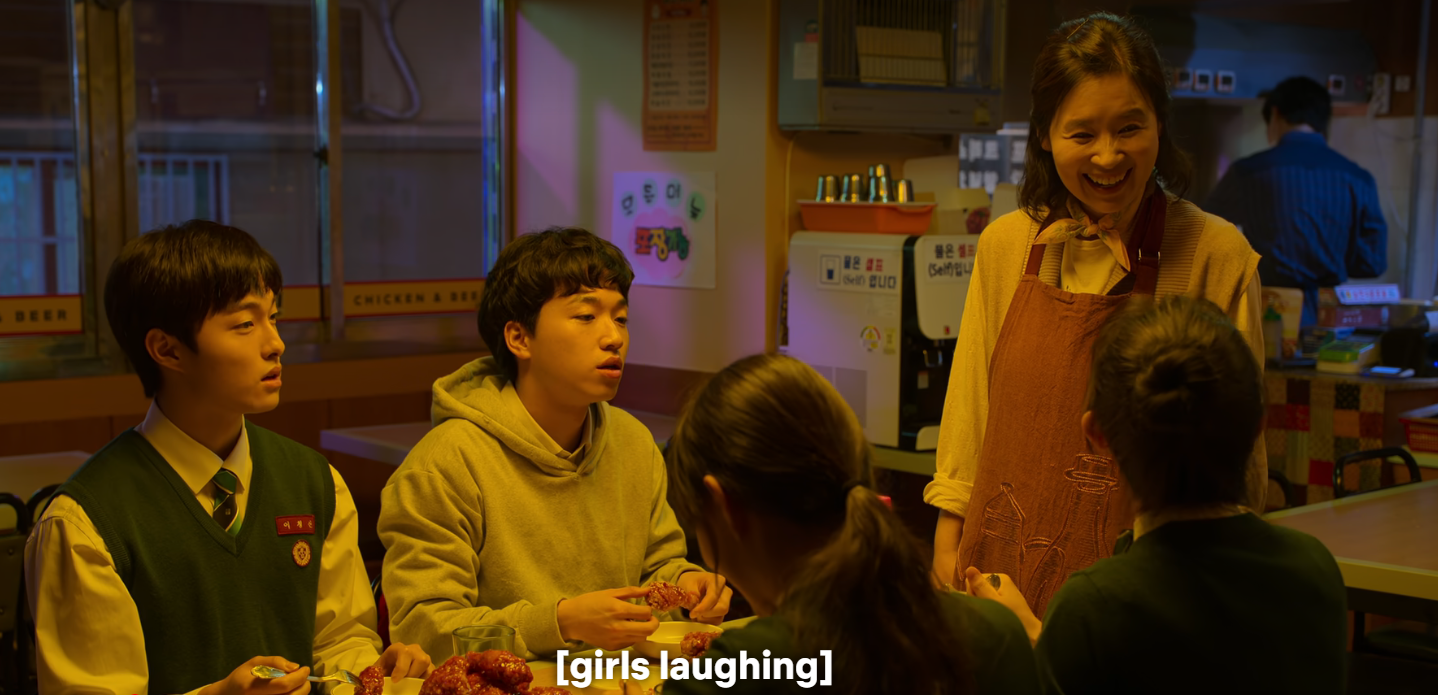
The restaurant owning family also has the distinction of being one of the only two-parent households in the episode; almost everyone else is being raised by a neurotic, overworked single parent. The friend group are basically clustered around one of the lingering crumbs of the South Korean middle class as every other family around them turns into a broken, dysfunctional mass of downtrodden wage slaves or coked-out corporate tyrants.
The actual zombie plot begins with the dissociated teacher and his son I mentioned a few paragraphs ago. The son, we've been told, attempted suicide shortly before the start of the series. As the pilot goes on, it is very strongly implied that he actually succeeded at committing suicide, and that his father brought him back to life through mysterious, dangerous means. At the time, his father promised him that he'd make things better, he'd keep things from getting that bad for him again. In this, his father completely fails. Not long after the son's implied resurrection, the delinquents - who have started to receive pushback in the wake of the incident despite the coverup - corner him on a rooftop and start beating him up. He tries to deescalate, but at a certain point he gives in to some immense rage and starts going ape on them, scratching, grappling, and trying to bite. The fight culminates with the boy being thrown off the rooftop and, apparently, dying for the second time in a few days, directly or indirectly because of the same group of deranged bullies.
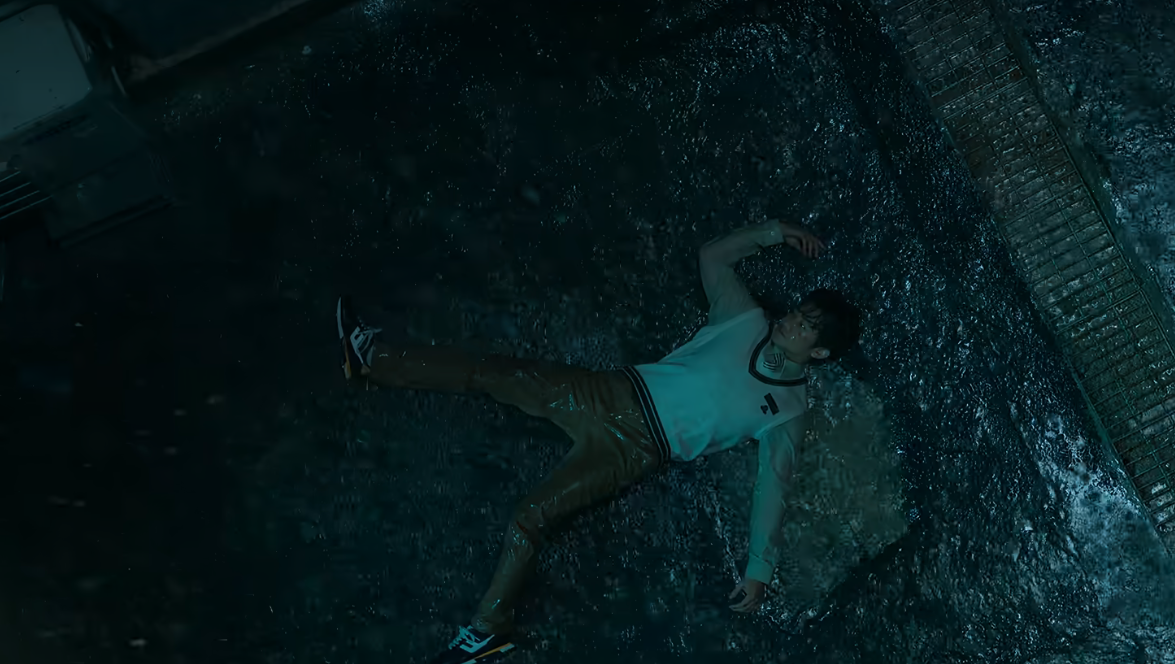
The violence we see this poor, already-bullied-to-death-once boy subjected to is sickening. Brutal. Deeply unpleasant to watch.
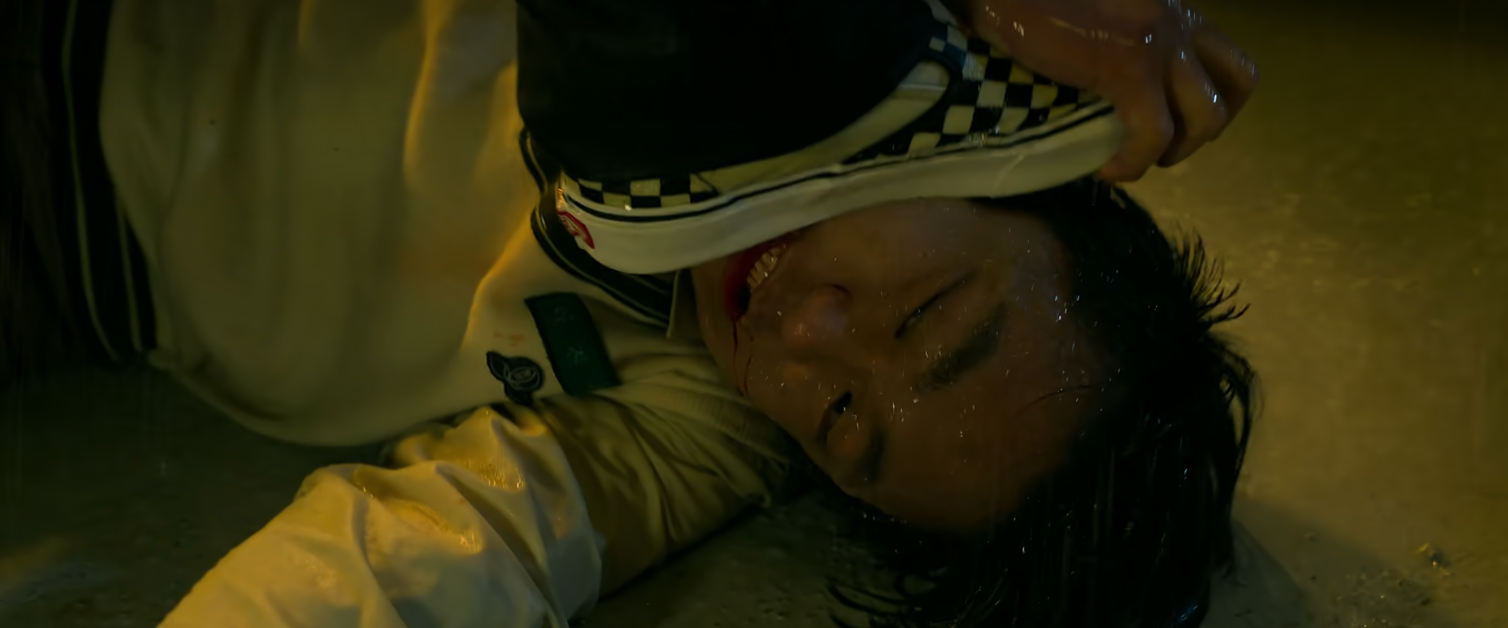
And it only gets worse for this kid after he's brought to the hospital, miraculously still alive, despite his countless broken bones, head trauma, and mysteriously low body temperature. His father sneaks into the trauma ward and talks to him. Insisting that no, really, seriously, things WILL get better, he'll make sure, he just needs a little more time.
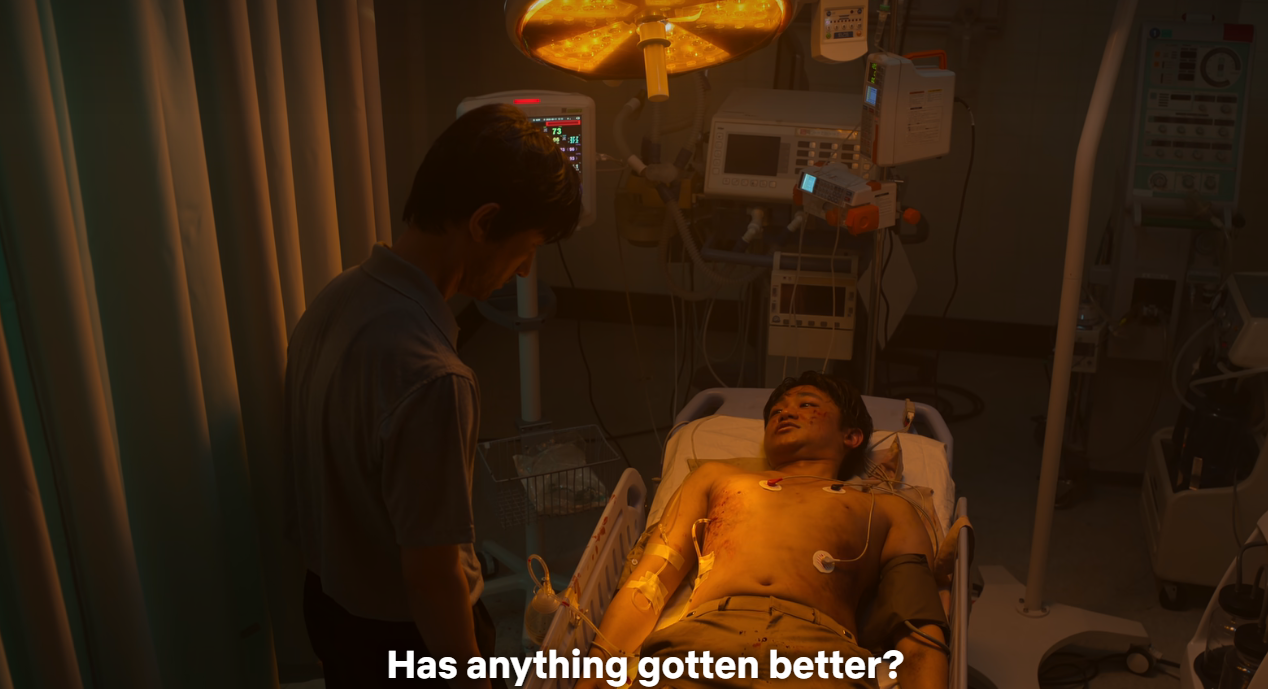
His son just cries, insists he wishes he could just stay dead. Then shifts his tone and says that if he doesn't die, then the delinquents will have to; those seem to be the only two options.
When his father just unconvincingly tries to reassure him that he'll do something, the boy's rage escalates again, and he goes from wanting to kill his tormentors to wanting to kill everyone. He starts, despite the injuries that should have paralyzed him, pulling himself off of the hospital bed and trying to attack his father. To which the father reacts by beating his own son into an immobile pile of flesh and bone for a third time, and stuffing him into a literal suitcase to smuggle him out of the hospital before he can reanimate again.
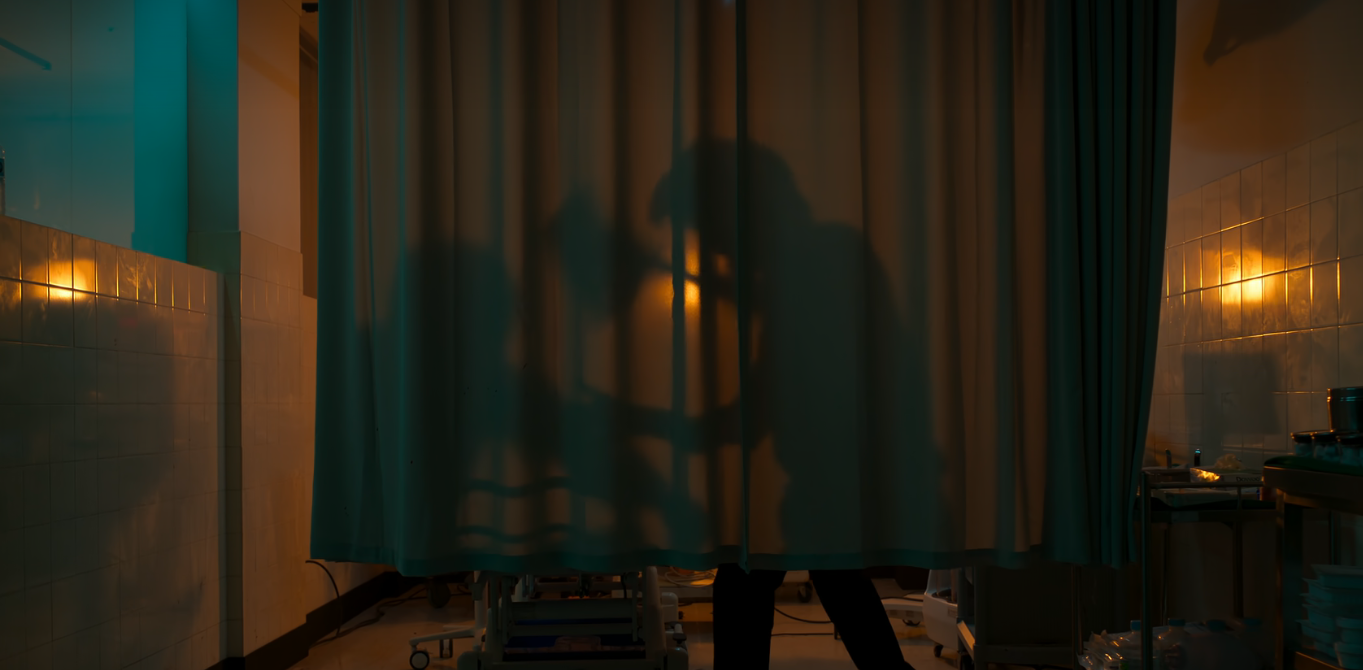
There's a repeating pattern of the most shocking violence in this episode being committed against the zombies rather than by them. This patient zero's case is just the most extreme.
Arguably the worst part of this whole subplot, though, is that even after all of the above, we see the father trying to act on his promise to make things better. And it still amounts to nothing more than begging the school board to let him tell the police about what these bullies have been doing, and then meekly going silent when scolded by them. He'd rather let his son be brutalized over and over again, even personally brutalize him himself, rather than make ripples in the office. He won't let him die either, though, because he supposedly loves him or something.
In the wake of him smuggling his son out of the hospital and the latter officially becoming a missing person, this teacher starts showing strange symptoms himself that go beyond the psychological. Low body temperature. Unpleasant smell. Implied to be a consequence of his son managing to bite him a little bit during his rage episode at the hospital. In the aforementioned scene where he lectures on through an in-class sexual harassment incident, this teacher also makes some bizarre pseudoscientific (really more like pseudoreligious) assertions about the will to live being paramount and the shape of ecosystems being determined by which species has the most "will to live" rather than, you know, evolved survival mechanisms. He has this outright supervillain expression come over him while he tells the students that, despite what their lying textbooks might tell them, platyhelminthic parasites are actually able to control their snail hosts by beating them at an opposed Charisma check.
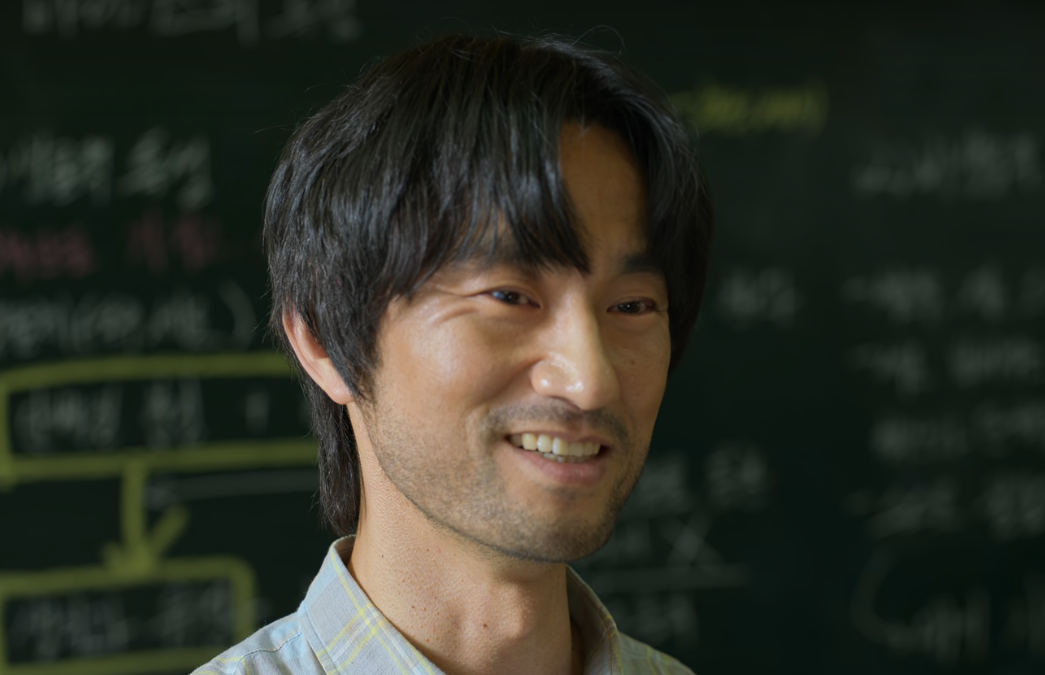
He's somehow suppressing the rage that comes with zombiehood, but it's still changing his personality and outlook. I'm kind of getting Herbert West vibes from this guy.
Anyway, the real outbreak ironically isn't caused by the son escaping the house and biting someone, or by the teacher losing his cool and biting someone. Rather, some rando just happens to find a zombified hamster that he'd been experimenting on in the back room of the school science lab and tries to pet it.
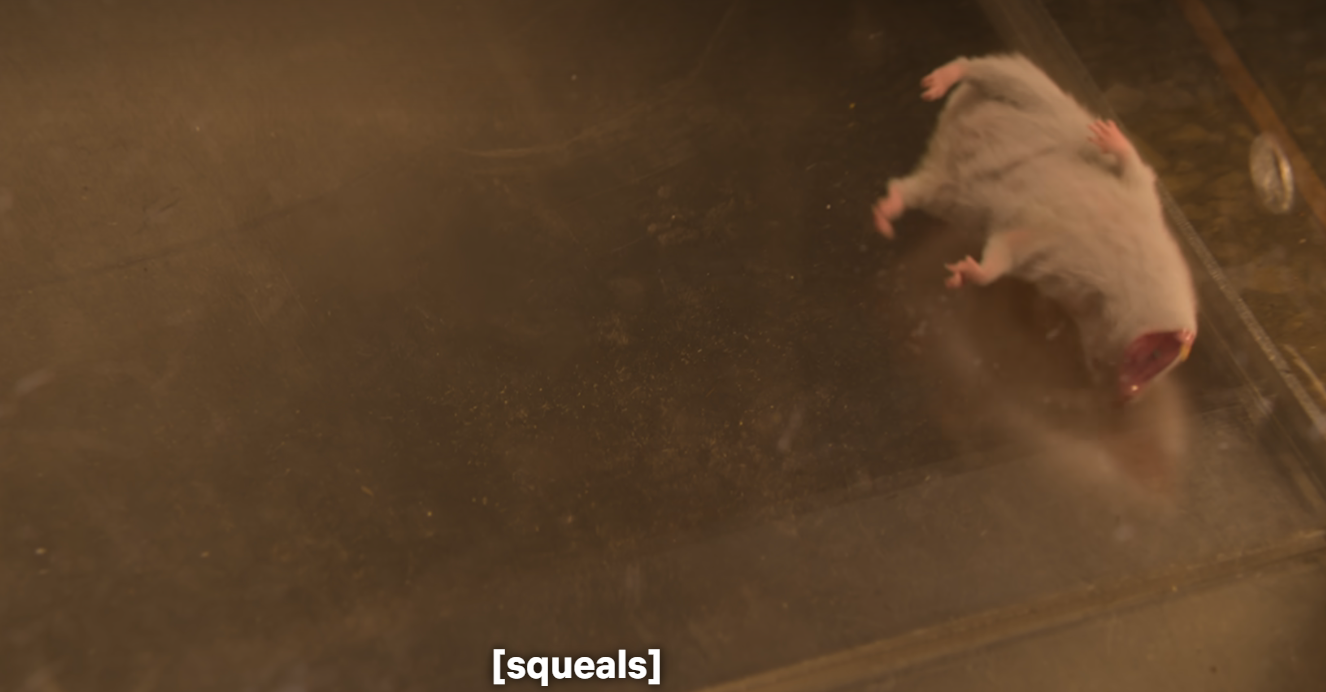
The way the zombies - human and animal alike - move around, seeming to constantly break and mend their own bones as they twist around, making truly unnatural vocalizations as they attack, is a special effects standout.
And, once again, shocking violence is performed to an infected person. Once again by the science teacher (granted, he's infected too at this point, but he seems to still mostly have his mind) grabs an beats up the girl to prevent her from spreading the contagion, and locks her in the school lab to experiment on (it's framed exactly the way you're imagining, given that this is a show that deals with themes of rape and abuse). He's still trying to figure out a more reliable solution to the rage problem, after all.
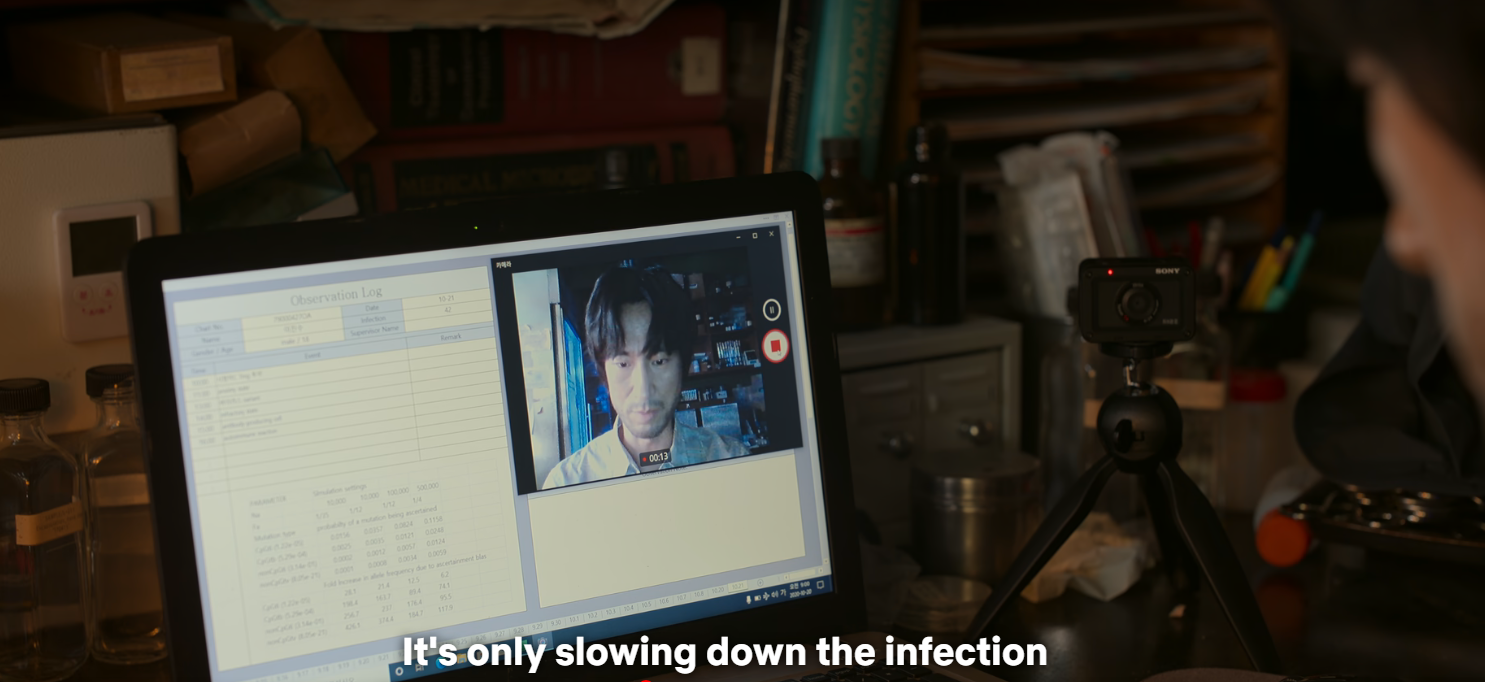
Soon enough, though, she escapes, biting both a school nurse when she's brought to her, and then a hospital nurse when the ambulance gets called. Dual outbreaks at the school and the hospital begin.
Even before the paranormal stuff starts, plenty of the group's classmates and teachers seem distinctly zombie-like. The most extreme case being the class president (and object of one of the lead's affections), who goes through her schoolday like a silent robot, earbuds in place, doing her schoolwork perfectly but never speaking unless spoken to. We learn at a certain point that her presidential status was awarded to her by the school purely because of a bribe from her wealthy mother; the fact that she's a great student doesn't actually have anything to do with her being recognized as such. Another girl - the victim of the gang's sexual violence - sits still and just moans pitiably to herself while being harrassed, before eventually trying to jump off the roof herself for fear of facing the shame of everyone being about to find out she's been "soiled."
The zombie is basically a compacted, broken lump that the kids are crushed into by the faulty machine they live in.
I don't know if all of the mundane events surrounding the zombie stuff is believable, but even as grotesque exaggeration of Korea's social problems I think it works for this kind of story. The cinematography is also really excellent, particularly the use of long, unbroken moving shots. One sequence in particular, that has the camera sweeping up along the outside of the school building to show classrooms full of zombie violence, classrooms that have already been abandoned, and classrooms full of students and teachers heedlessly continuing their classes as the alarm hasn't yet been raised, is downright breathtaking. The walls and floors between each room representing the social atomization that prevents anyone from seeing anyone else, locking each individual, alone, into danger. The shot then culminates with the sexually assaulted girl on the rooftop about to jump, stopped at the last second by the sight of zombies bursting out the windows and onto the pavement below her.
One weakness that this pilot has is that the four happy-ish kids that take up most of the screentime barely interact with the delinquents, the zombies, or even the other characters who DO interact with the delinquents and zombies. Obviously that's going to change now that the four are trapped in a school full of marauding undead. And, thematically, it's part of the point that these four have managed - largely by luck - to remain innocent to their world's true ugliness up to this point. However, I feel like having more supporting characters in common between the two threads would have been able to preserve that theme while also keeping things more focused and maintaining the sense that this is all the same story. By the two-thirds point, it was kind of feeling like two stories were happening passed each other.
But, again, that's sure to be a pilot-only problem. Episode two starts with the zombies having made their public debut. I'm looking forward to seeing it and the two episodes that follow.