Star Wars Andor S2E1: "One Year Later" (continued)
On the outer rim planet of Mina-Rau, some migrant farm workers take another night in their futuristic mobile-home thingy set up in the fields. I know it's not considered luxurious by setting standards, and this one probably has at least one too many people sharing it, but still, the thing is a goddamned beauty.
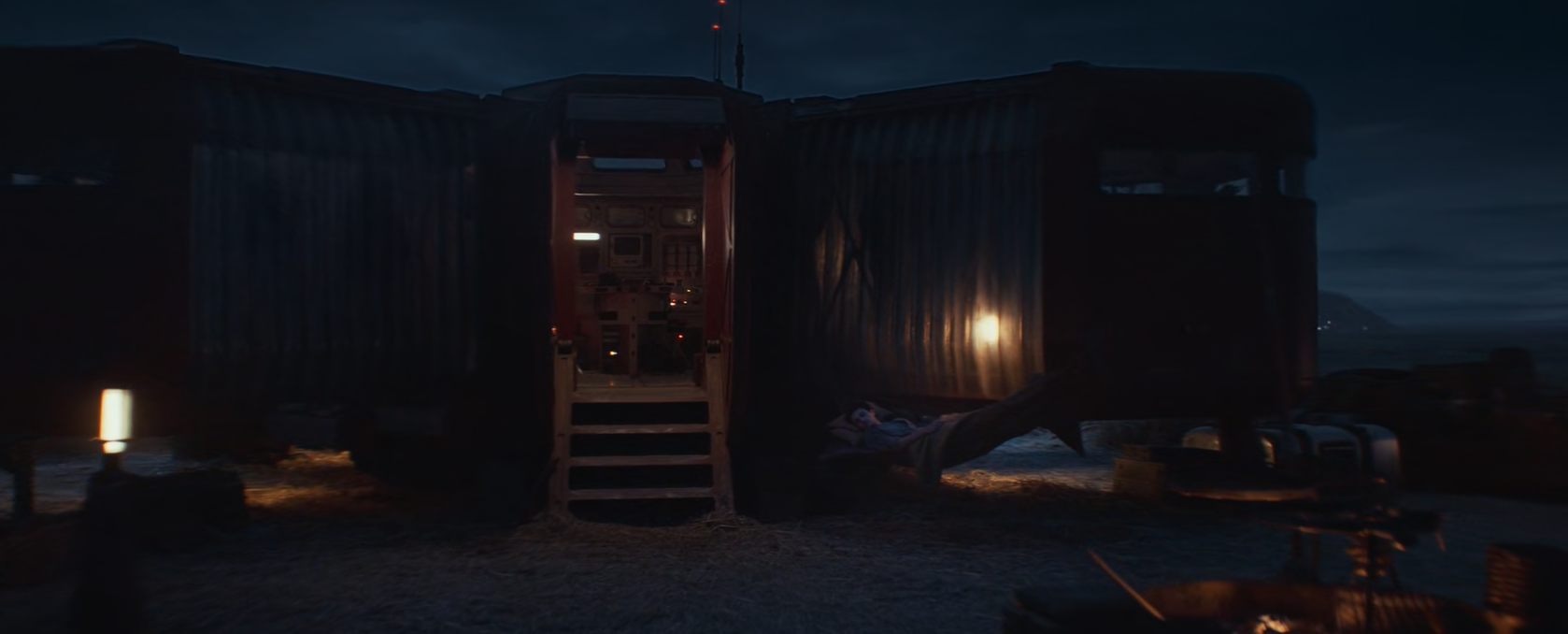
Actually, let me get another shot from later in the episode, when we see it in the daylight:
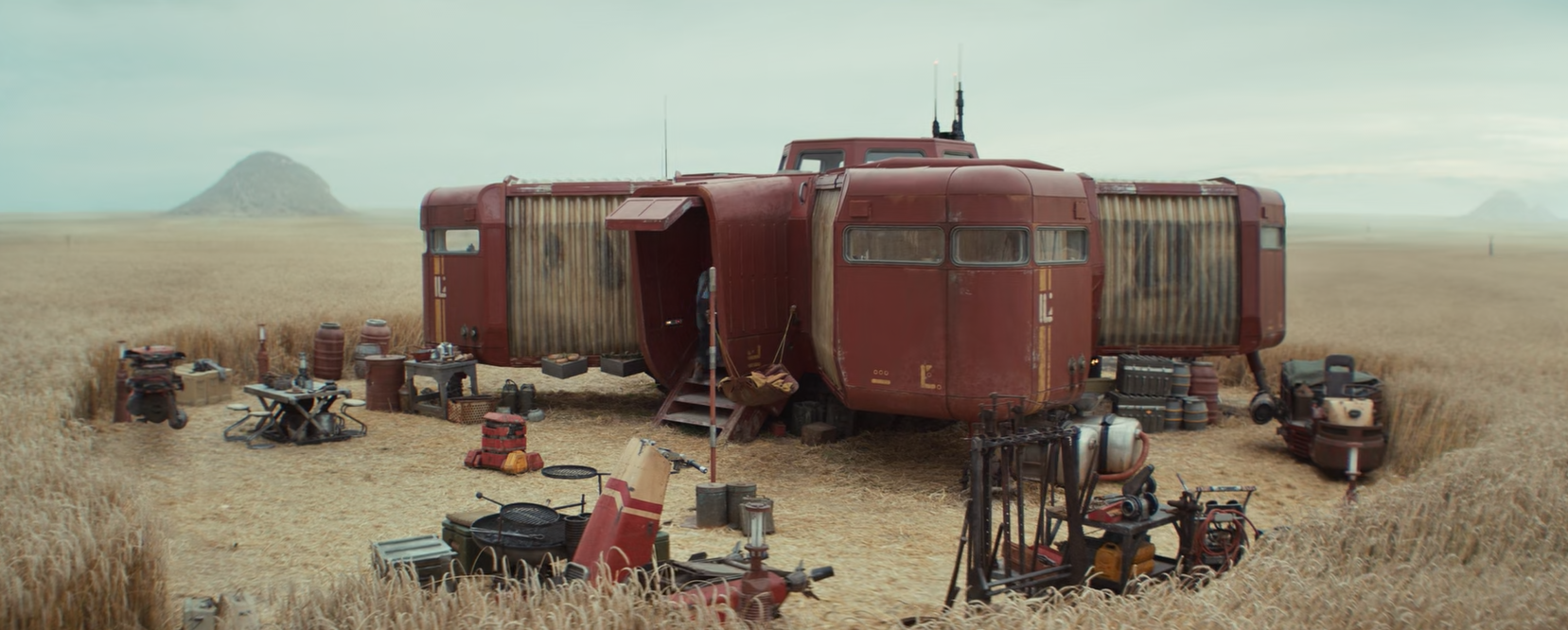
Combined with some interior shots we get later, I've got to say, this show has sold me on the X-shaped space trailer. I would like to live in the X-shaped space trailer. I'd share it with one, two, or - though it would be cramped - even three roommates. When it's hot, we'd mostly sleep on the hammocks outside anyway, and when it's cold the extra body heat would even be an asset. I'll even do farm work too, if you throw in free wifi and lemonade. The lemonade has to be cold, and it needs to have mint in it, but if you provide it I will willingly be your agricultural serf. The revolutionary spirit of "Andor" has been broken by the X-shaped space trailer.
Unfortunately, the cozy is ruined by PTSD. During a creeping late-night sequence delivered with cinematographic artistry, we learn that one of the trailer's inhabitants - Bix - is suffering night terrors. She dreams about that ISB torturer breaking into the trailer, creeping up to her mattress, and whispering more Vogon poetry in her ear until she wakes up screaming and clutching her chest.
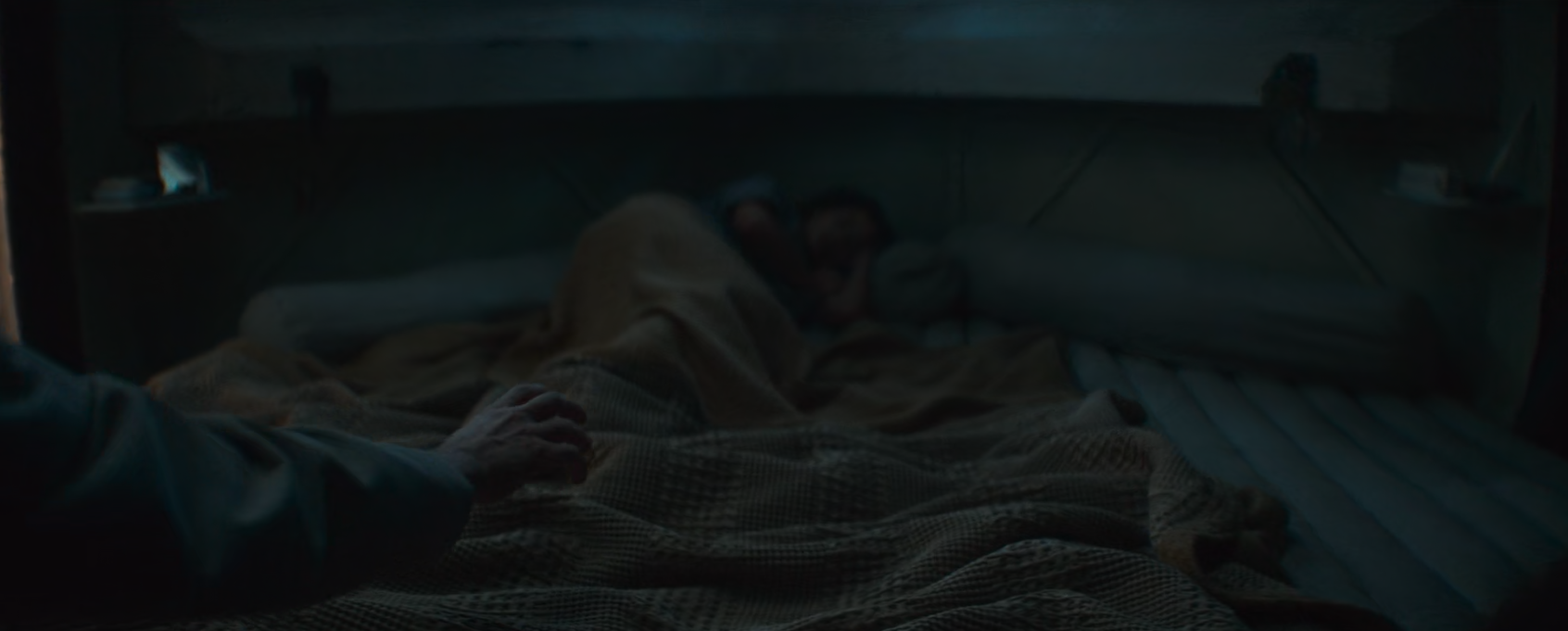
Her trailer mates are, unsurprisingly, revealed to be the Rix Road cell members. Since it seems they're going to be more important characters going forward, I will take effort to commit their names - Carcrash, Ginger, and Twink - to memory. Cuckcube is also with them, of course, and it takes only a small amount of imagination to presume that Maarva's ghost is chilling around here too somewhere, sending them good vibes through the Force or whatever. In the months since blowing up Dierdre's army and absconding with Bix, the group seems to have made new lives doing farmwork out here on the rim, either permanently or just until the rebellion can find further use for them.
From what we can tell, it's not a bad life at all in the meantime. Not cushy, by any means. Hard work and minimal pay. But they have a nice place to live, a friendly community of other farm workers, and probably much better air and water quality than what they're used to on Ferrix. It doesn't hurt that with their old scrapper skills, these four are mostly maintaining farm equipment rather than doing the monotonous grunt work.
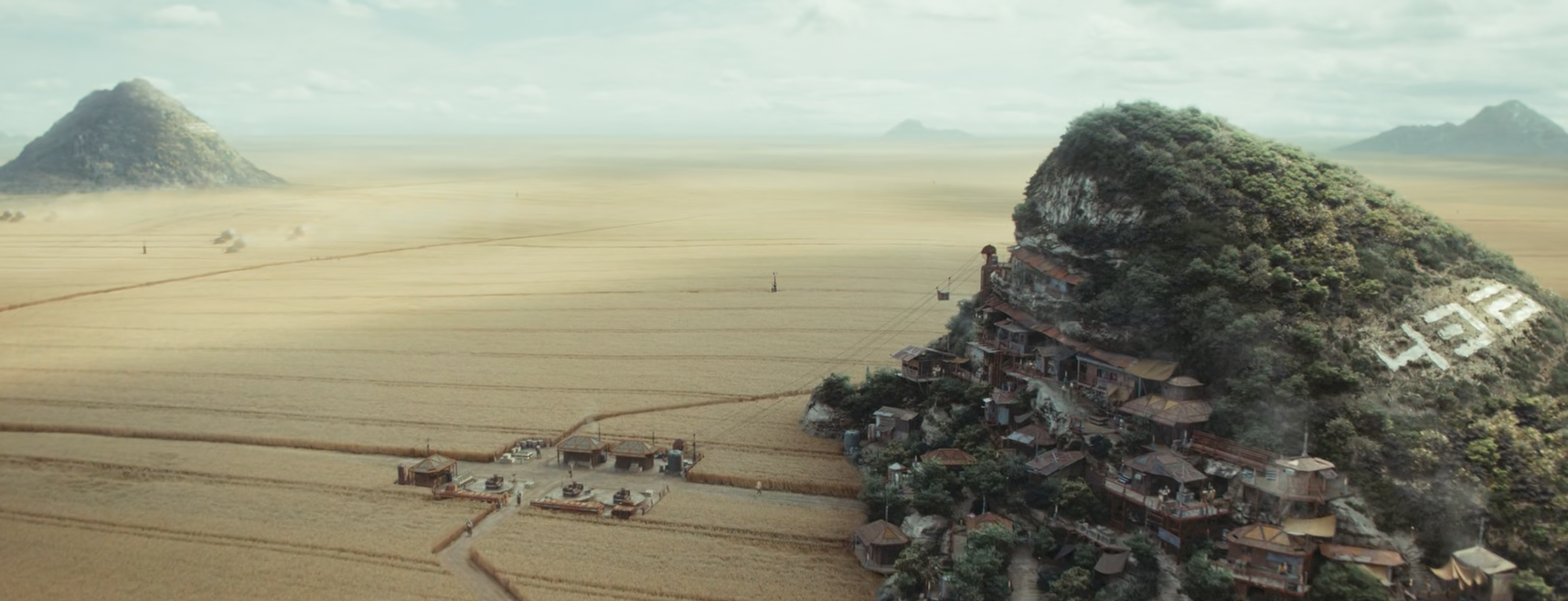
Again, throw in wifi and lemonade and you've got me.
It's not clear if they've been in touch with Cassa since they all fled the scene of the crime. Cuckcube frequently asks if the others have gotten word from him again, which could mean that he's been in occasional contact, or it could just mean that Cuckcube's been asking this at 8 hour intervals all year.
Anyway, trouble seems to be coming there way. An ominous-looking spacecraft lands at a nearby spaceport, bringing an imperial auditor to do a random supply-census check. They're going to be taking a look at the local labor pool, making sure they know where everyone is coming from and if their visas prove they're supposed to be here.
-___-
Oh.
...
So, to get the basics out of the way, obvious real life inspiration is obvious. Andor's second season was produced during the immediate leadup to the 2024 American presidential elections. While the Biden administration kept ICE icing nearly as much as it had during the previous administration, Trump was being very vocal about how much worse he was going to make things if re-elected. So, I can totally understand why the show's creators would think it important to put a subplot about migrant agricultural workers being terrorized by fascist immigration agents.
The thing is...if they wanted to go this route, I'm not sure how good of an idea it was to have the migrant workers actually be undercover terrorists. It, uh. Kind of sends a message other than the one the writers intended to send. Ya know?
...
On the topic of ships landing in places with shady migrants, Cassa ends up having an experience when we get back to him on the jungle planet. His experience is, um. Well. He has it. It definitely is a thing that happens.
He finds what looks like his contact's ship near the TIE-gunship's landing site, but he doesn't meet the man he was expecting. Instead, he's held at gunpoint by this band of randos who are so shit at being guerillas that they loudly argue with each other about how to capture him while they're capturing him.
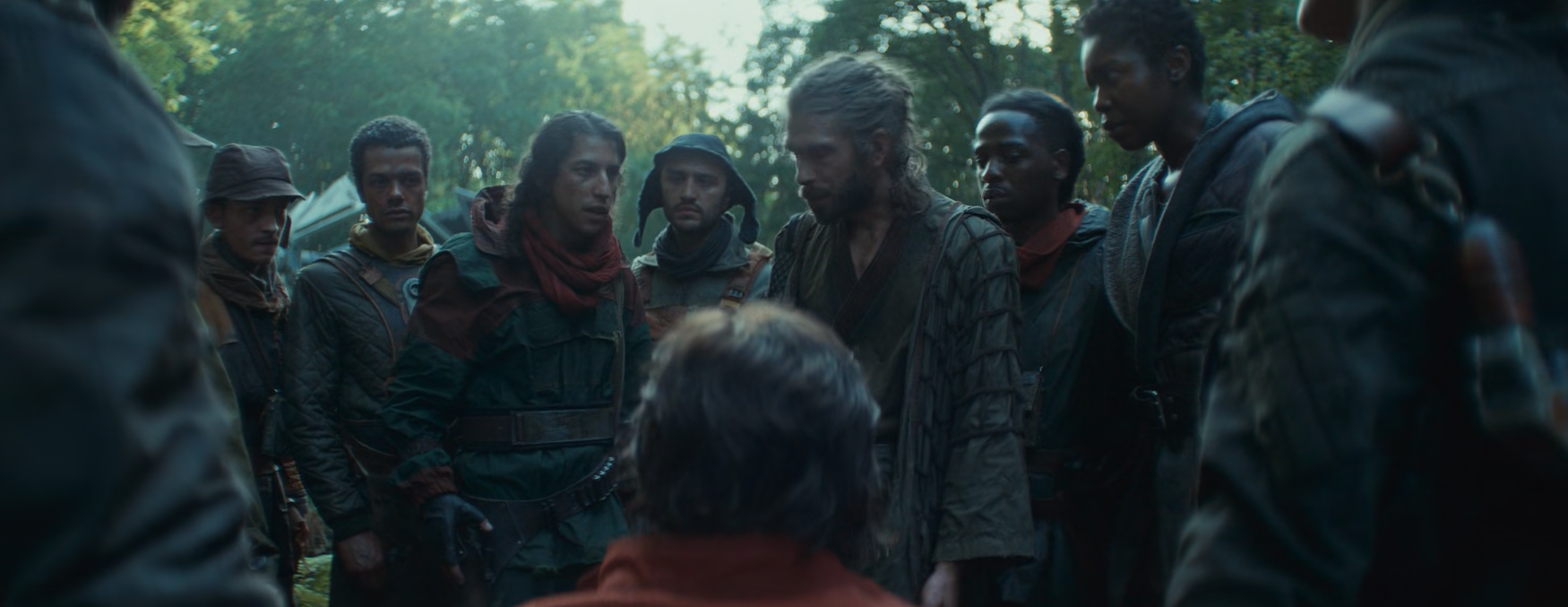
Funnily enough, I make frequent use of this exact gag in my DnD games. Having groups of enemies bicker at each other like married boomers while trying to ambush the PC's is a great way to show that a faction isn't very disciplined or organized. Shows the players some exploitable weaknesses, and is also pretty amusing.
Anyway, these guys are part of a militia called the Maya Pey Brigade, one of the groups connected to Luthen's network. Unfortunately, this bunch of grunts were left stranded and leaderless in the wake of an imperial ambush. Depending on who you ask, one of their last experienced people either flew their last operable ship back to look for more survivors and never returned, or just stole the ship and abandoned the rest of them to die while he saved himself. One of the dominant personalities among the remaining brigadiers is said pilot's brother, who refuses to entertain any insinuation of wrongdoing on his sibling's part. The other dominant personality is positive that both brothers share a treacherous nature, and it's just that only one of them has had a chance to act on it so far. Everyone else in the group has either rallied behind one of these two, or hates both of them equally and won't do what either of them want. They ran out of food two days ago.
The man who Cassa was supposed to meet here encountered these guys, and somehow ended up dead. They insist that he was "a hostile" and had to be dealt with. The details, when Cassa asks for them, prove strangely elusive.
A defining character moment for the Maya Pey group is when, after correctly guessing which group they belong to and having his guess confirmed by their reaction, Cassa is asked which group he's a member of himself. He replies that he can't do that, basic operational security. When one of the Maya Peyers protest that they already told him who they are, he shrugs and says that it's not his fault they have shit opsec. Which prompts half of them to try to beat him up for frustrating them, which in turn prompts the other half of them to tackle the first half to save their valuable prisoner.
Valuable because he can kinda-sorta fly the TIE gunship with its bizarre controls, and they need someone to fly them away in it.
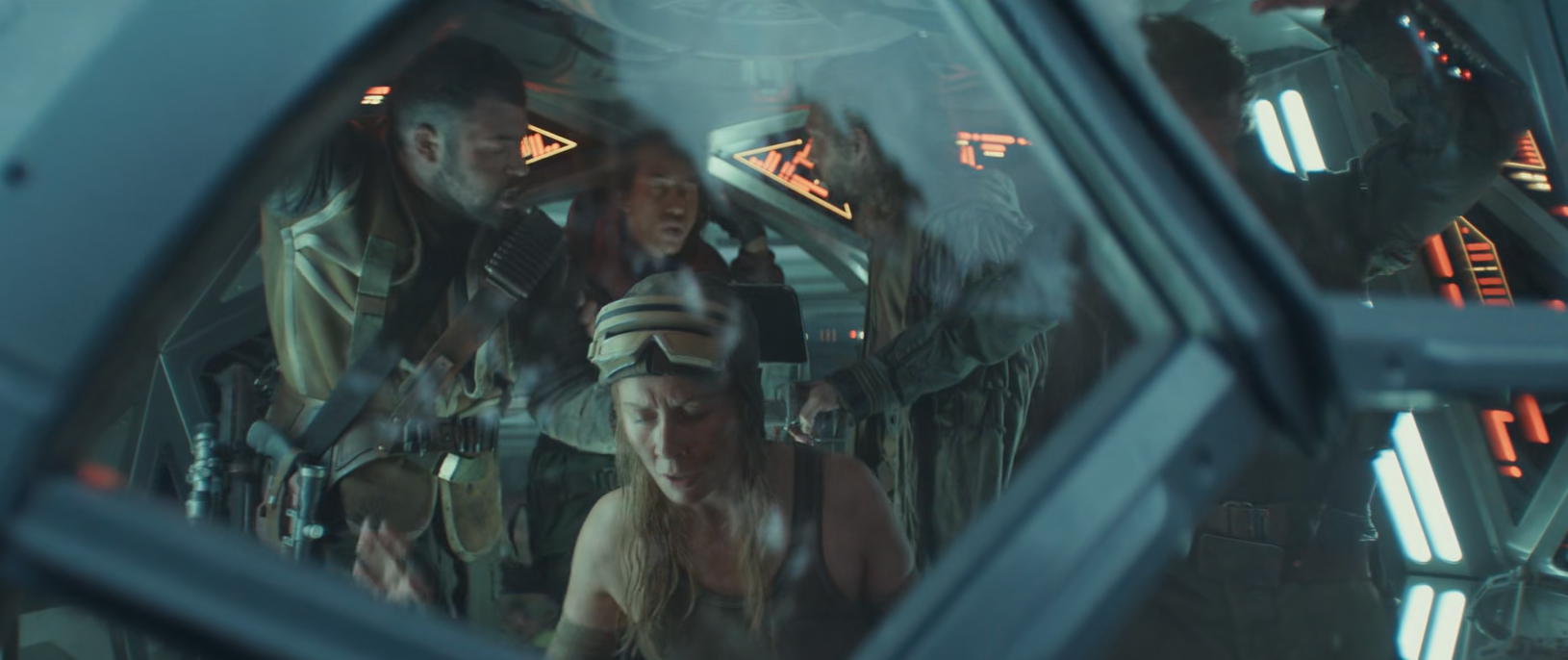
Ideally they can force him to teach one of them to fly it, since the fighter doesn't have enough room in it for their entire group as it is, let alone the entire group plus Cassa. And, it seems, after the maybe-betrayal by their last pilot, none of the remaining militiamen will trust the other to come back for them in a second trip.
...
Well, actually the establishing character moment was when Cassa was walking through the jungle and a voice from the foliage shouted "Stop right there, you're surrounded!" Only for another voice from the other direction to shout "Don't tell him we're surrounding him, idiot!"
...
Suffice to say, they take Cassa's superior opsec as proof that he really is an imperial test pilot and not a rebel infiltrator like he claims. I'm sure they have a wonderfully imaginative story in mind for why a test pilot would have landed his experimental prototype fighter alone in a guerilla-infested jungle, but they don't deign to share it.
I'd say that these guys could have used a lesson or two from Namek before taking up arms, but I'm pretty sure they'd have just called him a nerd and made fun of him for knowing how to read.
...
I'm a little unclear as to how they ended up in the exact same place where Cassa was supposed to meet his own contact. Even if there's good reason for multiple groups to be operating in the same region of the same planet, this run-in does seem like an awfully big coincidence.
I guess I'll need to wait until there's more context for what this place is to the rebellion in the first place before I can try to figure this out.
...
This whole sequence is intercut with yet another subplot, this one developing at a mountaintop resort on a Switzerland-coded plutocrat planet. A select group of imperial officials, officers, and business magnates are having a highly secret meeting, and Dierdre has just barely recovered enough clout after her humiliation at Ferrix to make the list.
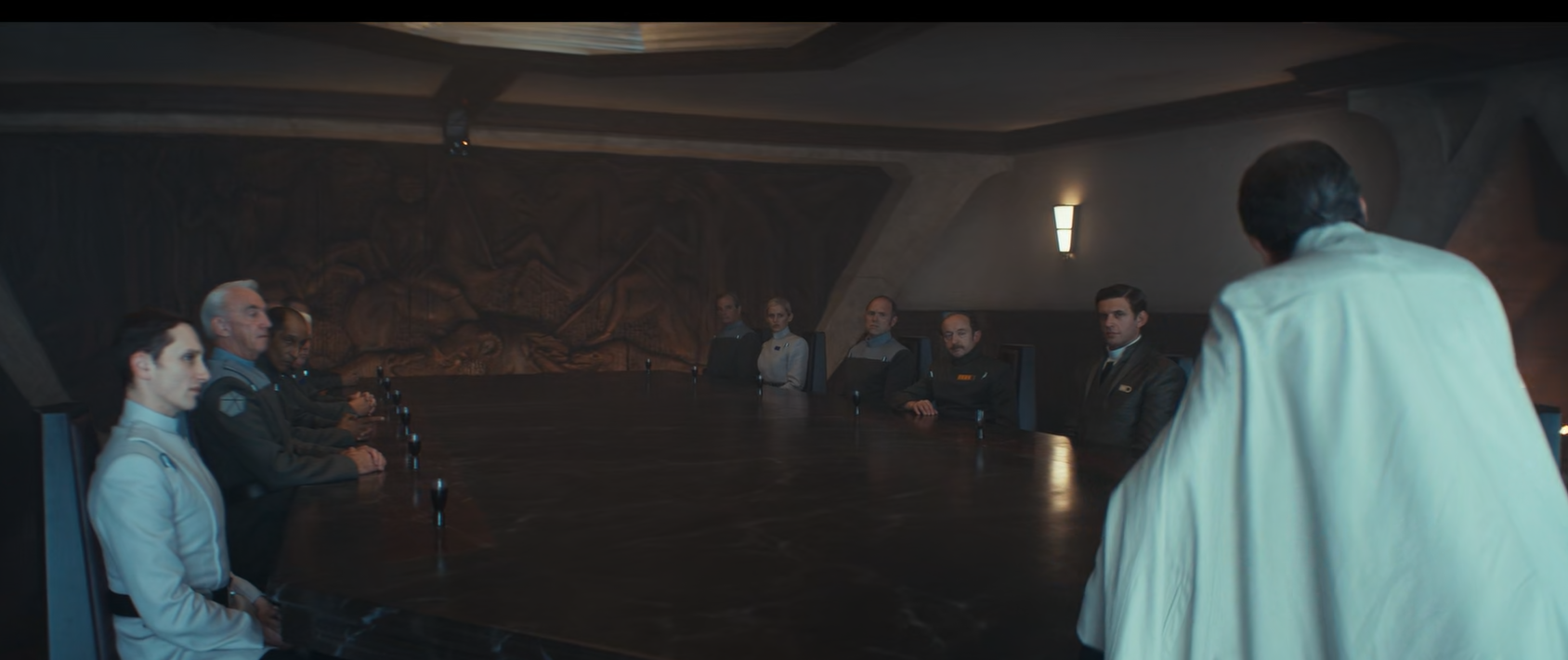
To show just what a big deal this meeting is, the man holding it informs all of them that any droids they brought with them will have their memories wiped, handheld computers likewise. They are not to even talk to their superiors about what is discussed in this room; if the higher ups of their respective agencies need to know anything, then Emperor Palpatine will inform them himself.
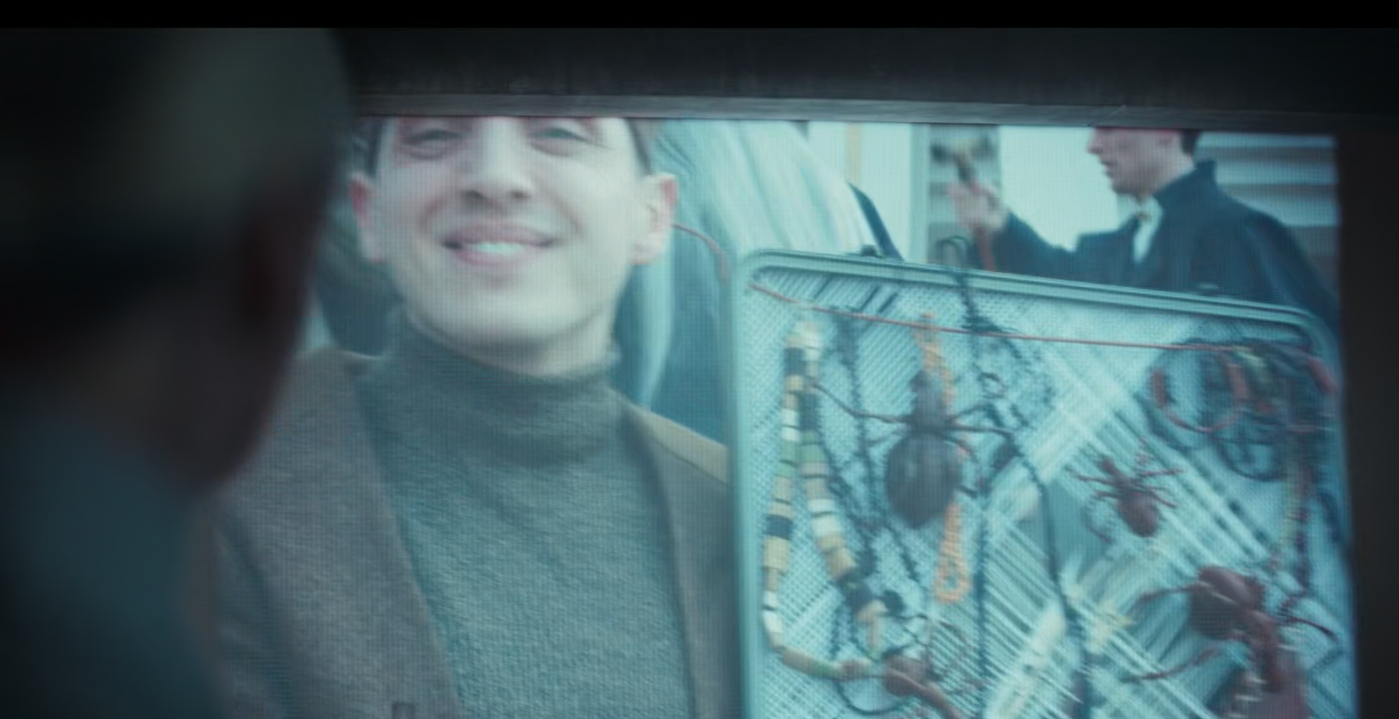
Then, he has them all watch an infomercial. In which a pseudo-1930's sounding narrator cheerfully advertises what the planet Gorman has to offer tourists and fashionistas alike from the galaxy over!
The surrealism of these bad guys all having to watch a commercial advertisement in lieu of getting a normal dossiers on this planet turns into dark comedy when it's eventually revealed that one of the groups present at the meeting is the very media conglommerate that made this ad. And that they didn't want to participate in this sinister plot against Gorman unless their ad for Gorman played in the evil meeting room.
...
This? This right here? This is why fascists lose.
...
Anyway, Gorman is a planet best known for its music, its mountains, and - by far the most - its silk industry. The latter thanks to a local arachnid-analogue species that can thrive nowhere else, which the Gorman people have domesticated and farm en masse. Gorman silk is sought after for high-fashion garments of all kinds, which has earned the otherwise obscure little planet a certain mystique among the galaxy's rich and tasteful.
So, what is his majesty wanting to spin up on Gorman? Our answer to that is hinted at by the identity of the man holding this meeting. I knew I recognized him - the face and uniform really just go together in a way that sticks in your memory - so after my rewatch of the episode I looked it up. I guess my subconscious remembered at least one more detail from Rogue One than my conscious mind did, because this is Director Krennik, the man in charge of the death star project.
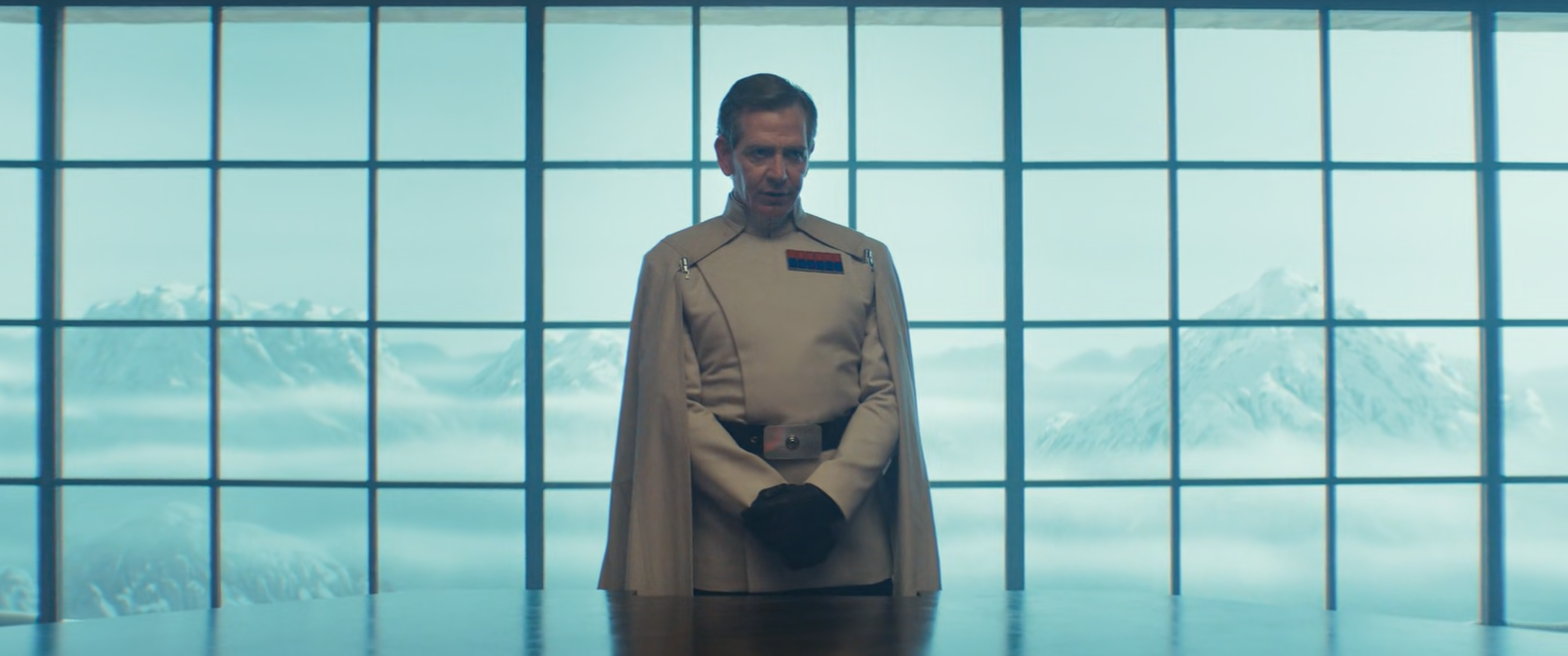
Gorman's mantle is uniquely rich in a certain mineral that Krennik's service requires in large quantities for certain purposes. The euphemism he uses is...even if none of them are expected to actually believe this story, it's a pretty baffling choice to be honest. In his words, access to more of this mineral will allow the Galactic Empire to become "energy-independent."
:/
Yeah. Again, this isn't even a lie so much as a legal ritual that everyone at the meeting is knowingly performing, so the believability of this line isn't the problem. It's more that the concept of the empire being "energy independent" is something that would seems like it would strike anyone in the Star Wars setting as a nonsequitter, in a way that draws attention rather than diffusing it. Like, who even is there for the empire to be energy independent of?
Maybe it's supposed to mean "energy-independence for the Imperial military" or something like that? Independence of the central government's power needs from the private and/or planetary sectors? I guess that could make sense.
So. They need to mine the unobtainium from (very) deep under Gorman's surface. It's the kind of mining that can't be done without severe, planet-wide environmental impacts. There's even a (small, but not that small) chance that this mining could fuck up the plate tectonics and render the entire planet an uninhabitable volcanic chaos. Which means they're going to have to do all this over the planetary population's objections. Unfortunately, while Gorman has a small population with little official political power, the planet's relevance to galactic high culture means they can't just crush it like they would to a backwater world.
...
Probably the most disturbing part of this sequence is when we get a little speech from the impeccably hateable propagandists from the "Ministry of Enlightenment" and its deputized companies who oversaw the tourism ad campaigns. They proudly explain that they've been working hard to connect the Gorman people, and the spiders they farm. In a way that passes for harmless totemism, but can readily be twisted into dehumanization if needed. They also have been subtly leaning into Gorman's association with wealth and elitism, cultivating a stereotype of the Gorman people being haughty, on airs, and sort of just vaguely punchable.
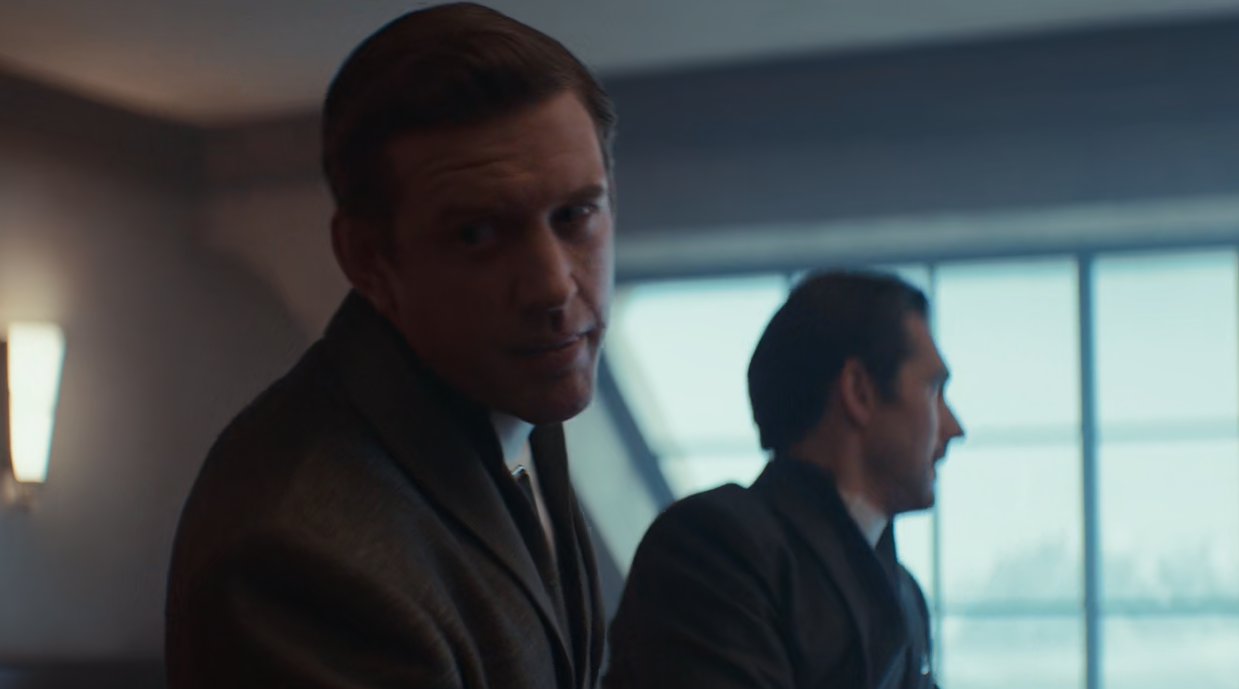
Not quite as punchable as the Ministry of Enlightenment dudes themselves, but they don't make TV appearances.
What makes all of that so disturbing is that the Empire only just now developed an interest in Gorman. The propaganda pre-cooking, however, must have been done over the course of years at the very least, and more likely decades. It's possible that they already knew it was likely that someone might want the unobtanium eventually, but I don't think that's it. I suspect that they actually have the social machinery for transforming any planetary population into a hated outgroup, already half-assembled and waiting for use.
Any ethnic group, regional group, racial group, whatever. They can be the enemy as soon as we need them to be, no matter how they OR the general public feel about that at the moment. The only exceptions, presumably, would be the major core planets that the MIC elite themselves hail from, and even that's a big question mark.
One of the key features of an authoritarian government is free-form criminalization. Thousands of minor laws that are never enforced except when the regime wants them to be. Their purpose is to make sure everyone is guilty of something or other, and the government can therefore choose to prosecute whoever it wants whenever it wants. What we're looking at here is the ultimate evolution of that. Free-form subalternization. An imperial society that can colonize any subsection of itself at will.
The worst part is that it's not THAT big of an exaggeration of twenty-first century American consent-manufacturing. It is an exaggeration, but it's not a huge one.
...
In a break in the action, Krennick asks Dierdre for her opinion on where they stand and how to proceed.
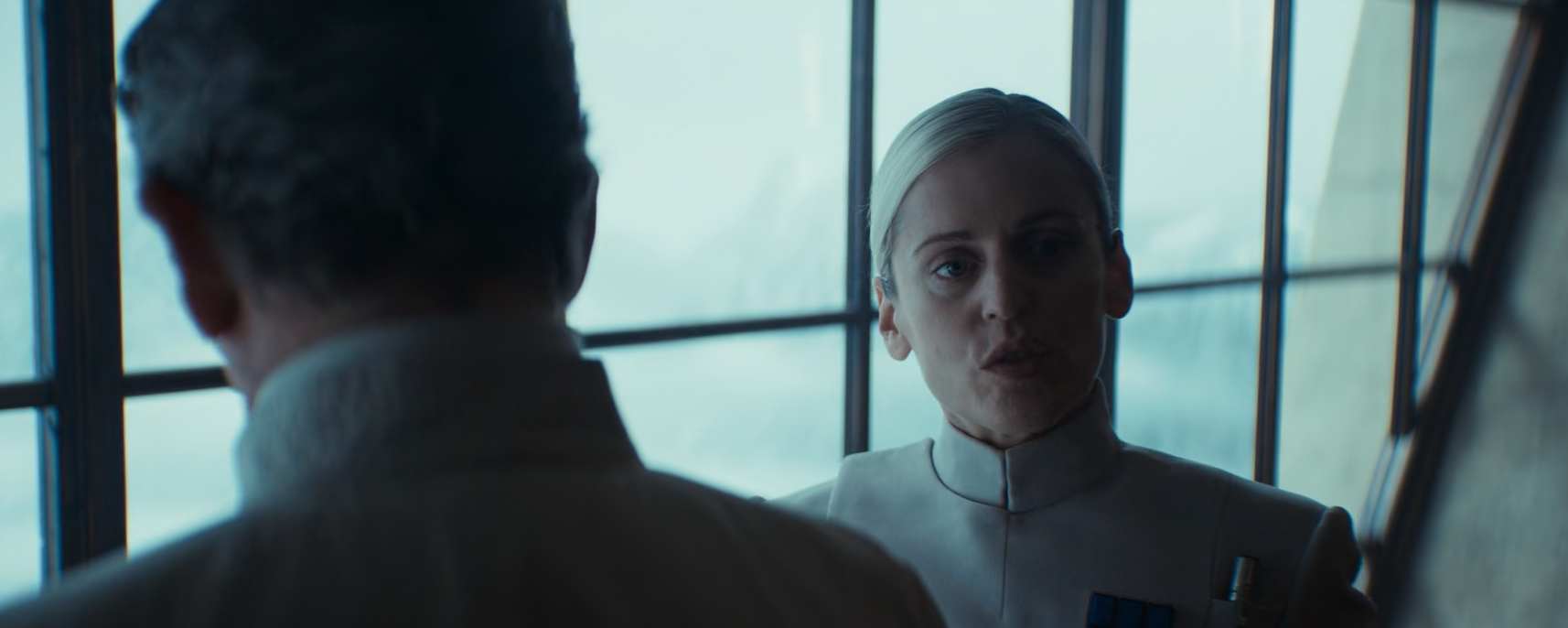
She doesn't think propaganda alone is going to be enough in the case of a world like Gorman. They're a bit off the beaten path of the imperial core's "normal," sure, but still a little bit too connected, a little bit too familiar. There needs to be something from the Gorman side to poison the core against them. Some sort of demonstrably real dissident activity. In her words, "rebels we can count on to do the wrong thing."
If Gorman were to be the site of that type of revolt, then they'll be able to get the wheels turning. Dierdre hasn't exactly had the best luck with planetside revolts, but maybe she's learned since then.
On the topic of learning from experience, the second-to-last scene in the episode returns us to Chandrila, where Mon Mothma has found her daughter crying alone in a back room during the evening banquet. Apparently, Gul'Dan Junior hasn't been willing to hold her hand when she tries to take it, and the rejection has finally pushed her to the point of tears.
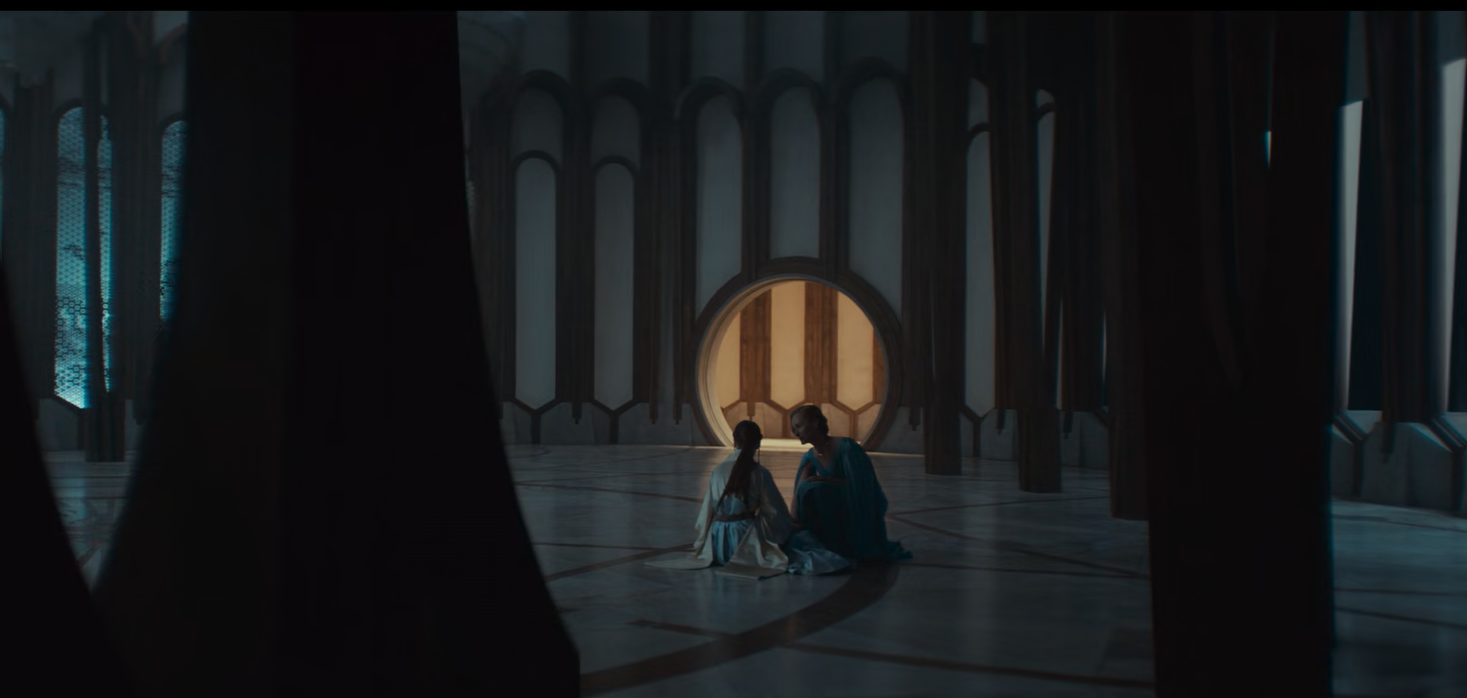
Goddamn. If I were Mon, I'd be so dearly tempted to ask Lita if she's succumbed to feminist brainwashing about needing to choose her own husband, like some kind of woke libtard. Mock her for her lack of traditional values. Then, feigning a stroke of eleventh hour compassion, sensitively ask her if she's struggling with homosexual urges, and promise that I know some people who can cure those if she'll just sign the NDA and go on the six month excursion.
I would be so, so, SO fucking tempted.
Alas, Mon is a more forgiving parent than I. She kneels down next to her daughter, and they begin what looks like it might be their first real heart-to-heart conversation in several years.
The last scene, meanwhile, has the rebels holding Cassa get into a fight over which of them the jungle monsters are probably going to eat tonight, and the guns finally come out.
This is one of the densest hours of television I've yet to watch. It's hard to believe that this was all just one episode. Andor's second season is looking to cover a lot of ground.
If I had to pick a favorite detail out of this episode, I think it would be how the show is framing the death star. I was going to say that it's giving the station a movie-monster treatment, but that's underselling it. It's more like the way a cosmic horror story might dance around revealing the birth of a dark god. Remember, while I've talked about the death star a lot in these reviews, and anyone with franchise familiarity would probably have picked it up by this point, the death star hasn't actually been mentioned by any character. We're just told that the prisoners are secretly working on "something big" for the imperial military, and that Director Krennik needs a lot of exotic minerals for some secretive reason. It's all omens and portents and blood sacrifices so far.
This grandiose treatment of the station is more than justified. The death star takes the theme from all the way back in the pilot, of violence as a monster that feeds and grows on itself once allowed in, and expands it to apocalyptic dimensions. All these forms of violence and brutalization - the Narkina prison, the planned depopulation of Gorman - growing on each other to nourish the ultimate avatar of violence. For all that the concept of a "society that can colonize any part of itself at will" is horrifying, remember what new paradigm this process is meant to usher in next. A world where Grand Moff Tarkin can kill two billion people, within the imperial core, on a whim.
I earlier called Dierdre the Darth Vader of this take on Star Wars, but that's not really true. "Andor's" version of Darth Vader is the death star. That's the big bad. That's what the protagonist needs to confront no matter if it kills him.