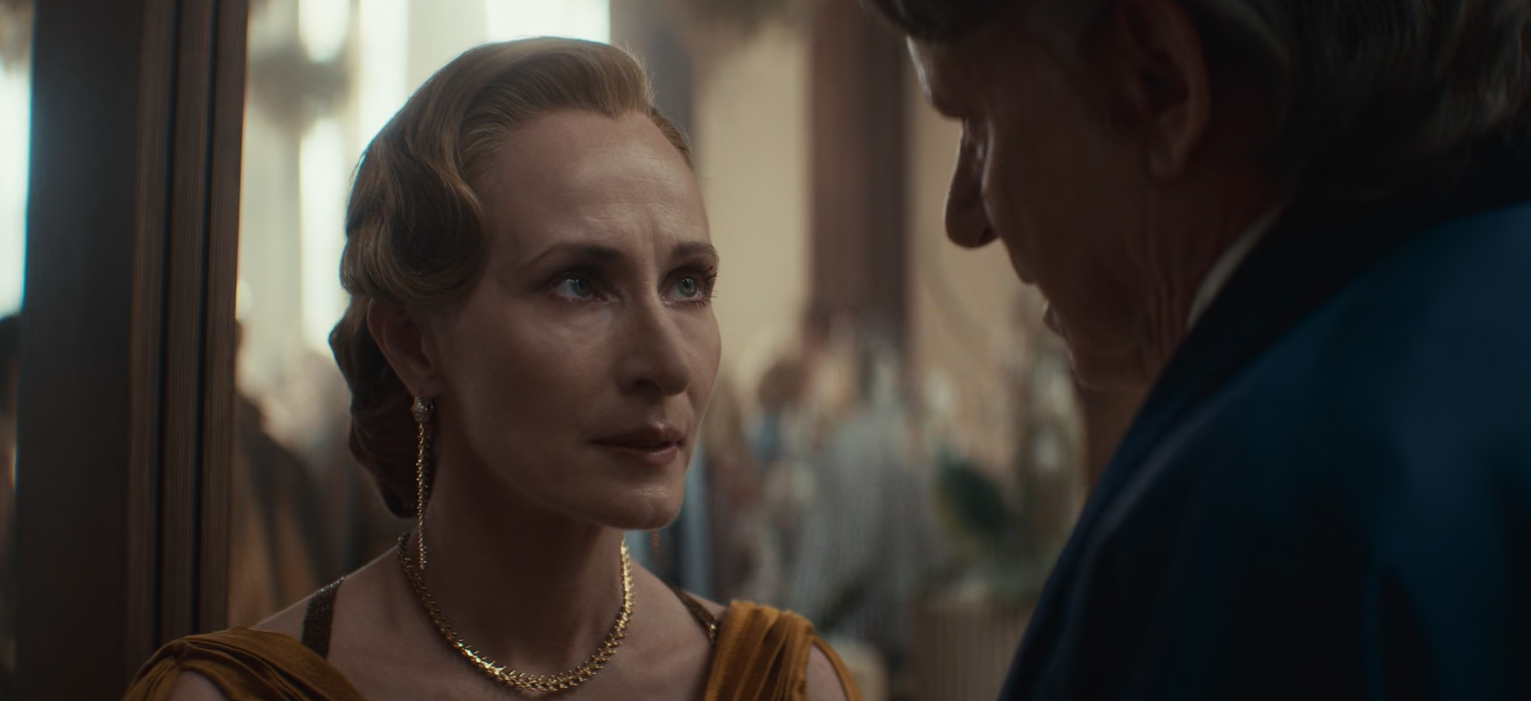
We open on Dierdre and Cyril moving past each other as they busy themselves in the empty, oversized kitchen of their empty, oversized apartment. Silently. Like a pair of clockwork automatons pantomiming a domestic couple. At less than a year into their relationship, this is just surreal to watch. Even more surreal is when they, in turn, pose in front of the mirror for their imminent houseguest, and...Dierdre what even is that smile?
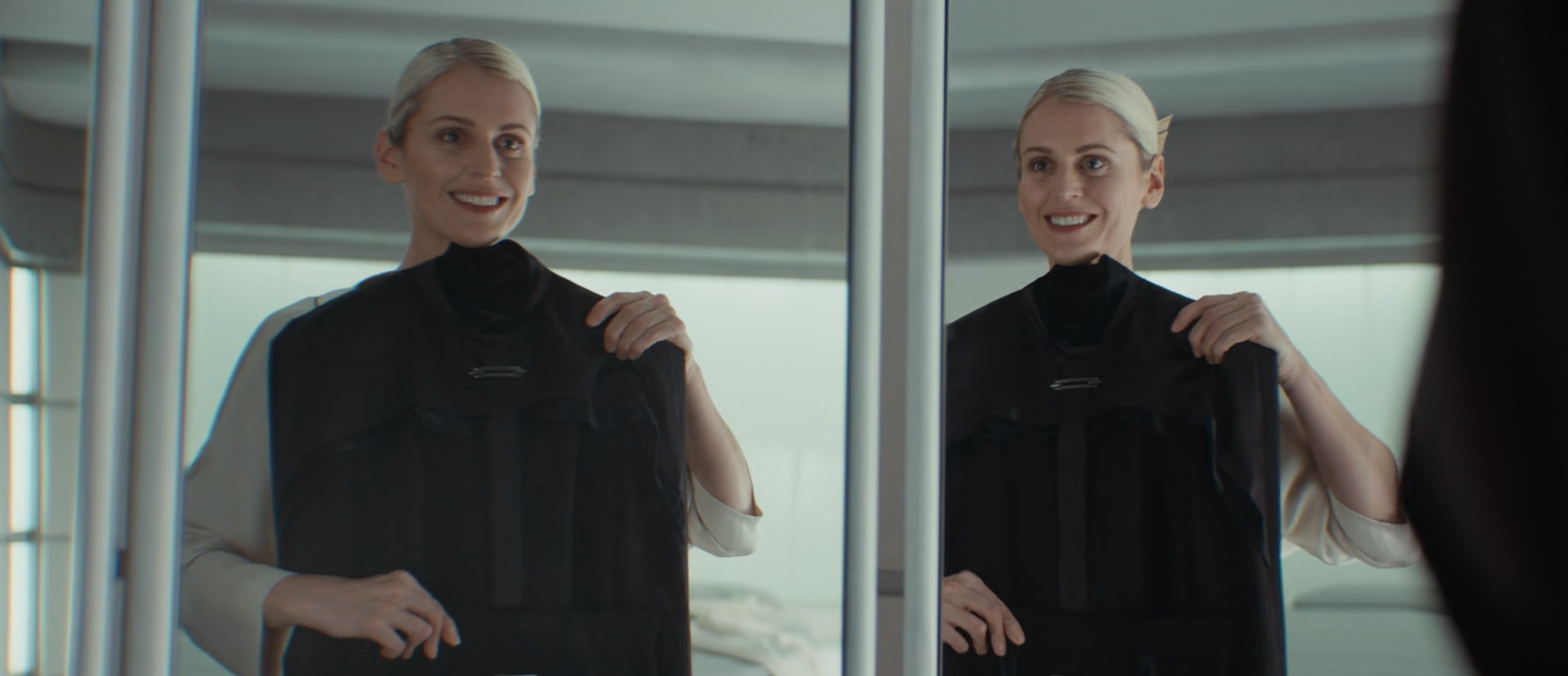
Equal parts "if I stop smiling the man with a gun to my head will shoot" and "Gotham City could use a laugh."
Then there's Cyril doing the same, which is...well, much more normal on one hand, but also puts whatever the hell is going on in Dierdre's head in even weirder context:
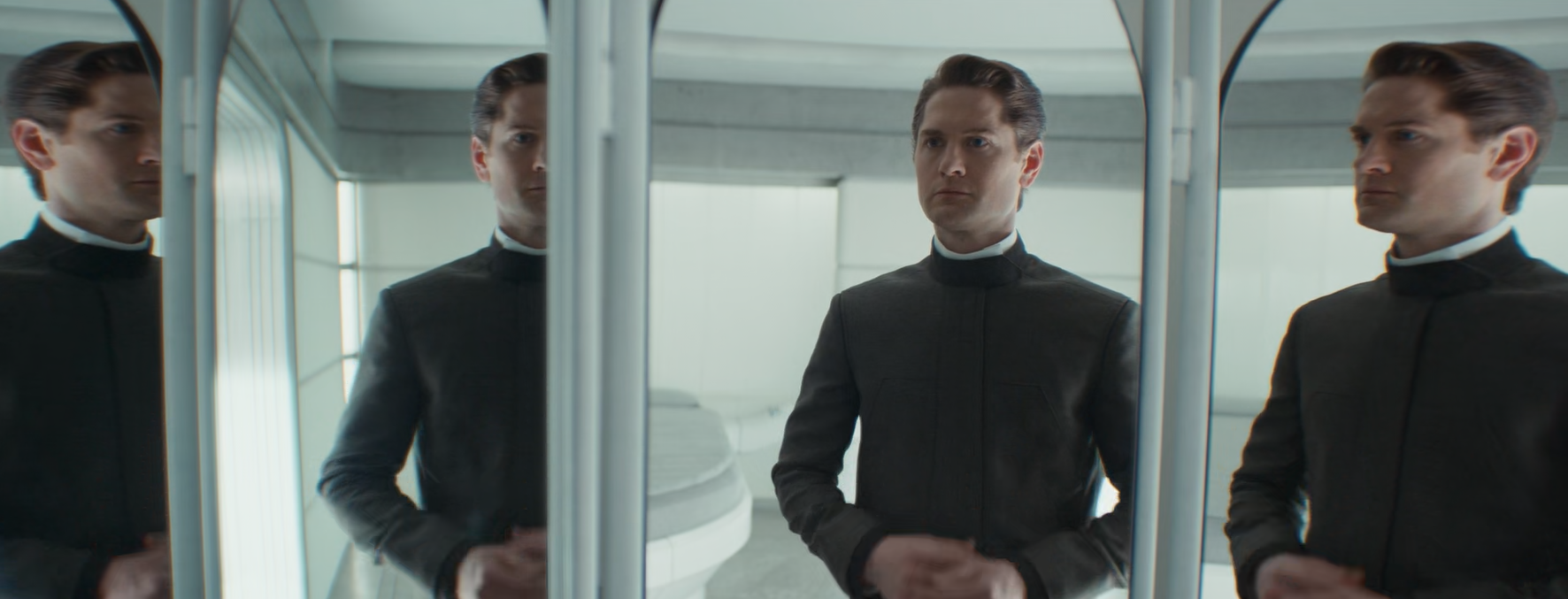
Like I said back in season one. Cyril is a delusional, power-tripping asshole, but he's also more or less just some guy. Dierdre is something much weirder than that.
Funnily enough, this sequence is where we finally start getting some insight into how someone ends up becoming her. For an early sign of where this is going, I was shocked to see that Dierdre, rather than Cyril, was the one trying to supress the nervous shakes as Cyril's mother - a woman who you'd think would be completely unintimidating to anyone besides Cyril - approaches their address. It only continues from there.
From the second Cyril's mom steps in the door, she has the passive aggression toward her son turned up to 11. Almost every word out of her mouth is belittling him in some way or another. Complaining about him trying to keep her from meeting his girlfriend for this long, attributing any display of thoughtfulness or good manners from him to Dierdre's influence, and even implying that Dierdre is too hot for him, which is an incredibly WTF thing to imply to your child's SO's face in front of them. When they sit down to lunch, she talks about how silly Cyril was for "running away to play policeman" for Pri-Mor instead of staying here on Coruscant where the food is decent. And then segues into complaining about how his father also ran away on them, and implies that Cyril would turn out just like him if not for her own endless, patient, loving guidance.
So, she's simultaneously hyperpossessive of Cyril due to post-divorce abandonment issues, and taking her resentment of ex husband out on him through a constant torrent of emotional abuse. I still had some lingering uncertainty about whether or not Cyril bears some responsibility for their relationship being the way it is, but at this point...no. His mother is abusive, and he tries to keep her at a distance out of sheer self-defence.
During this conversation, it also comes out that Dierdre was orphaned by the state at the age of 3. Her parents were "criminals" of a kind she doesn't specify. She was raised at the Meero KinderBloc as early as she can remember, and she even took the name of that orphanage as her surname.
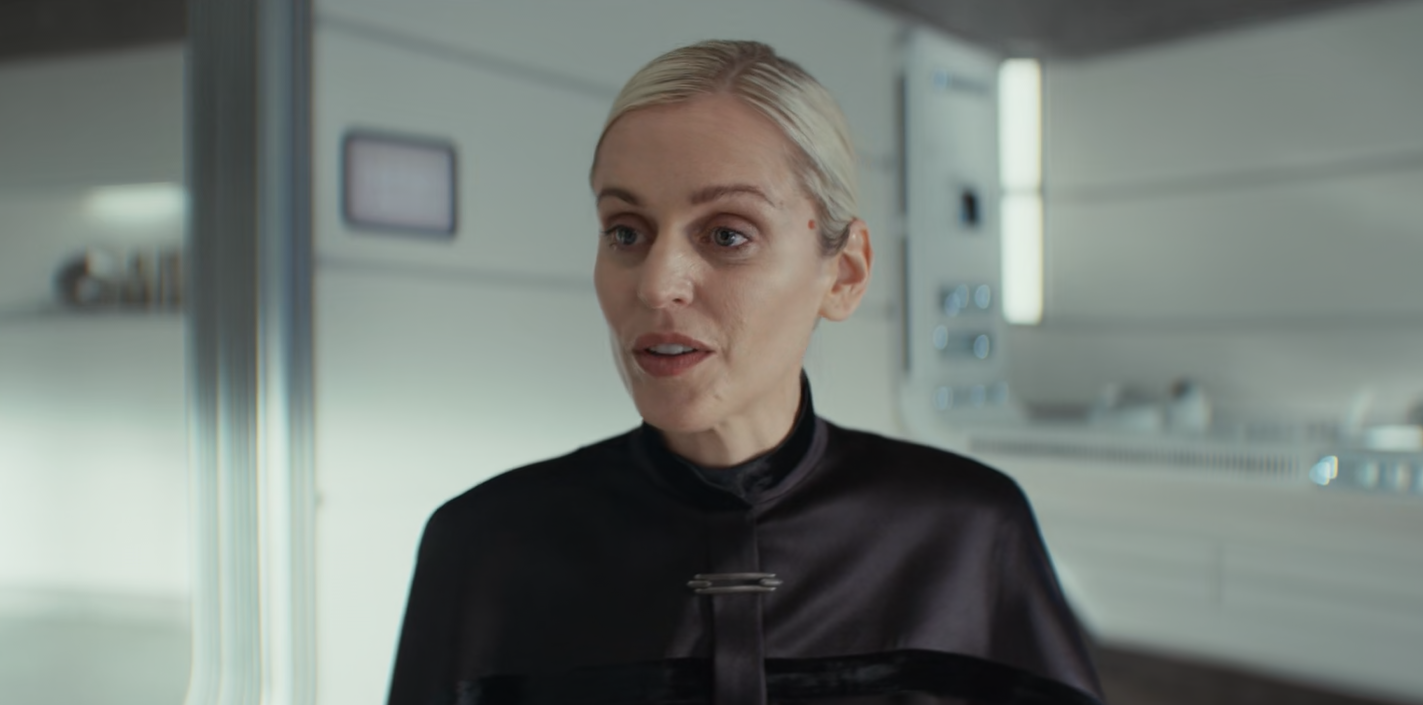
I mean. Kudos to the actress. I had actually been trying to imagine would Dierdre's family situation might have been during some previous scenes of hers, and my mind drew a complete blank. So, she nonverbally communicated exactly what this character is meant to be long before the show made it textually explicit.
...
Now, to do some sociological inference, how old is Dierdre supposed to be? Actress Denise Gough was in her early forties during the filming of this series, but she has a very young-looking face that makes the casting choice hard to read anything from. She describes the facility as an "imperial kinderbloc," but the show has given us ample precedent for the Galactic Empire projecting its name backward in history, and Dierdre is the exact type of person who would stick to the party line on this no matter what she herself remembers.
So, I wonder. Did she have her formative years during the Palpatine Chancellorship? The Clone Wars era? Earlier, when Valorum or whatever his name was still sat uselessly atop a decaying sham-democracy? I definitely don't think she could have been younger than 10 or so at the absolute minimum when the Empire was declared.
What I want to know is how things changed - or how they didn't change - over the course of her time at the orphanage. Were things already Like That during the late Republic decades, or did the trend toward nazi sleepover camps only start in the wake of Palpatine's militarization? Maybe some of these Coruscant state-run orphanages were already feeder apparatuses for the Republic's security state. Maybe they weren't.
...
After a while, Cyril gets fed up with his mother's constant low-key bullying and excuses himself to go in back and hold his head in his hands for a few minutes. Dierdre is left alone with Mrs. Nozzle. And, for just the length of those few minutes, she comes to life.
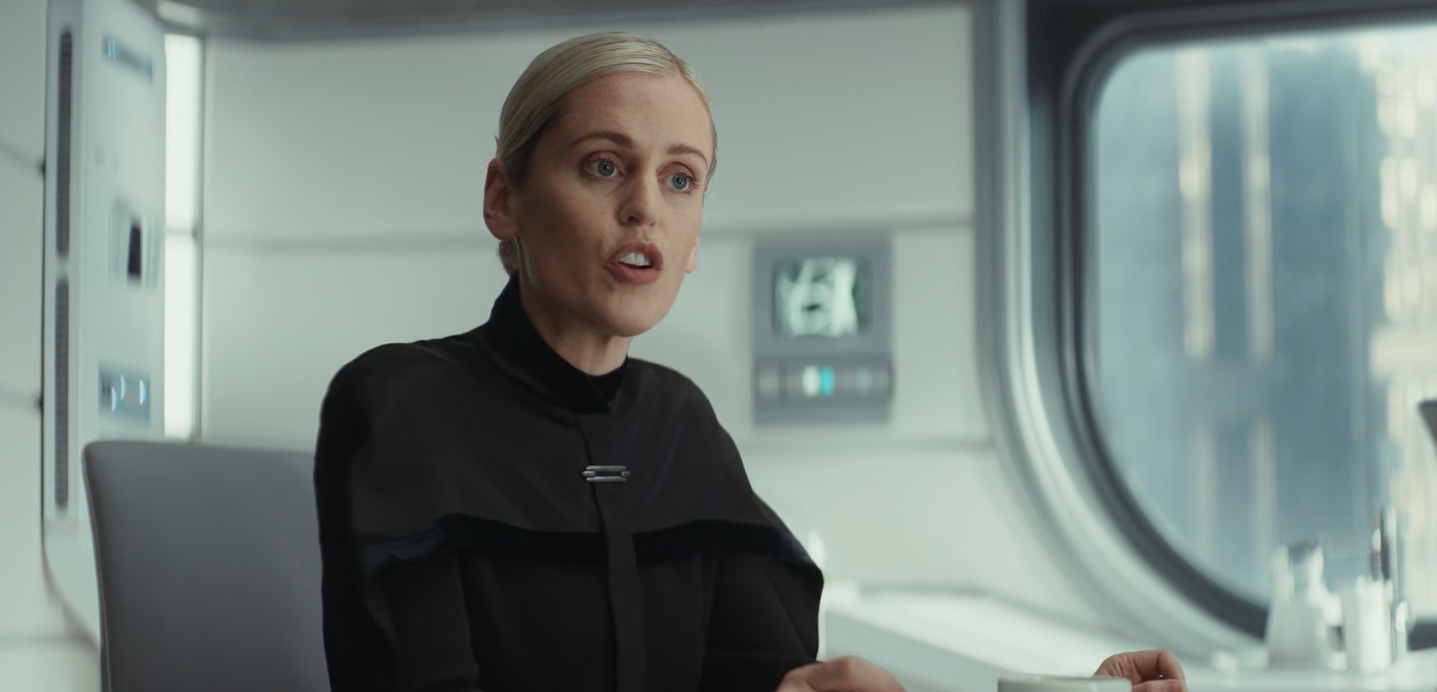
There's a moment at the beginning when she's still unsure of herself, segueing from what passes for normal conversation with Mrs. Nozzle into a dynamic more akin to what Dierdre's used to. But once she's passed that hurdle, she's in full ISB interrogator mode, and it's like watching a bad costume fall off.
Cyril's mother is told that henceforth, she will be permitted to see Cyril up to twice a month, contingent on her own behavior. Emotional sabotage will have consequences. Unwanted or excessive attempts at contact will have consequences. Also, that brother of hers who she's always bragging about? Cyril's uncle who got him that job at the standards department? She really ought to STOP bringing him up so much, because Dierdre checked, and there's enough proof of corruption and embezzlement there that she could have him sent away for decades this very afternoon if she felt like writing a short memo and leaving it on the right desk. So, stop talking about the brother. Stop talking to Cyril except when either he invites it or Dierdre demands it. In fact, stop talking at all, period. Just sit there and smile until this visit is done.
From that point on, with Cyril's mom terrified and cowed, Dierdre actually feels much more alive. Even after Cyril comes back in the room and they keep having their tea and coffee cake while making smalltalk, Dierdre seems much more comfortable and alive. There's a clear hierarchy now. Everyone knows who outranks everyone else. The fact that Dierdre herself is on top is nice, but it's also probably of secondary importance to a clear hierarchy with severe, universally-understood punishments for dissent existing at all. This world has been terraformed into one Dierdre can survive in.
And, I think, she also came as close as she knows how to actually showing love and affection for Cyril. Terrorizing his enemies is the best she can do.
...
I said before that Dierdre would disintegrate without an organization like the ISB, but holy shit did I not even realize how on-point that assessment was.
I don't want to go too easy on Dierdre. It's probably safe to assume that not everyone who went through this system ended up working for the Space Gestapo. Ultimately, she did choose this, and she could and should have chosen otherwise. But, the odds were stacked in favor of this outcome, and no matter what she did end up doing with her life she would have still been pretty fucked in the head while doing it.
Basically, Dierdre is an orc.
Specifically, she's the version of them that one can glean from Tolkein's later-years letters on the subject. Not evil because of inborn metaphysical corruption, or because of a fall to temptation, but because she was raised to never know what the alternatives even looked like. The only model for “normal life” she was shown was brutal dominance within the boundaries of an omnipotent organization. Threatening Cyril's mother is the only way she knows how to show kindness toward Cyril. Likewise, the hints of predatory sexuality she showed toward Bix during the torture scenes might have been the only sort of sexual outlet she's experienced with.
There's a much-discussed scene in "The Two Towers" where a pair of orcs discuss the possibility of deserting their army and being free. Even in that fantasy of theirs, though, the best future they can imagine for themselves is becoming bandits. Because fighting and looting is all they know how to do, and just because they hate their lives doesn't mean they're equipped to imagine a substantially different one. That's basically Diedre, only unlike that pair of uruks she hasn't even realized how much she hates her life yet.
A whole civilization of orcs is implausible. Tolkein was eventually forced to conclude that there must be fertile regions in Mordor in order to feed all those soldiers, and presumably there'd have to be people who farm and build instead of just fighting and stealing. But a select group, supported by and simultaneously isolated from a more functional society, is very much plausible.
She's a pitiable figure, even if she's also a frightening one. Everyone ultimately chooses to be who they are, but some lives leave more room for choice than others, and I think Dierdre's had much less than the other Star Wars villains.
This all leaves me even more curious than I was before about how she and Cyril ended up becoming a thing. Obviously the catalyst for it was him saving her life on Ferrix, but I want to know when and how exactly the switch flipped in her brain that let her accept his advances. It doesn't flow logically JUST from the rescue. I also don't think, at this point, that she's doing it out of emotional masochism (or at least, not primarily out of emotional masochism. There could still be at least some element of that). What did he say? What was it about him? I feel like there's at least one important link in this relationship's chain of causality that hasn't been shown, and I really want to know what it was.
...
Elsewhere on Coruscant, Kleya has managed to recalibrate the hyperwave caster and proxy her way through to the gunship. The gunship which, currently, is sitting morosely in space as Cassa struggles to get its comms actually working. Is that what he was doing when he accidentally hotwired the thrusters? Seems like a difficult pair of things to mix up, but then, it's established to be a really weird control scheme.
Well, they finally manage to connect. And we see that after two days with no food being tormented by muppets, followed by an untold number of hours being a sitting duck alone in space, Cassa's professionalism is breaking down. He starts getting impatient very quickly, and more importantly he's not able to keep speaking in code beyond the first unexpected complication either of them needs to explain.
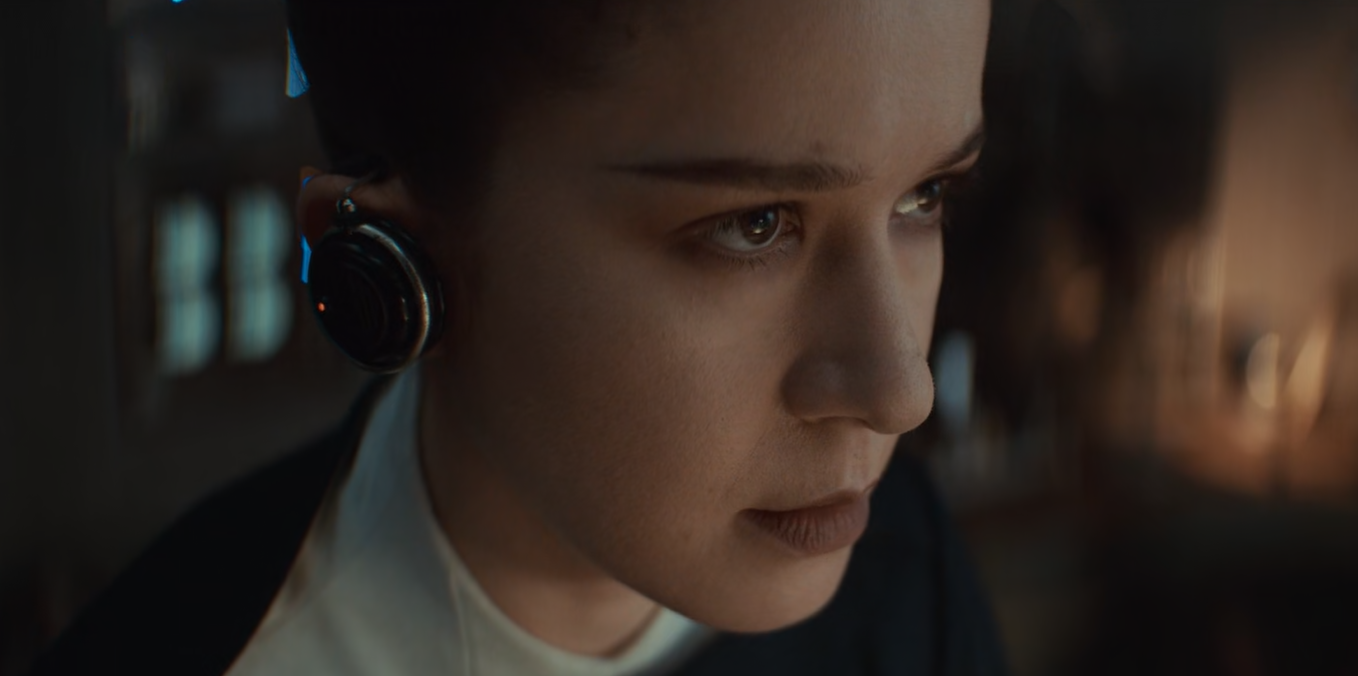
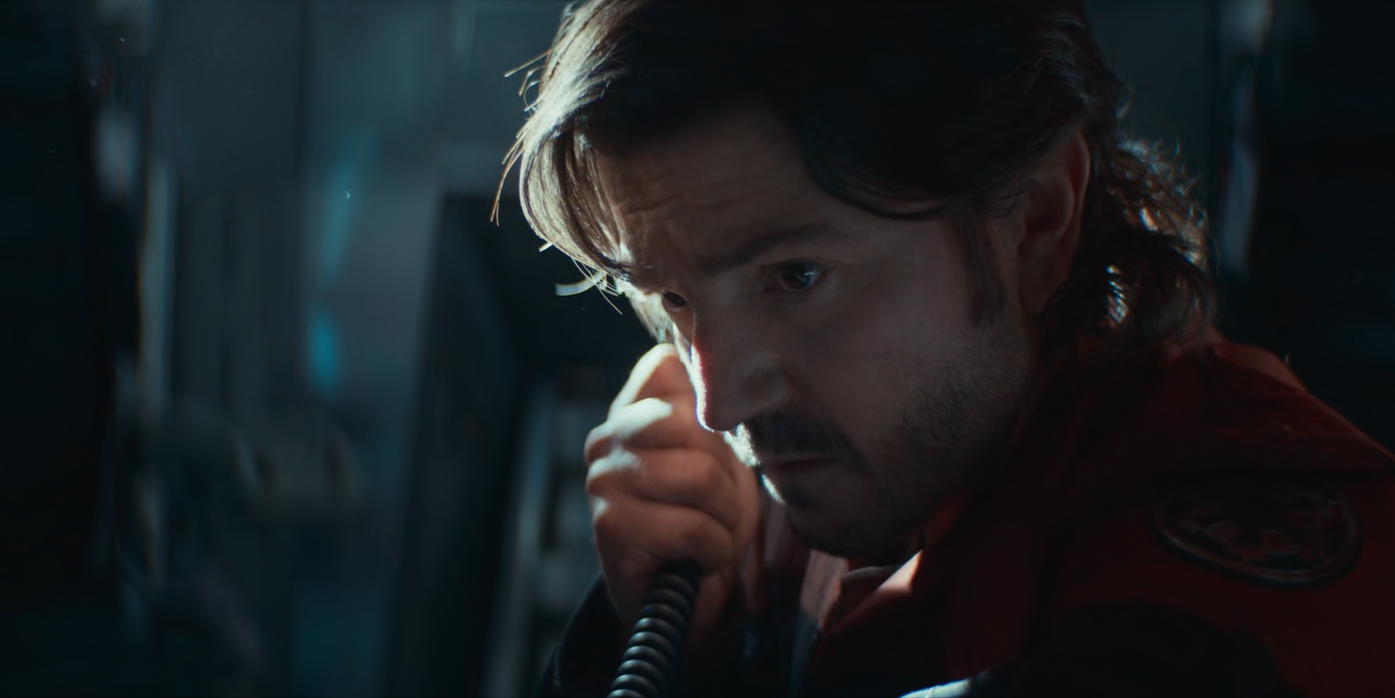
Kleya looks so weary of this, in the wake of similar scenes with Val. It's like nobody besides her is even taking their protocols seriously. Even the bossman himself has been getting sloppy, leaving the big comm array unmanned while they have a big operation like the gunship heist in progress. She gets increasingly frustrated with Cassa as the conversation goes on, with her sticking to code as best she can with him abandoning it. Again, just like she did with Val late last season.
On the topic of military and civilian lives not always being in harmony, Kleya almost feels like a counterpart to Dierdre. She's the only rebel character so far to have shown no signs of having interests or attachments beyond the rebellion. She's not incapable of faking normalcy like Dierdre is, but she seems to be baffled by other people's inability to abandon everything and be impersonal vessels of the rebellion when needed. I have to wonder what her background is like, and if there are any parallels when it comes to the lack of normative family and socialization.
Kleya's final frustration comes when she manages to make it clear to Cassa that there's something going on with his fellow Ferrixians on the farm planet, and he immediately lays in a course. She tells him not to go there under any circumstances, there's too much heat, he needs to sit tight for a little bit while she figures out a new destination or rendezvous for him, but he blows her off.
Kleya's frustration and anger when he cuts off the channel are understandable. Her seeming confusion as to why people keep breaking ranks to go rescue their loved ones from near-certain death, however, points at something like what I've been talking about.
On Chandrila, Gul'Dan is unveiling his ridiculously over-the-top wedding present before all and sundry. Millennia ago, eight sacred idols were plundered from Chandrila by some historical invader. Only five of them have since been recovered and brought back to their planet of origin. Well, as of today, thanks to the uncanny skill and resourcefulness of a Coruscant antics dealer who Gul'Dan decided to honor by inviting along to the wedding with him, the five are now six.
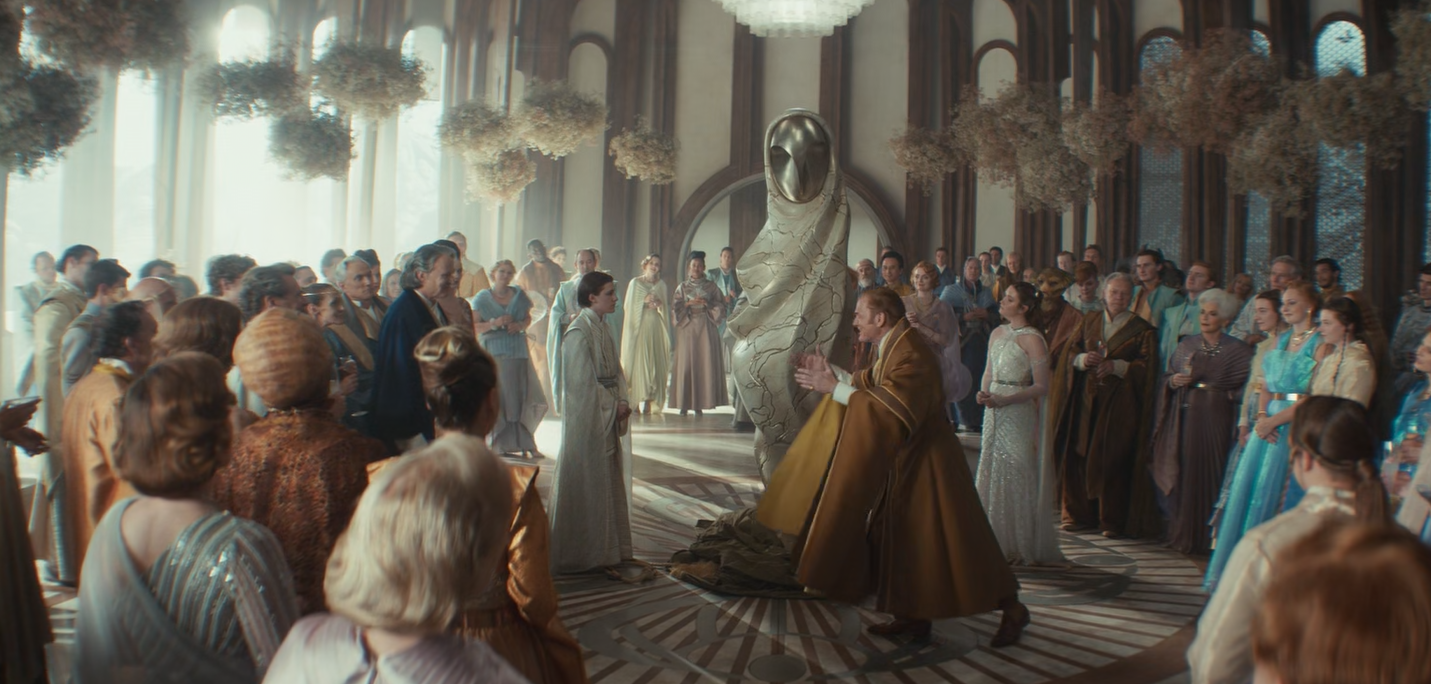
Well, sort of. The artifact is now the personal property of his son and daughter-in-law. A cultural relic of the Chandrilan people's, transformed into a private trinket of a couple specific Chandrilan elites, done purely to puff up the insecure ego of another Chandrilan elite. It's not really being returned to its rightful owners at all.
But hey, it's back on Chandrila, and that's good enough, yeah? Yeah? Come on everybody, cheer for the warlock!
Everybody does, in fact, cheer for the warlock. Or at least, most people do. A few, including both Mothma parents, give very quiet, very forced applause. Earlier, when Mon and Man were discussing their suspicions about what Gul'Dan would be gifting the newlyweds, this possibility occurred to them (they discussed it in vague terms that the audience couldn't understand until getting this context now), and to Man's credit they were both equally disgusted by it. Which - along with his earlier expressed distaste for Lita's tradwife influencer classes - makes me feel like perhaps Man actually did believe in something, once upon a time. There are still vestiges of it in there. Unfortunately, she doesn't seem to have managed to pull him out with her when he started sinking.
God, that makes the House of Mothma so much more of a tragedy than it initially seemed.
Well, Luthen's likely to be getting some more Chandrilan customers after that kind of exposure. Which is good, I think. The more attention he gets as an antiques dealer, the more easily he can disguise his other activities.
As the fanfare dies down and the music for the wedding-ending dance party starts to play (really nice techno-dance track, by the way), Mon has another little meeting with Tay. He tells her that he's been talking to Gul'Dan himself, and implies that he really, really thinks Mon should appreciate his efforts more. They'll talk about it on Coruscant next week like she promised, of course.
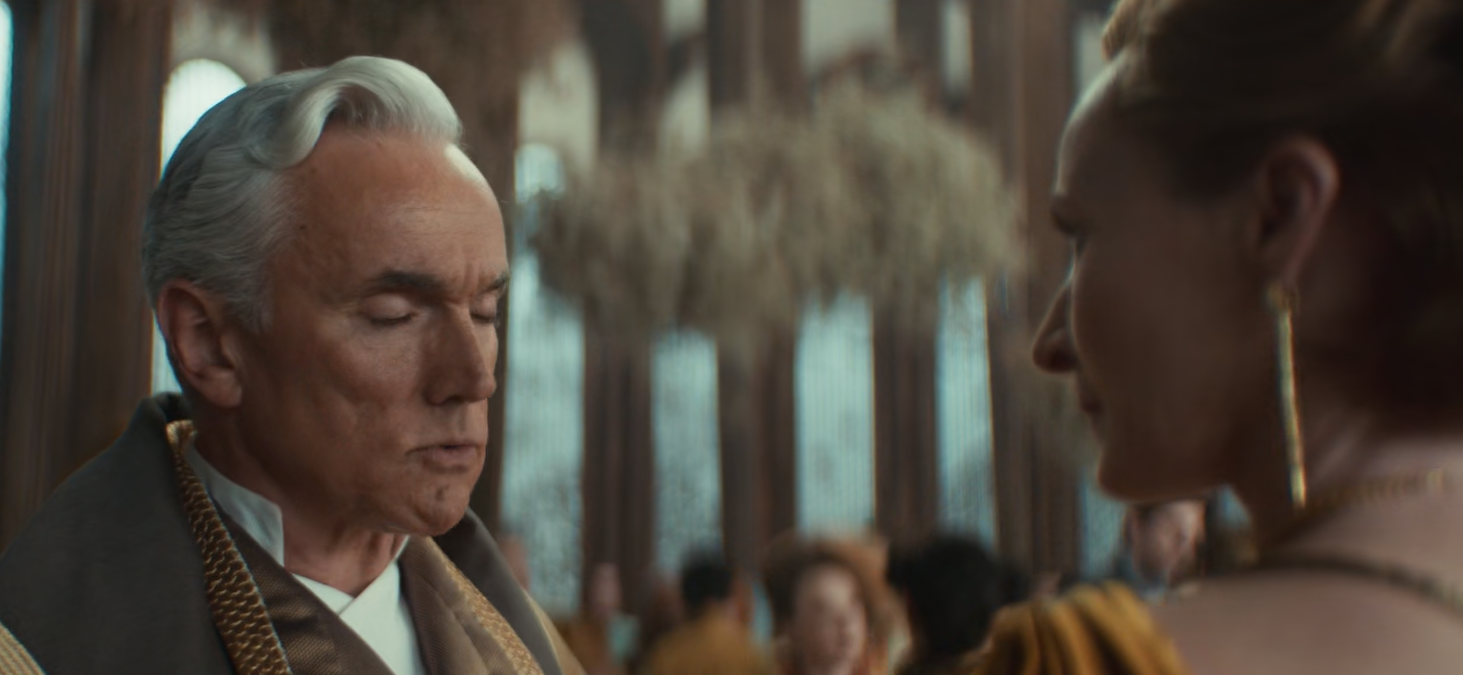
That motherfucker.
Well, he did seem way too good to be true, politically, for an aristocratic banker. I suppose I'll take this as vindication of my earlier doubts about Tae.
Right after Tae leaves her side, Mon is sought out by Luthen. He's been keeping an eye on Tae for the last day, and he confirms that Tae has been pestering Gul'Dan at every opportunity since Mon last spoke to him. If he's now coming to Mon again and saying the situation is more urgent than ever, then that's bad.
Mon assures him, again, that whatever Tae is demanding, she can eat the losses. Luthen grimly shakes his head and tells her that no, she can't.
If Tae is willing to go to these lengths, then who's to say he won't just go to them again the next time he makes a bad investment?
And then again the time after that?
What if the ISB happens to come sniffing at his door? If he's the kind of man who would threaten this just to escape bankruptcy, what might he do if he thought his freedom was at risk?
No, no. There's only one number that will satisfy Tae for good, and Luthen is going to dial it right now. Mon protests that he's an old friend. Luthen retorts that in their line of work, old friends can stop acting friendly at any time, and they need to realize that that's happened when it has indeed happened. He calls it "the curse of our kind."
He then asks her if she would have told him about this final development, had he not already been here watching. She insists that she would have, but I don't know if either he or she is entirely convinced.
So, that's what was going on with Luthen and Gul'Dan, I guess. Luthen had suspicions about both of Mon's banker confidantes, and it just so happened that Gul'Dan wanted something history-y for a wedding present. So, Luthen approached him with a lead on a long-lost Chandrilan artifact and used that as an opportunity to vet both men himself. That doesn't explain why he thought he needed Kleya here with him, so maybe there's a bit more to it than just that, but that's at least a big part of it.
It seems that Gul'Dan has either passed muster, or is just too savvy to kill without stuff getting out. Tae, on the other hand...honestly, Tae was pretty stupid in how he went about this. If he'd just kept his cards close to his chest until his meeting with Mon on Coruscant next week, and then only started implying implications if he couldn't get what he needed without that, he probably could have avoided what's about to happen to him.
Next time, the conclusion of this episode and this arc.