Star Wars Andor S1E10: "One Way Out" (continued)
The work shift - the last one for this crew, one way or another - is a tense one. The men are still managing to keep themselves from panicking and letting the guards know that they know, but Kino, Cassa, and a couple of other cool heads work hard to keep the rest in line. Conveniently, it's Kino's literal job to keep the rest of the group in line and deputize trusted inmates to do the same, so any guard casually looking in at the work floor will see Kino and his buddies quietly scolding the others and think "all is well."
The most memorable bit of this is Cassa interrupting a trembling man who's whispering the words "I'm dead, I'm dead" under his breath as he works by telling him "Not yet. Not until we've fought." Probably the best attitude to have in this situation. They have literally nothing to lose, so it's best to see everything that's about to happen as a liberating catharsis rather than a grim responsibility.
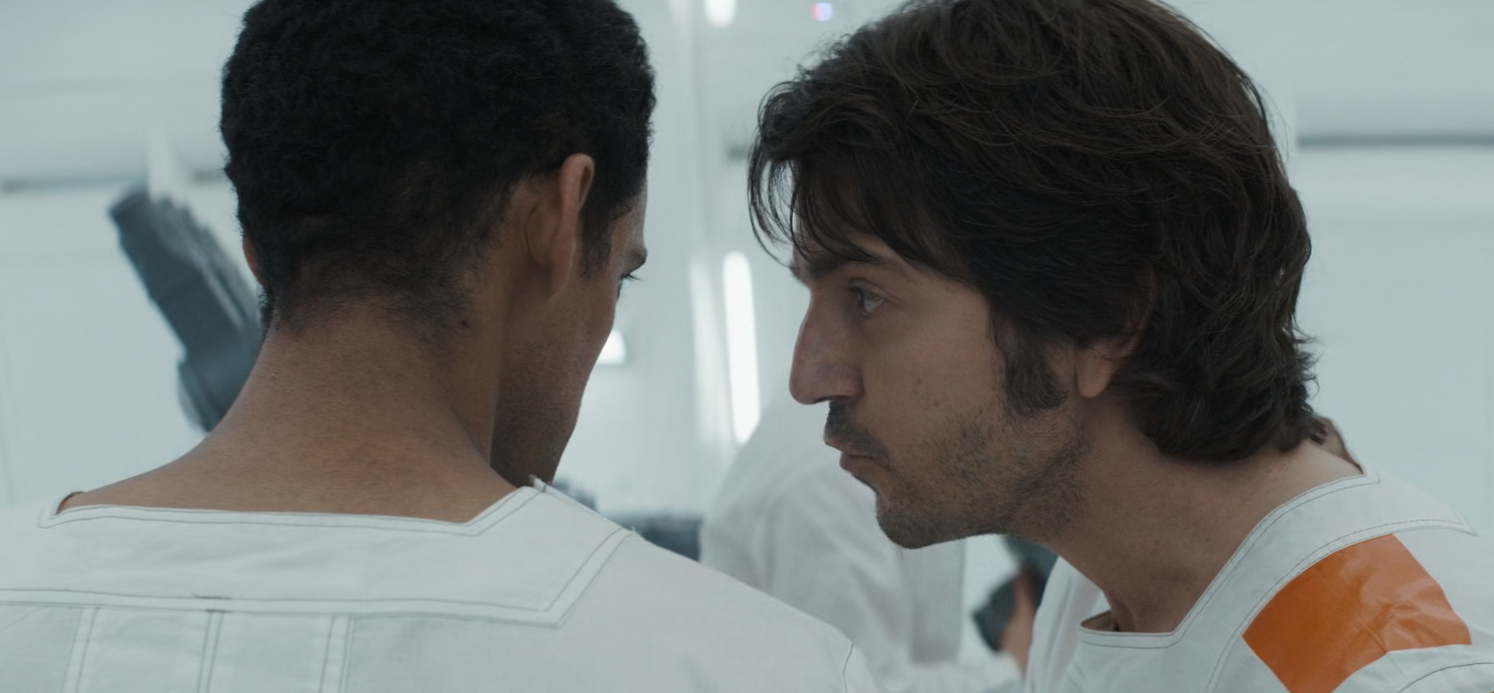
When the guards bring in a new man to replace the elderly inmate who died the other day, the plan is put into action. Cassa uses a well-timed bathroom trip to finish breaking open the water pipes he's been weakening over the months, springing a massive leak that sends water slowly expanding across the bathroom and eventually creeping its way out onto the workfloor.
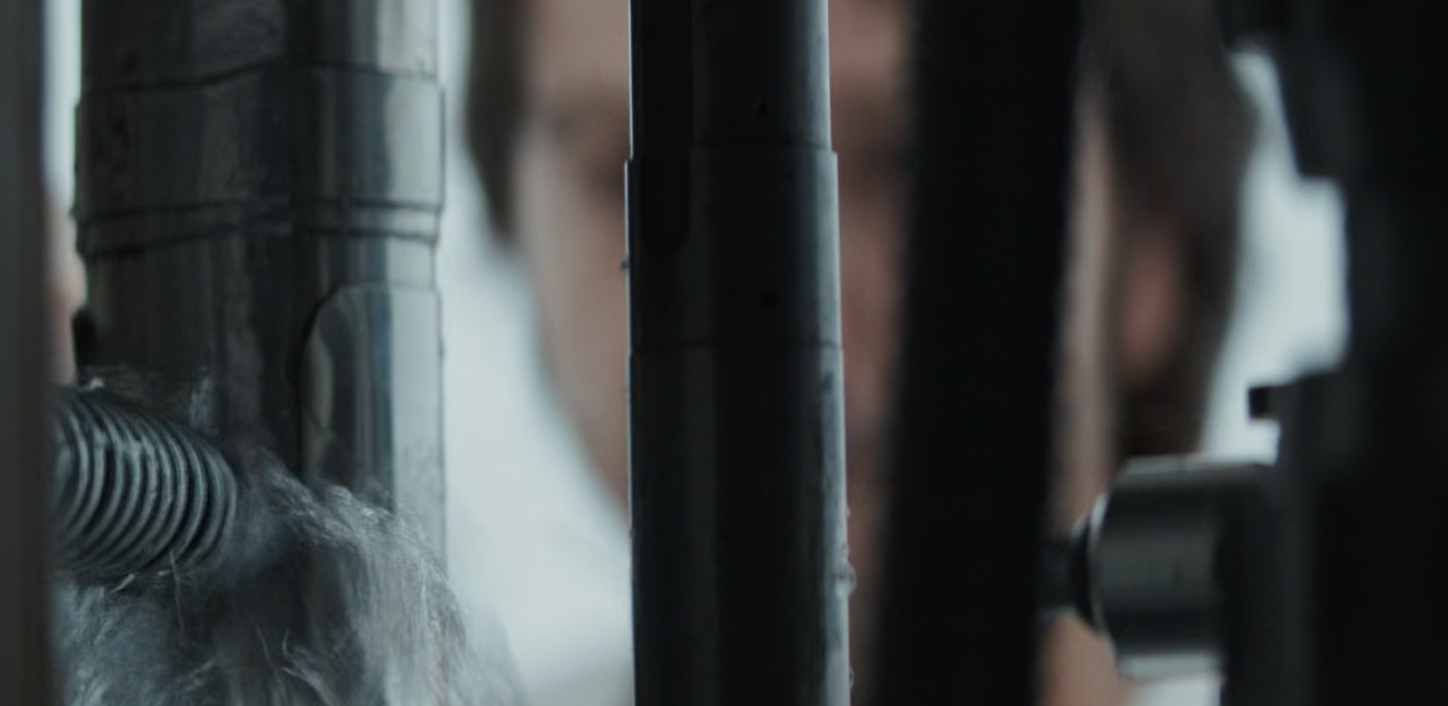
He had a hunch that this would be a viable strategy from the beginning. The incident a couple nights ago, when the entire station's power seemed to flicker for a moment when they were frying the other work crew who knew too much, confirmed it. The prison's electrical wiring is cheap and shoddy, and sinking too much electricity into the floor-taser system at once runs the risk of shorting things out. They probably had to run maintenance on the floor wiring of that other section, after they killed everyone in there at once. They'll have to do the same thing with this one after the system tries to "electrocute" an entire surface area covered in water.
Or rather, they would have to do maintenance if it still mattered after this.
When the guards are escorting the new inmate down on the elevator platform, a pair of Cassa's crewmates stage a fight to get the guards distracted. Then, Kino leads all the others in a frenzied attack on the guards on the nearly-descended lift. The timing is critical here. They need to keep the guards off-balance, too worried about exposing themselves to the electricity to activate the floor, until enough of the floor is covered. They need to ensure that the lift platform is still down at the moment that the power goes out.
The execution is imperfect. It can't be perfect, what with fifty participants involved and none of them having had more than a few hours of forewarning. Several inmates get shot in the process of keeping a guard or two in the electricity danger zone while they get the lift platform jammed up. One guard is killed. Another manages to climb back up off of the stuck lift and into the exit, which the inmates know means the electricity is about to come. Another one or two inmates are electrocuted as they fail to climb onto the work tables quickly enough.
However, the vast majority of the crew is still alive and able bodied a moment later, when the water's electricity sink has finished overdrawing the local power lines.
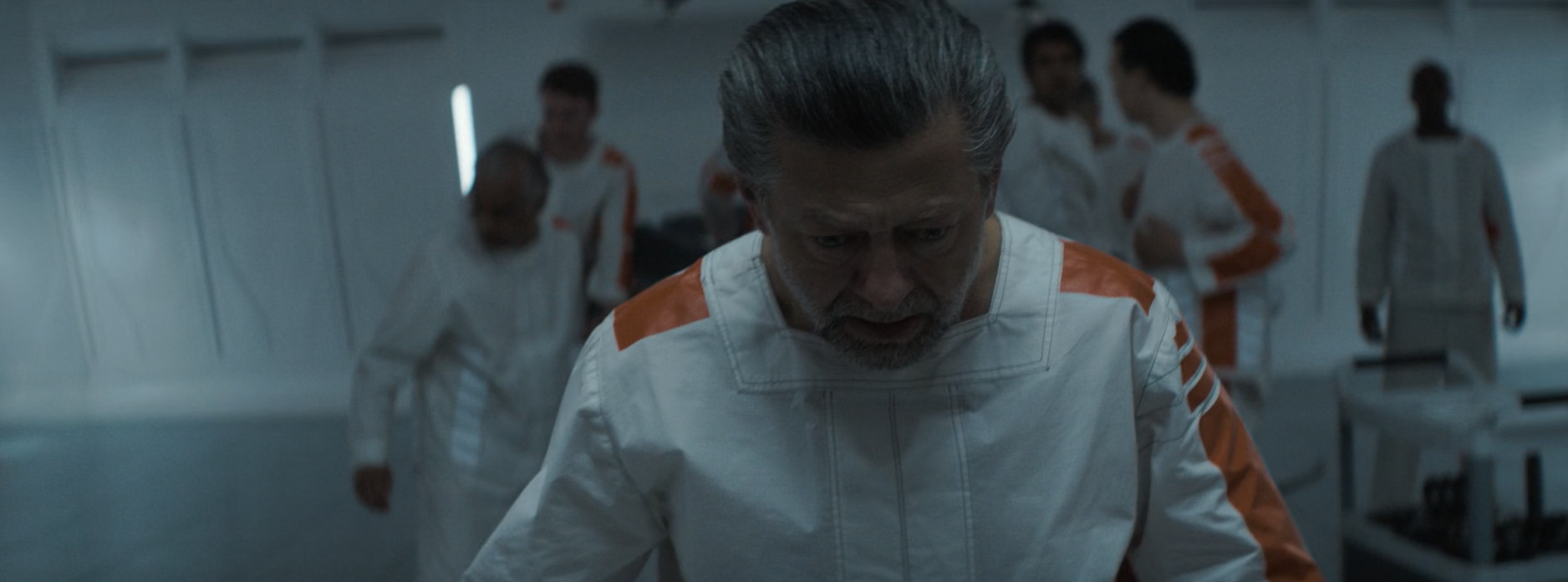
Escape from the floor isn't over just yet. In fact, most of the casualties suffered by this crew are incurred at this point, as the guards fire their blasters wildly into the crowd. Overall, it looks like at least a dozen more inmates fall. But that still means that thirty or so - led by experienced combatant Cassa, who grabs the foot of the guy firing from the doorway and yanks him down to be disarmed and beaten to death - are able to climb over the corpses of their fellows, make the breach, and overwhelm the 2-3 remaining guards.
But then it's pretty much all over for this platform.
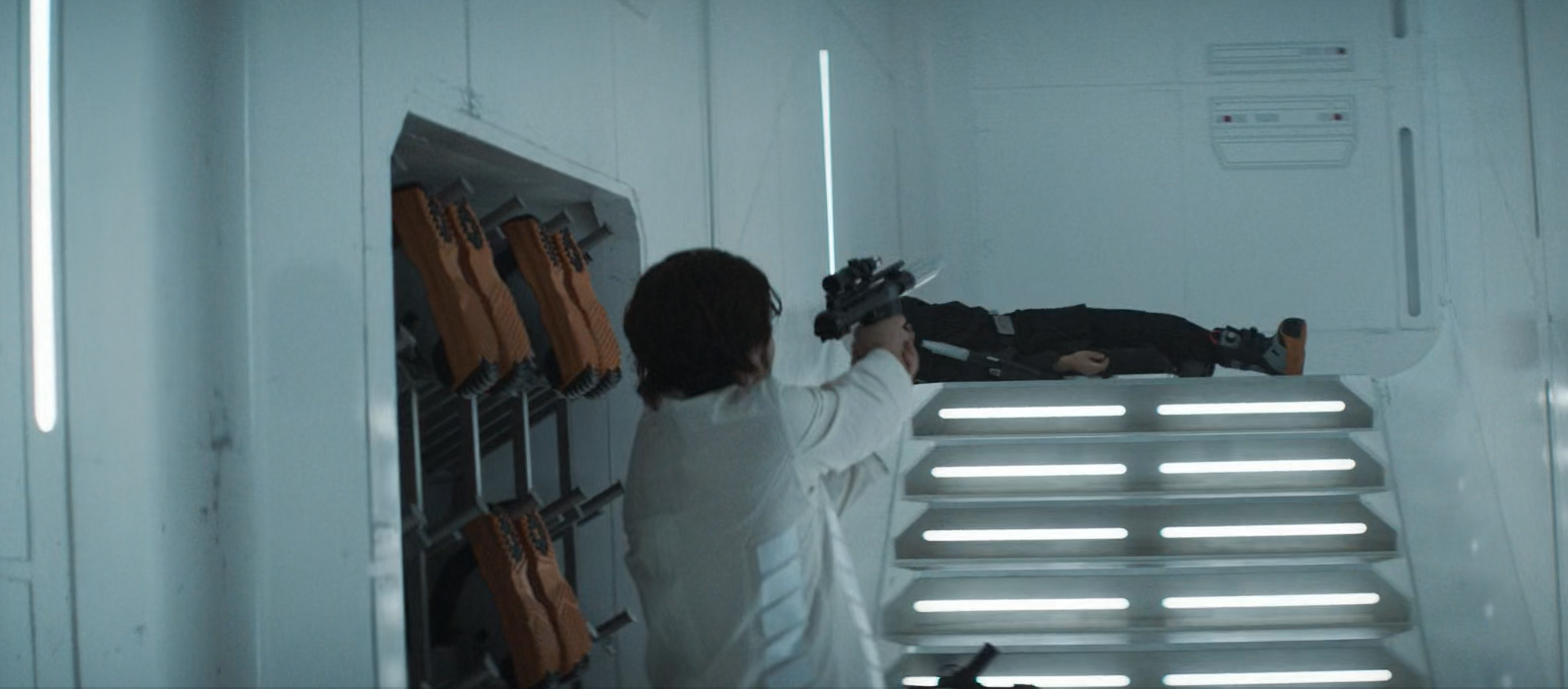
There aren't enough guards to deal with a breakout of this scale. Especially once the water starts leaking into the floors under theirs, and at least one other work crew proves canny enough to grasp the significance.
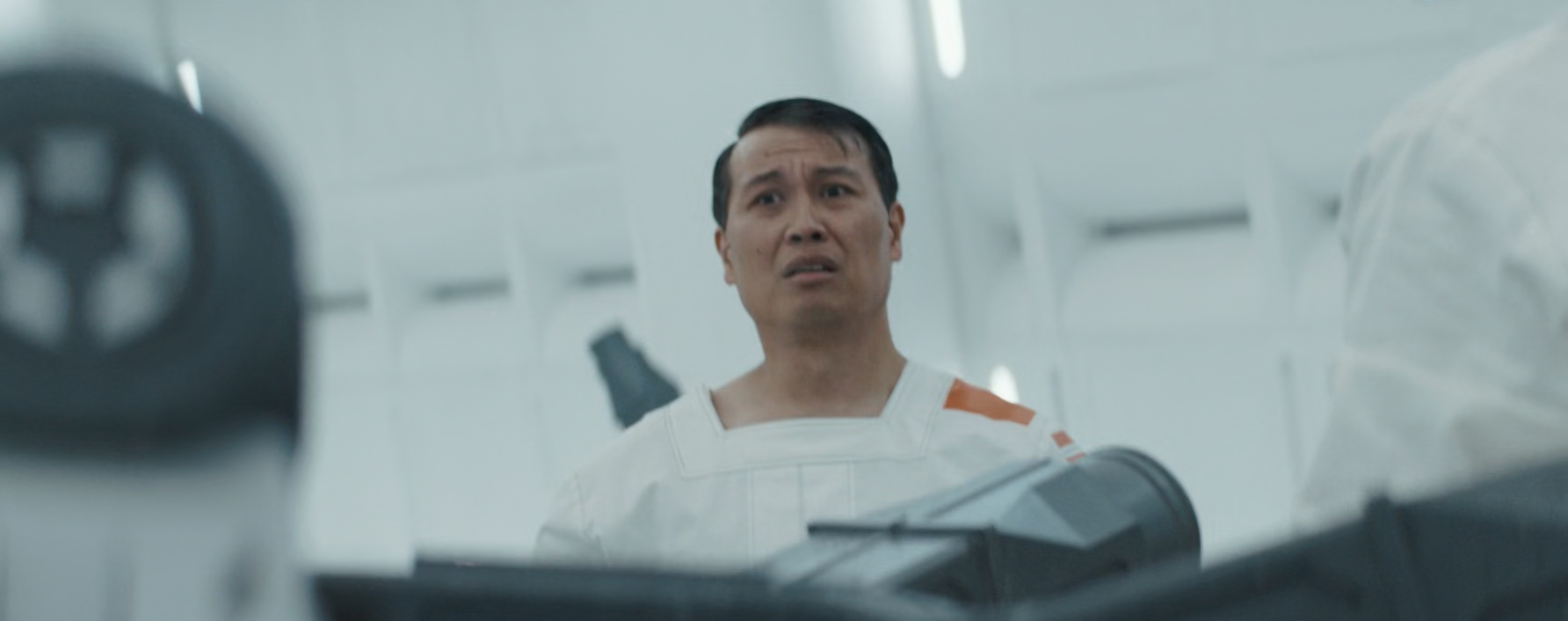
Naturally, the first priority for the escapees is to kill the guards at the entrances of those floors as well and open their respective lift-doors, quickly doubling the number of both escapees and stolen laser guns. Second priority is to hit the platform's control center, where a small group of inmates led by Kino and Cassa force the command crew to shut off the main hydroelectric generator and preclude the possibility of any more floors being activated.
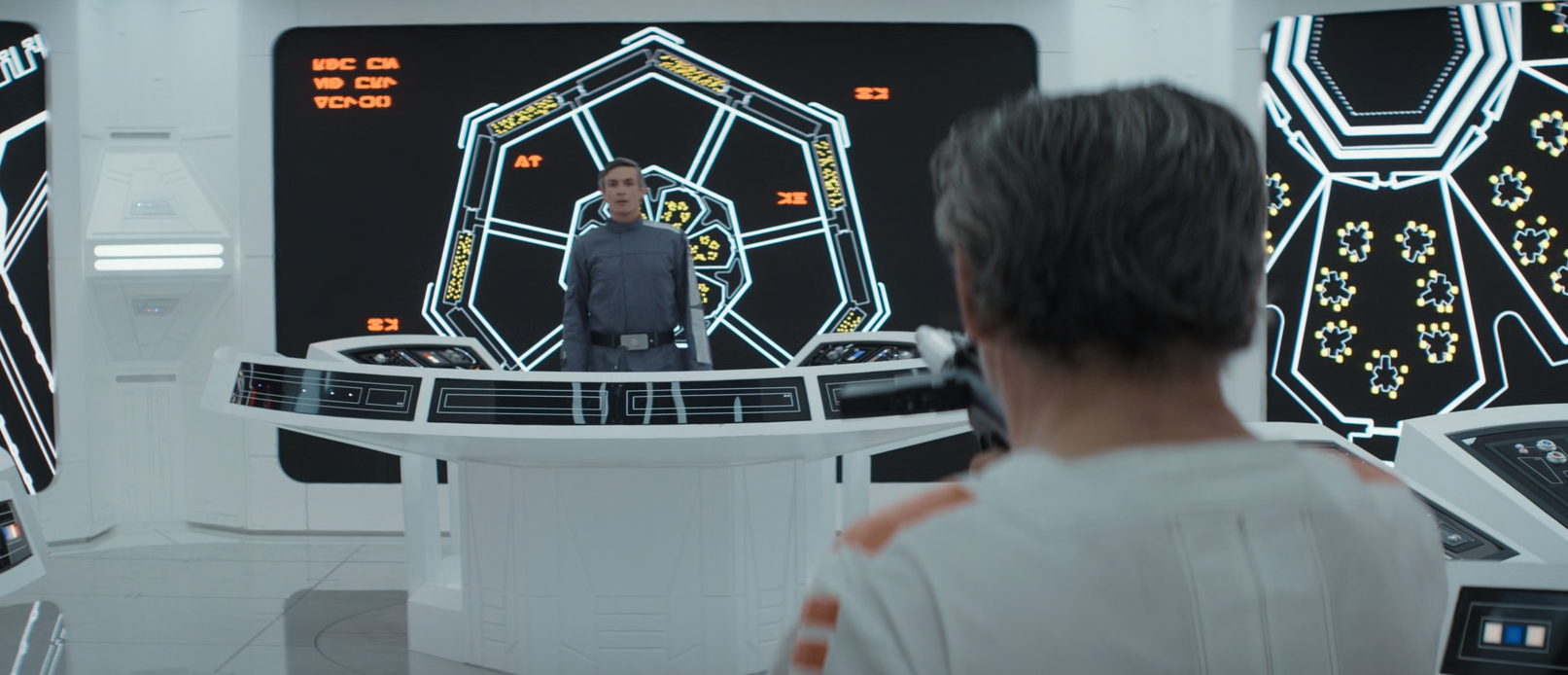
Surprisingly, these guys actually turn out to be slightly harder to bully than the soldiers at the Aldhani supply base. I'd have expected the opposite, given their respective roles and services. Nonetheless, after Cassa shoots his way through the two highest officers in the command structure for noncompliance, the third in command relents.
After the auxiliary power comes on, Cassa takes a step back and cedes the next job to Kino. Cassa knows that with Kino's years of experience as an inmate and a floor manager, and especially his ability to retain some measure of empathy for the men under his command despite being put in a position of oppressor-by-proxy over them, he's much more capable of appealing to the inmates and riling them up. Breaking the news that they (through means that still don't really make sense to me) learned about no one ever actually being released. Their sentences being made up, with those "released" actually just being sent to (presumably?) some other facility to be worked the rest of the way to death. The lie of eventual freedom being purely an illusion to keep them compliant and willing to suffer injustice after injustice.
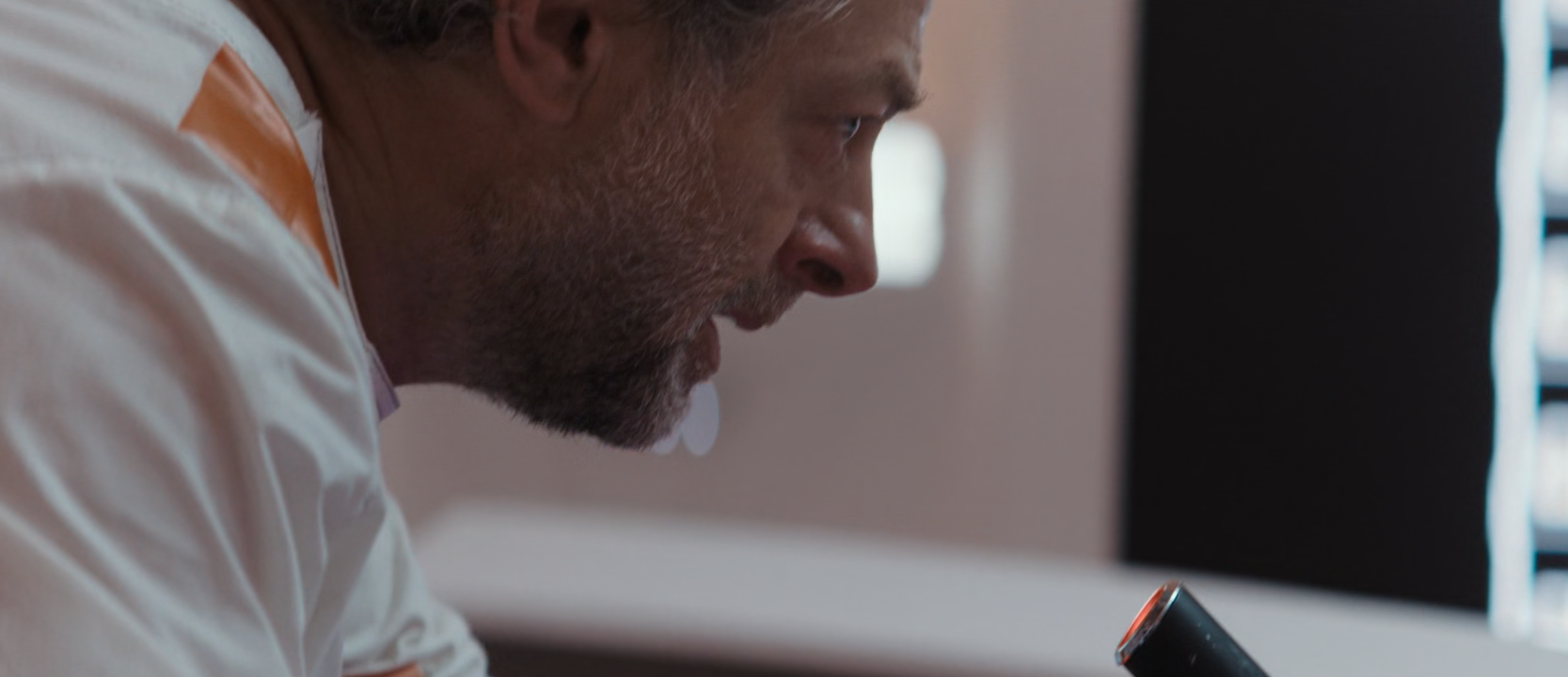
Most of all, Kino tells them, if they can spent the next hour fighting even one tenth as hard as they've spent the last however many years working, their victory is guaranteed. Many will still die in the process, but if they lose they're all dead anyway so what does that matter?
It's a pretty good speech. Cassa coaches him a little bit from the sidelines here and there, drawing on his own experiences with paramilitary command, but it's still mostly Kino's own unfortunate leadership experience guiding his words. With the main power down and the violent noises echoing through the halls, it's very easy for all the other work crews to believe Kino's carefully chosen words.
Groups of inmates systematically go from floor to floor, opening more doors and activating more lift platforms while the main power is down. We get some great footage of the ant-farm-like windowed skyways of the facility turning into vectors of escape, as sleeping shift crews are hastily awoken and rush out to their respective work floors to climb out with the others.
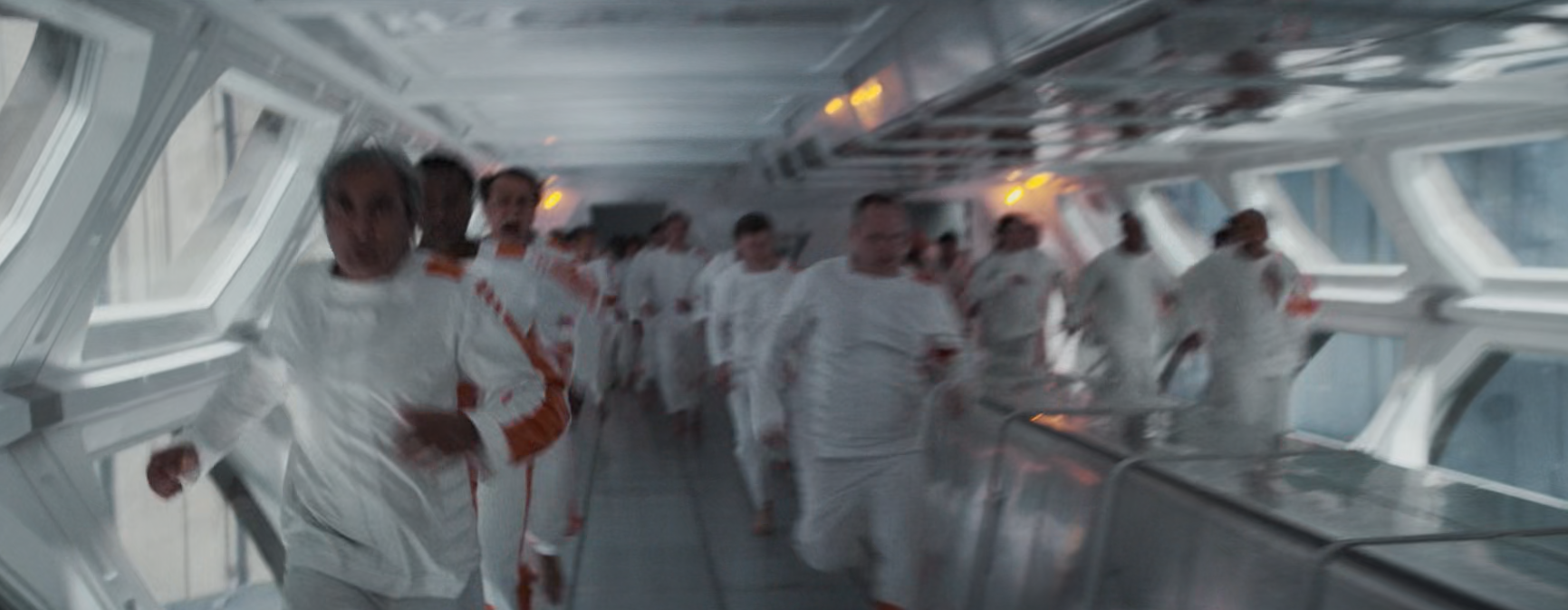
After the initial disproportionate bloodbath liberating the first couple of floors and the control center, the loss of life drops of sharply. It apparently didn't take the guards long to realize it's a lost cause after the main power turned off. So, most of them just grouped up, locked themselves into safe rooms, and waited for the prisonbreak to be over. I can't imagine that they faired very well in the ensuing court-martial, but honestly it was probably the best tactical decision they could have made. Cassa and Kino were right; they really were understaffed and over-reliant on the tech.
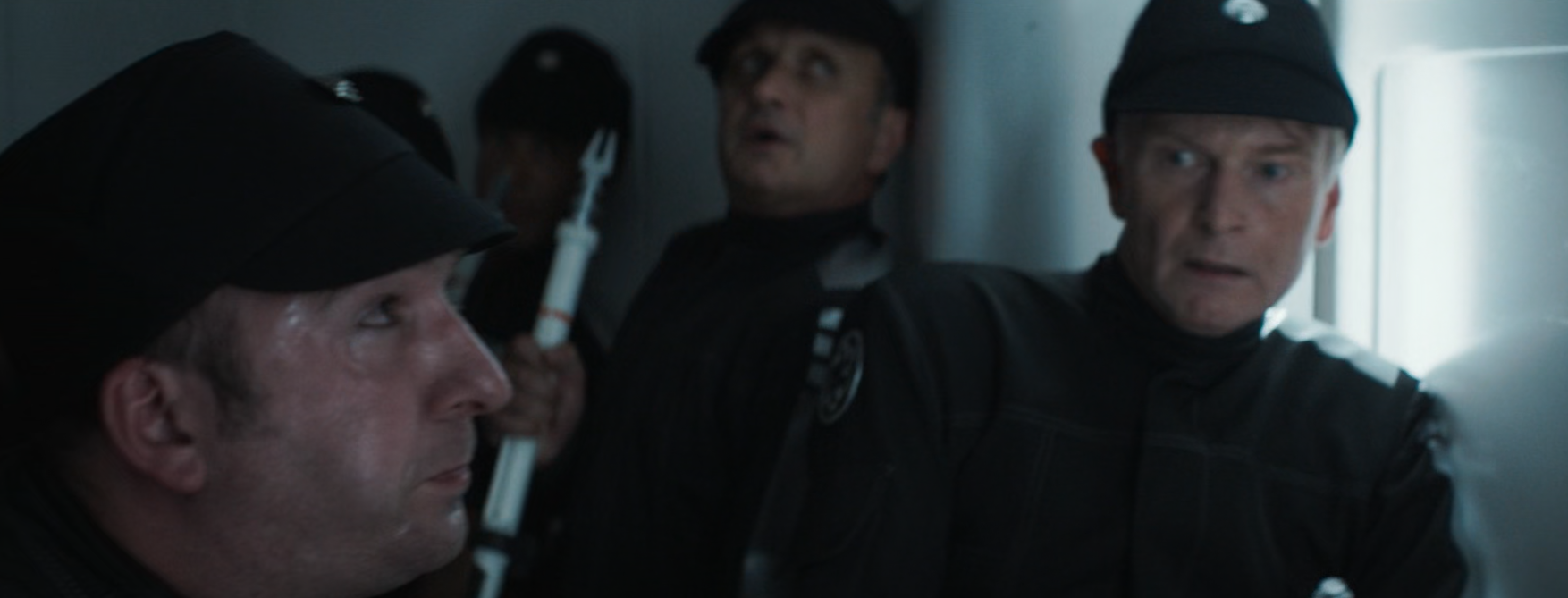
Thousands of inmates make it back up to the landing pads, looking out at the Narkina sun and sea for the first time in months or years after those initial few seconds when they were first brought here. And, um...okay, this part of the escape plan actually bothers me. Like, really bothers me.
Apparently they're all just going to dive into the ocean and swim away to...
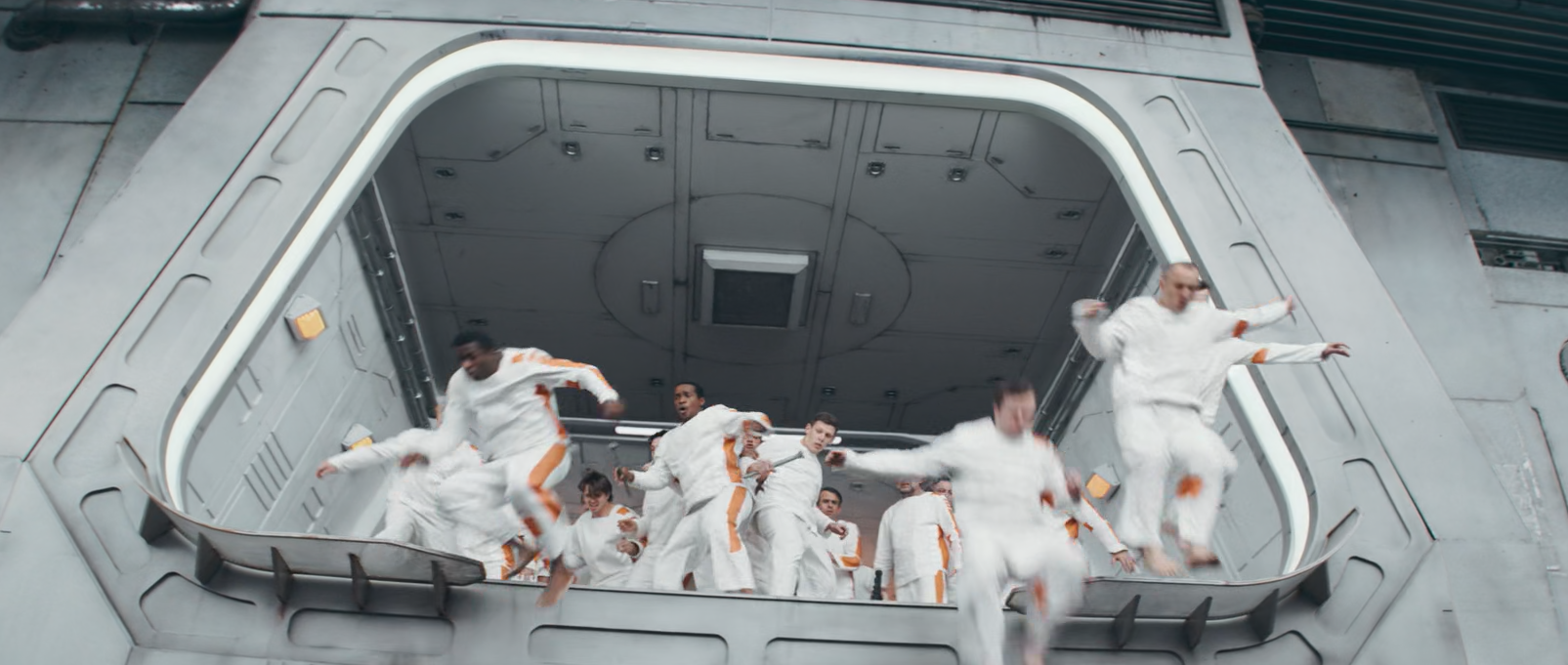
...um...they're going to swim to...
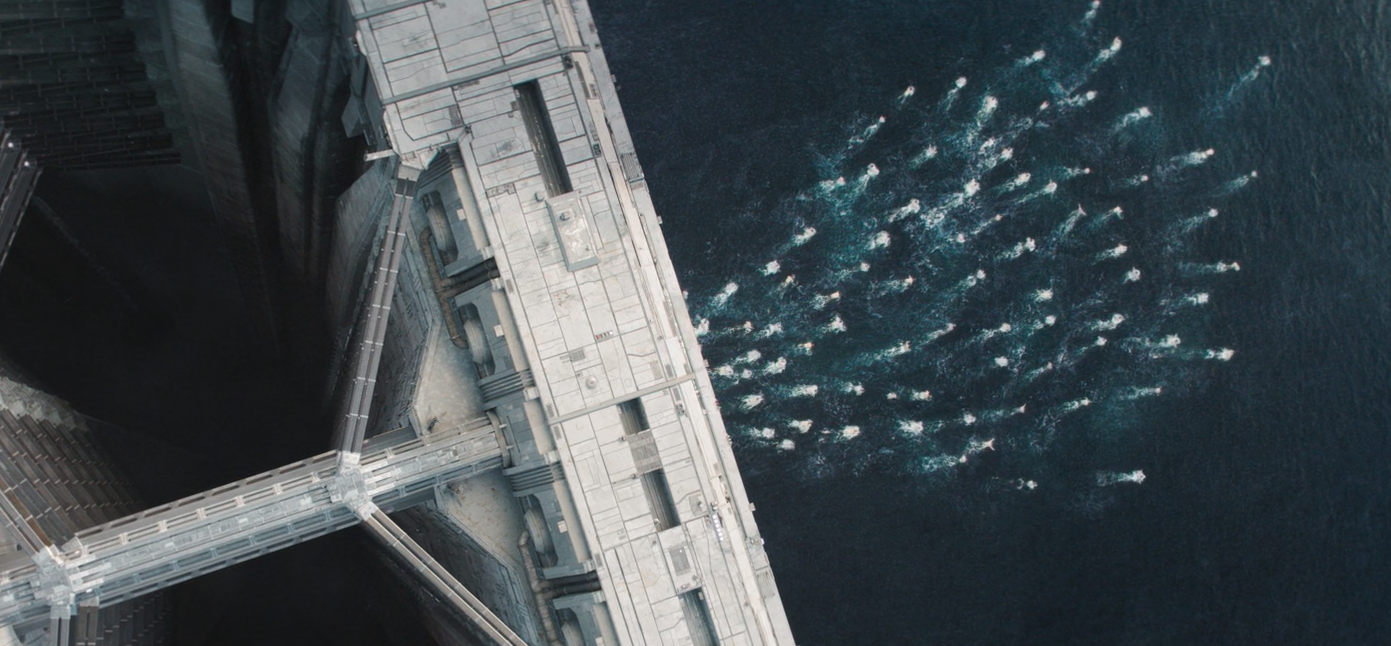
...I have no idea where the hell they're planning to swim to. Or even how they plan to swim any meaningful distance at all, what with how exhausted (and literally sleep deprived, for half of them) most of these men are.
I'm not trying to be a pedant or a killjoy or anything here. I'm really not. But remember, this is the broad view we got of the complex back when Cassa was first brought to it in episode eight:
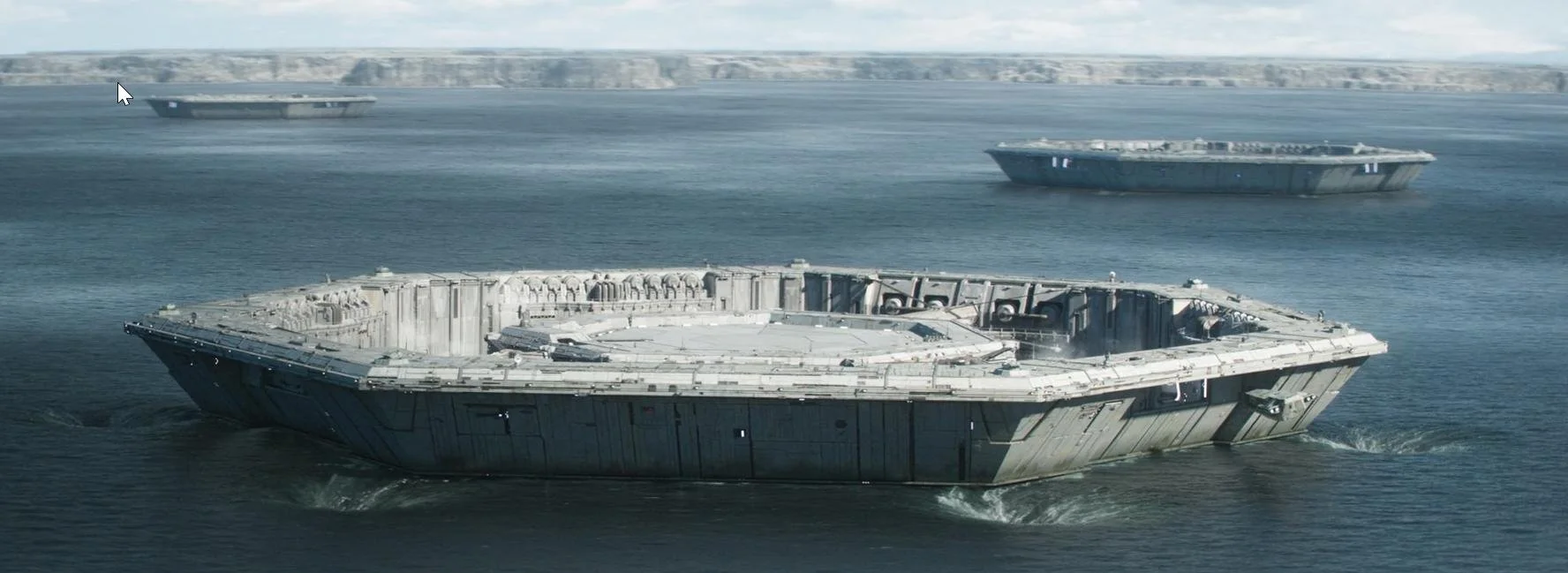
There are several of these rigs. Each separated from both one another and the shoreline by what looks like at least a few hundred meters of open water. I guess it's possible that this is in a bay, and there's another shoreline much closer to them right behind the camera, but that's a) hardly guaranteed and b) even if it's the case, that's not exactly going to be a doable swim for any but a few of these exhausted, largely unhealthy people.
Not to mention that, um. If there are multiple rigs, then wouldn't the guards on the neighbouring ones react to what's going on? I guess they might not have any means of doing so, if these platforms really don't have any kind of emergency air or watercraft kept aboard. But even in that case, I don't think that this lush-looking moon with a breathable atmosphere and hospitable climate is supposed to be uninhabited besides the one prison complex. Even generously assuming a nearby shoreline out of frame, it's going to take the escapees some hours to swim ashore, get off the exposed beaches, and go to ground somewhere that they can survive. Is that really not enough time for the guards to call in air support from the nearest base?
Put simply: I just can't believe this. I can't believe that any of these escapees actually survived and avoided recapture.
To be fair, the sentiment of "you're already dead, you might as well fight first" is repeated several times throughout this whole sequence. So, maybe we're supposed to assume that they all DID die, and that these deaths were just more meaningful and dignified than they would have been otherwise...but in that case, I feel like it would make more sense for them to just sit tight, help themselves to the guards' food and beds, and prepare for suicide by cop when the inevitable reinforcements come. And it also raises the question of how Cassian is supposed to keep being the protagonist after this point.
And even if we ignored the impossible swim, just the act of being made to ask these questions is bringing other things to mind. Smaller issues I took with earlier parts of the escape sequence that I didn't think worth making a big deal of at the time, but now I can't get out of my mind.
Why wasn't there a drain in the bathroom? It had water pipes running to traditional sinks and toilets in it. Why wasn't there a drain? Prison bathrooms do have drains, generally speaking, and sea-based facilities are built to be especially drainage-conscious. Why didn't this one have drains?
Why were the guards armed only with shock-truncheons and blaster rifles? With the way the prison floors and their access points are set up, wouldn't flashbang grenades be THE most obvious piece of backup weaponry to give them? Or just ANY kind of automatic or area-of-effect weapon, for that matter? I'm not talking about expensive or esoteric gear here.
What about the electrical panels on the hallway floors connecting the wards? Remember, while killing large numbers of people runs the risk of shorting out the wiring, the lower-powered nonlethal shocks aren't nearly as demanding (Cassa's introduction to the prison demonstrated this). The guards are all wearing rubber boots to specifically protect them from those lower-powered shocks. Why didn't the warden have the hallway outside the compromised ward electrified as soon as the guards went down, paralysing the escapees until reinforcements could arrive? The power still seemed to be on in that hallway even after things shorted out on the workfloor. The lights etc weren't effected like they were inside the ward.
Why aren't the guards on the neighbouring platforms climbing up on deck to shoot the escapees like dogs as they swim past?
Like I said at the beginning, these are smaller problems that I'm willing to gloss over or make up my own excuses for as long as the rest of the story is working for me. But when I saw the escapees triumphantly swimming away into open water surrounded by other, still-secured prison rigs and heard the upbeat victory music, they all just came bursting right back up again.
The (intended) knife twist at the end of this sequence is Kino revealing - after they've made it to the entrance - that he can't swim. He knew that this escape plan would require them to do a lot of swimming, but he committed himself to the plan anyway and kept the truth a secret until he couldn't any longer. Moreso than anyone else involved in the escape, Kino took the "I'm already dead, might as well fight instead of letting them take the spoils of my labor" sentiment to heart. Other inmates might have faced a strong likelihood of death in the process of escaping, but for Kino it was a one hundred percent certainty.
That's powerful. It's tragic. It's inspirational. But given how lethal what the other escapees are doing SHOULD be, I'm not sure if it actually sets him apart as much as the story wants it to? He's not actually any more or less suicidal than anyone else among the escapees in these conditions. Not any nobler or more self sacrificing.
Ehhhhh.
I want to like this. I want to like this so damned hard. The themes, the cinematography, the catharsis, it's all so good. But, alongside all that awesome stuff, my suspension of disbelief has been broken. Which, coming after all the pacing issues that the previous couple of episodes have had, it...
I don't.
No. No. I don't want to say this.
It was SO GOOD in SO MANY other ways, but.
...do I have to?
It's good though, I liked it, I don't wanna...
I guess I have to, don't I.
Okay.
The Narkina V arc, taken as a whole, is the worst part of Andor. From the hamfistedness of the initial random arrest (for all the good subtext that it carried) at the end of episode 7, to the stagnant amorphousness of much of episodes 8-9, to the SOD-breaking aspects of the escape in 10 now. There's just too much wrong with it. For all that it also did right, there's also just too damned much that bothered me.
It hurts me to write those words. But looking at them on the screen now, I can't bring myself to delete them.
There's just one more scene left in this episode. It's a long one with a lot to talk about though, so I think it calls for its own post.