Star Wars Andor S1E10: "One Way Out" (continued more)
In an unlikely corner of Coruscant, a man rides an elevator down into the lightless infrastructure of the undercity. It's a man we've seen once or twice before, though I don't believe he's been named. One of the Imperial Security Bureau directors who we've seen either butt heads or meet minds with Dierdre on occasion. Most recently, we saw him add some clever details to Dierdre's latest counter-insurgency op to make their trap less likely to be sniffed out. Dierdre looked a little miffed at having someone else point out a flaw in her plan, but she also recognized the wisdom of his proposal and managed to affect gratitude for the helpful tip. The ISB bossman also approved.
...
Speaking of which - just as an aside, and related to some earlier musings I had about the security bureau and its role within the military - the ISB bossman is apparently a recurring character from "A New Hope." Specifically, he's a slightly younger version of one of the officers who says, like, one line to Grand Moff Tarkin in a conference room scene.
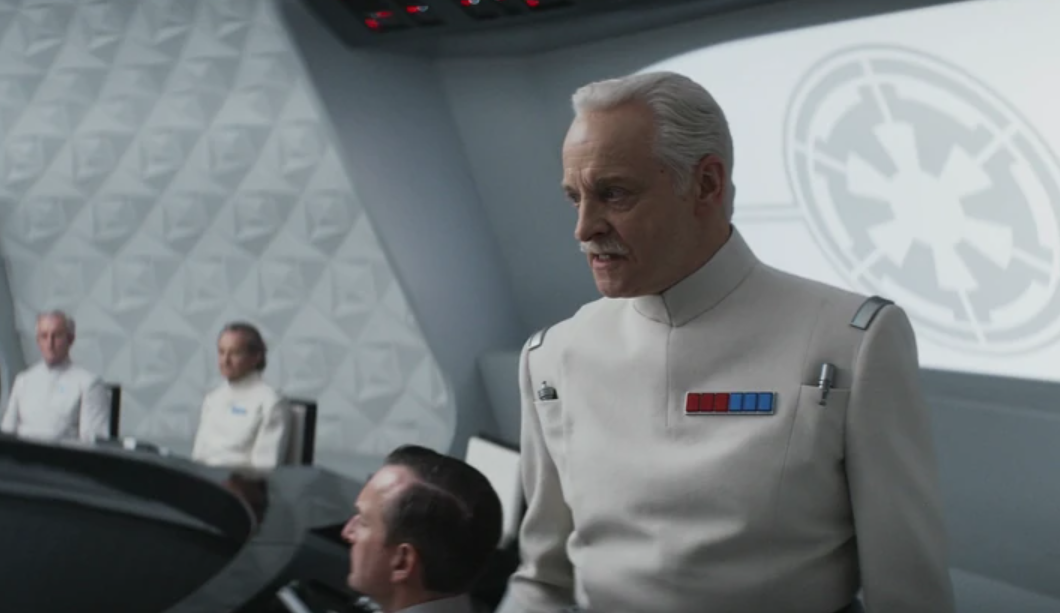
Andor. (wookiepedia)
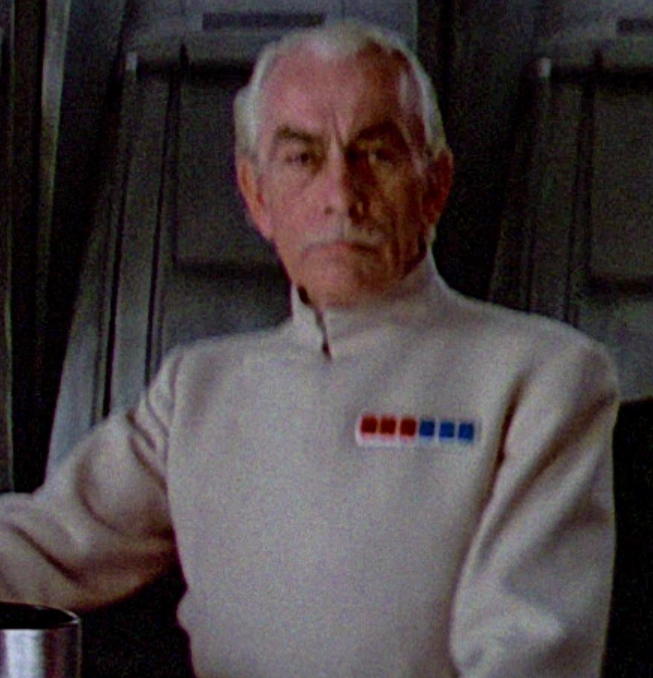
A New Hope. (wookiepedia)
It's doubtful that the Imperial military and security establishments were fleshed out in detail back then. However, his white uniform actually *does* kind of stand out within the boardroom scene where everyone else is wearing shades of olive-grey. I'm definitely willing to entertain the possibility that George Lucas or whoever did the costuming for him in ANH thought "let's have a couple guys in different-looking uniforms to represent security and political services present aboard the death star."
So, yes, the ISB was indeed seen back in the original trilogy! It might not have been named or detailed yet, but it was visible. That's cool.
Anyway, back to talking about that other minor ISB character in Andor for now.
...
Lonni. His name is Lonni, and he has a mustache.
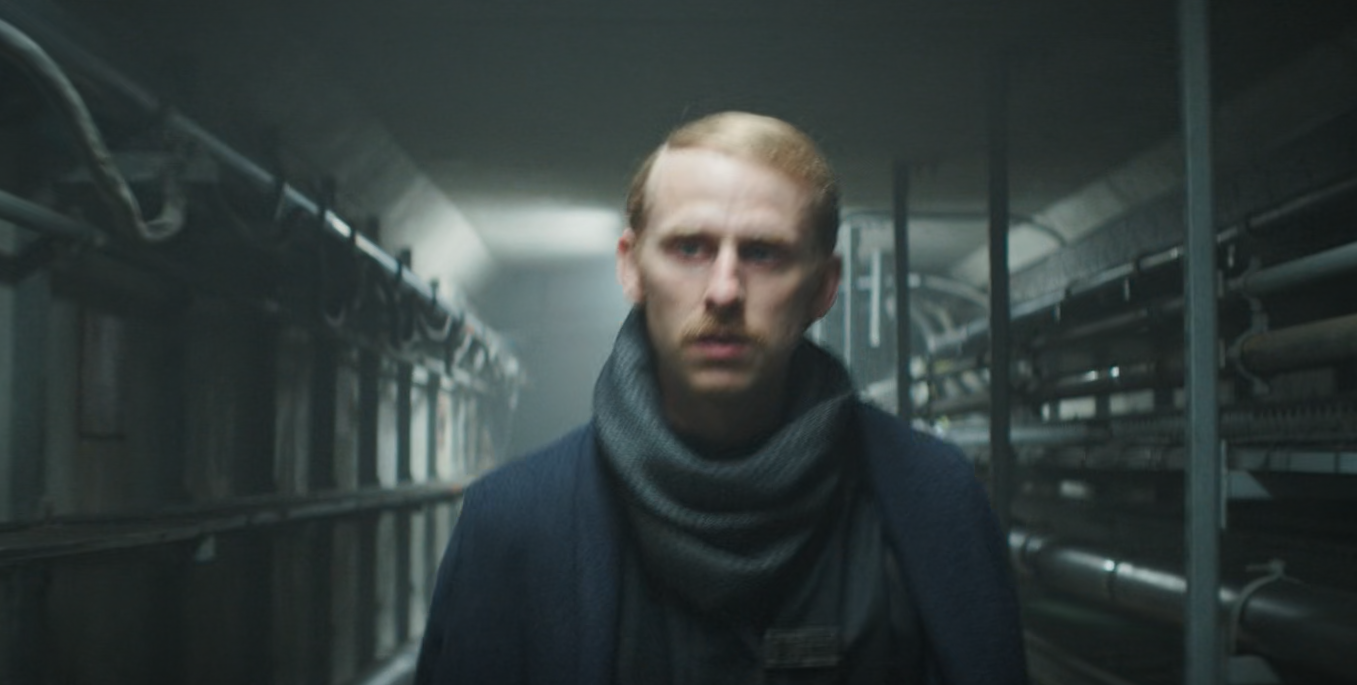
Anyway, Mustache Lonni takes an elevator down into the underhive. He looks agitated. Worse than that, actually, he seems frightened, resentful, and exhausted in equal measures. "Dread" is probably the best word to describe what he looks like he's feeling.
He gets out of the lift, gets into another lift that goes down even deeper into the artificial wasteland underhanging Coruscant, and finds the earpiece hidden in the compartment. He puts it in. Luthen congratulates him on his daughter's recent birthday, especially with how healthy and still alive she is. Isn't it great how she's healthy and not murdered? It really is great.
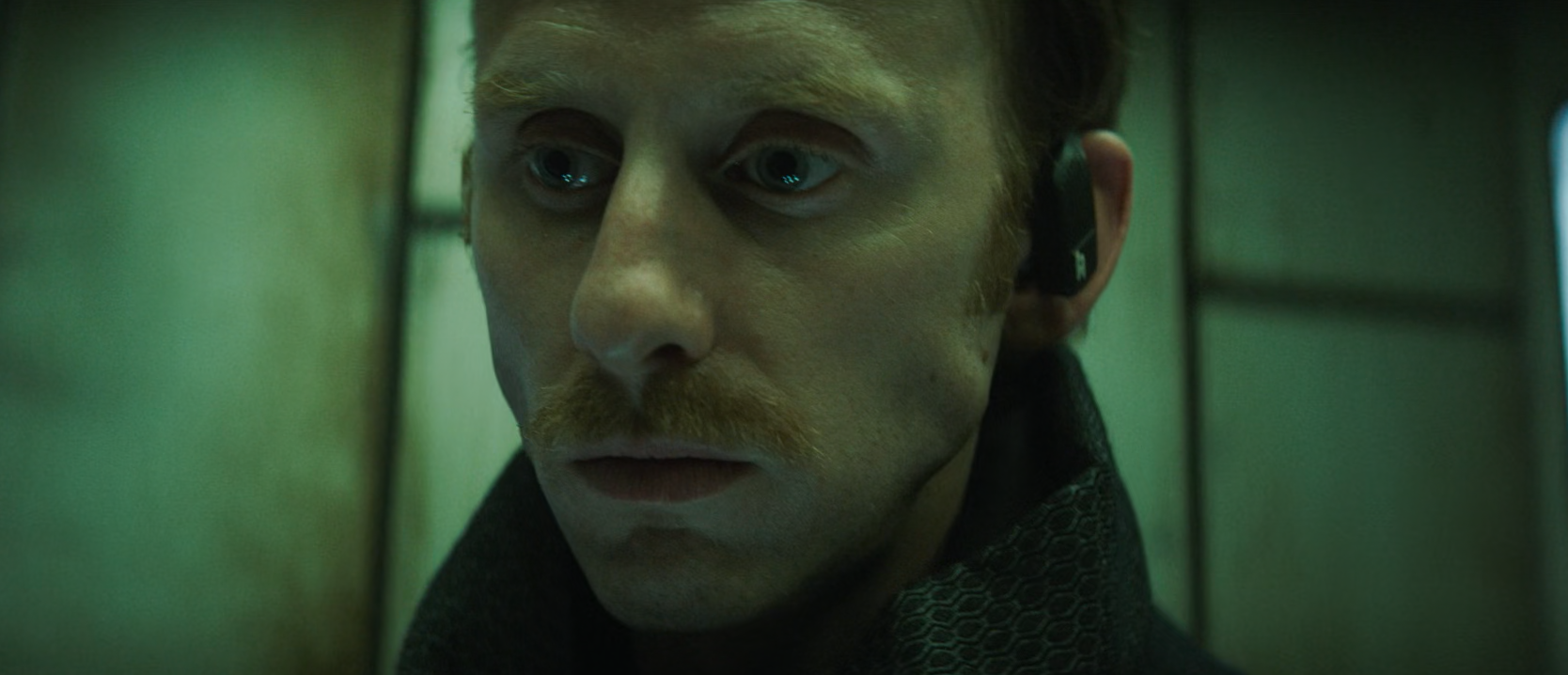
Heh, I kinda suspected that that's where this was going when I saw one of Dierdre's coworkers head into the undercity looking stressed. But man, Luthen really is a drama queen when he can get away with it. I'm kinda surprised he's not disguising his voice, but that might just be for the audience's sake.
Also, the next few words the two of them exchange after the barely-veiled threat:
Lonni: "Do you ever think about how this feels, for me?"
Luthen: "Oh, I think about you constantly."
That's a 10/10 from me.
Anyway, Lonni hastily informs Luthen of the recent goings-on at ISB command. Specifically, how this "Axis" character who agency rising star Diedre is hunting potentially sounds like someone who Luthen might not want to be hunted. Axis has apparently been involved in the trafficking of stolen imperial naval technology, which Lonni knows Luthen smuggles a lot of, and that she's just connected the Axis-linked thefts to the payroll heist at Aldhani.
Luthen, wisely, claims to be pleased at this development. And - perhaps more honestly - claims to be even more pleased that she's set up a big operation on Ferrix trying to look for Andor. I say "perhaps more honestly" because Luthen's own agents have been monitoring Cassa's home for some months by this point, and if they haven't seen any sign of him then odds are he's gone from Ferrix for good and the more time Dierdre wastes tearing the place apart the better. When Lonni asks him if Aldhani really did have anything to do with his organization, Luthen laughs and says that "we were invited, but declined," and pretends to kick himself for writing off the plot as too risky when it would then go on to be such a brilliant success without him. Hehe, well, he'll know to be less pessimistic next time.
I doubt Lonni believes him, but Luthen's got to at least try.
Anyway, the most substantial (and, honestly, shocking) part of this debriefing comes when Lonni tells Luthen about the operation that he and Dierdre are planning against one of Luthen's allied paramilitary groups. Luthen now has the ability to warn his contacts in that group of a planned ISB ambush and prevent them from suffering significant losses.
He decides not to do it.
Instead, Luthen opts to sit on that information and allow a valuable ally to lose valuable resources - not to mention the very real lives of earnest, dedicated freedom fighters - to the ambush. Because, if he did warn them, and the ambush was foiled, the ISB would realize there's a mole. The ensuing inquisition would very likely result in Lonni getting caught, and having an ear to the ground in the ISB's upper echelons is more important than the lives of these guerillas who are trusting Luthen.
Luthen's calculus may be correct. Maybe. It sort of hinges on how likely his own allies are to find out about this. However, given the circumstances under which he gained this intelligence, and the absence of any proof of him having had it...well, yeah, his calculus is probably - unfortunately - correct.
And then that leads into a much more shocking twist, when we see Lonni's reaction to Luthen's declaration.
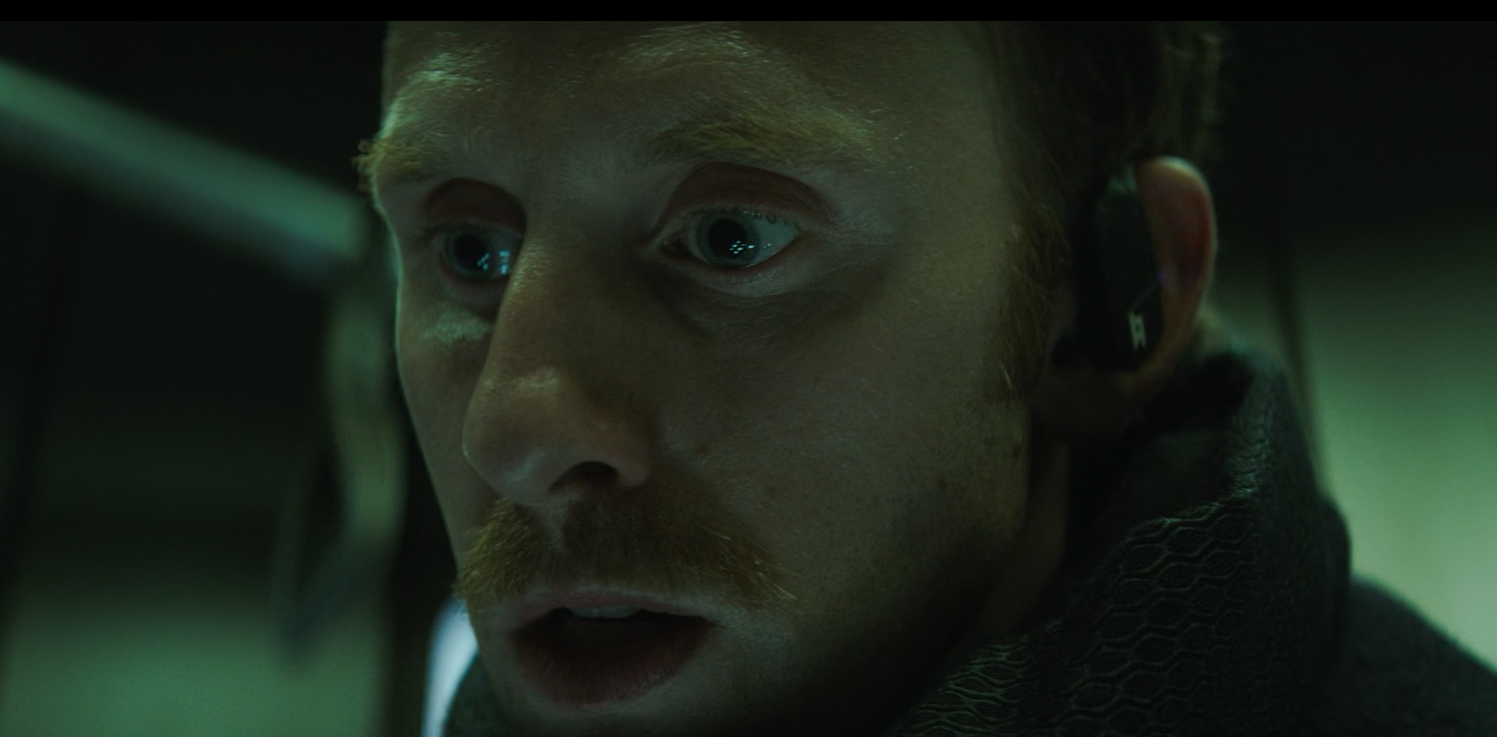
It turns out that Lonni isn't just some cowardly worm who Luthen managed to reel in on chains of blackmail. He's actually a dissident. Whether he infiltrated the ISB from the ground level or just got disillusioned once he was already in, Lonni is actually rooting for the rebels, not just rooting for himself and his family to not get in trouble. Luthen threatening his daughter, therefore, is just added insurance layered atop the fact that Lonni actually wants to undermine the empire.
At least, that's how the rest of this exchange makes it seem. Maybe Lonni's loyalties are actually more complicated and less aligned with the resistance than it appears. But working off of what's been actually shown so far, Luthen is looking really, really bad. Pushing your underlings this hard and this needlessly is - in addition to being petty cruelty that serves little purpose beside propping up one's ego - actively counterproductive for building an effective organization.
Well, maybe the situation is more complicated than it currently looks.
The elevator suddenly reaches its deep underhive destination, and the door opens to reveal Luthen here in the flesh.
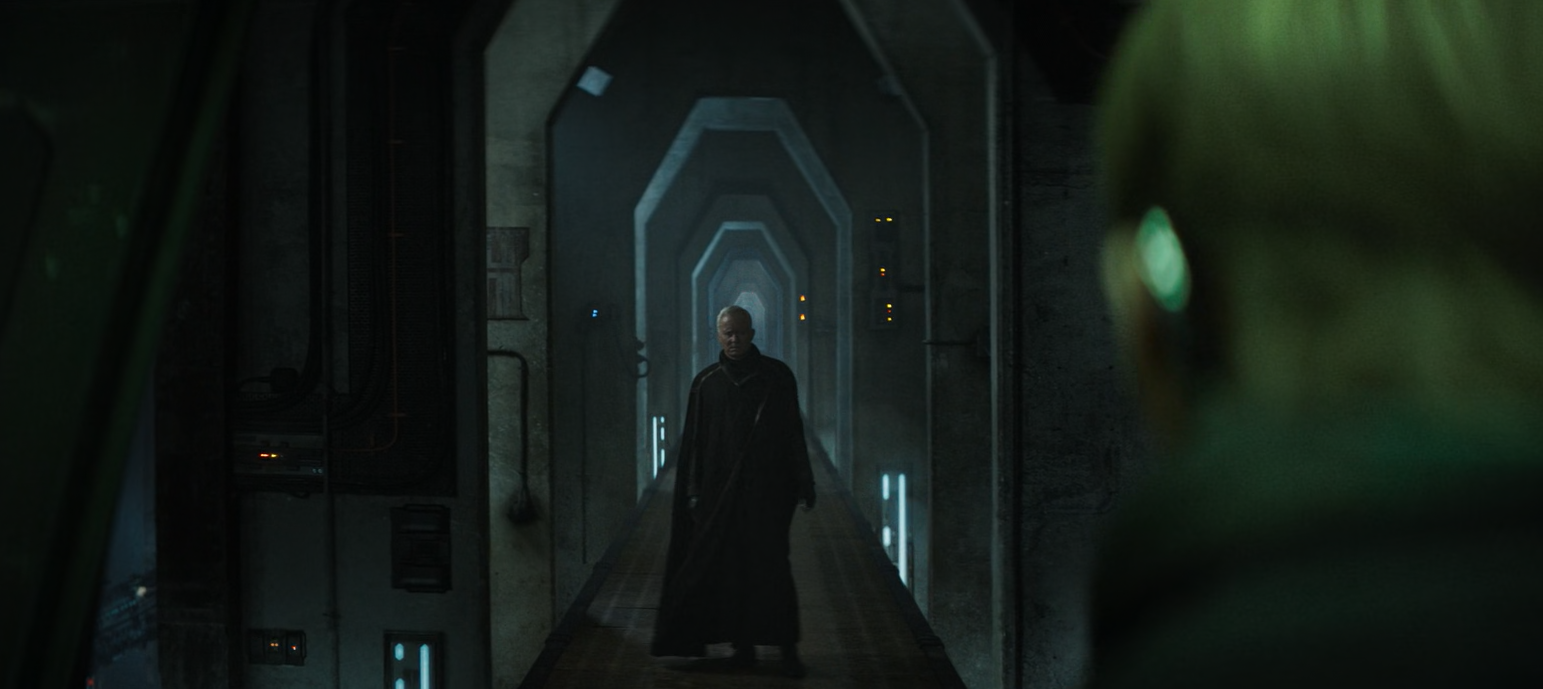
...
I'm not sure what the point of the protracted teleconversation was if they were about to meet face to face in a few seconds anyway, lol.
...
So, what this was all building up to is that Lonni wants to retire. Retire from the ISB, and - necessarily - also from Luthen's network. He's a married man and a father now, and he doesn't want to be doing this anymore. He's going to manufacture a health problem for himself that will force the ISB to let him go, and then take his family and get them somewhere far away from everything.
Luthen tells him that his retirement petition will not be accepted at this time.
The cinematography does some interesting things here. Framing the elevator shaft that Lonni is standing in like a prison cell, with Luthen standing before the doors and barring his escape like a guard. A piece of imagery that's much easier to identify after multiple episodes of watching Cassa in a literal prison.
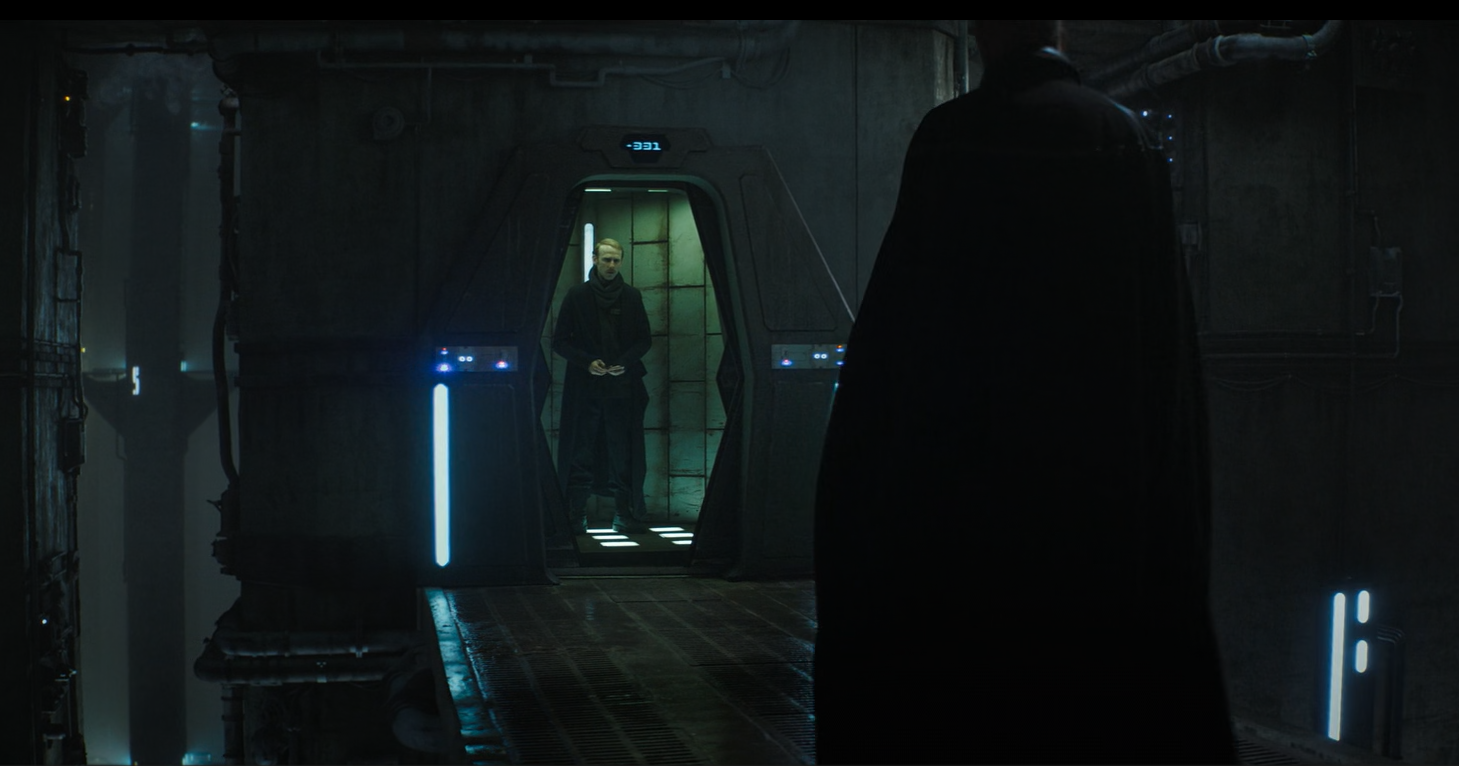
Luthen's choice of words when he shuts Lonni down make it clearer than ever that Lonni is an ideological, anti-imperial agent, not just someone Luthen's turned. Lonni joined the ISB (or its Republic predecessor organization? I'm not clear on when exactly post-RotS the ISB was established. Or maybe it was just renamed from the Republic Internal Investigations or whatever and handed a bunch of new powers) for the purpose of infiltrating it, and he's been motivated by that for all the years that he's been working his way up the ranks. Luthen clarifies that he wasn't actually just being spooky when he said he's always thinking of Lonni; he legitimately admires his ongoing act of heroism by living this lie day by day for years on end. Lonni is a true hero, and the resistance can't afford to lose any of its precious heroes right now.
...
That's...kind of rich coming from the guy who wanted to murder Cassa just for being a loose end. Let alone also, just in this very scene, declared his intention to let his allies walk into a trap and lose an expected fifty or so fighters.
I don't deny that Lonni is much more valuable than any of the above, by virtue of his placement. The galaxy needs him where he is, and the risks to his growing family are unfortunate neccessities. But "we need all the heroes we can get" is just not the most honest phrasing of Luthen's position.
...
Lonni asks Luthen that, with all the sacrifices he demands from other people, with all the other people who he sacrifices for the cause, what does Luthen himself actually give up? What personal sacrifices is he making as he sits in his cushy high-society nest on Coruscant and builds his rebel empire on coercion, fear, and blood? His answer is one that gave me some very mixed feelings. Largely on account of both who's saying it and - perhaps more importantly - who he's saying it to.
Luthen: “Calm. Kindness. Kinship. Love. I've given up all chance at inner peace. I've made my mind a sunless space. I share my dreams with ghosts. I wake up every day to an equation I wrote 15 years ago from which there's only one conclusion, I'm damned for what I do. My anger, my ego, my unwillingness to yield, my eagerness to fight, they've set me on a path from which there is no escape. I yearned to be a savior against injustice without contemplating the cost and by the time I looked down there was no longer any ground beneath my feet. What is my sacrifice? I'm condemned to use the tools of my enemy to defeat them. I burn my decency for someone else's future. I burn my life to make a sunrise that I know I'll never see. And the ego that started this fight will never have a mirror or an audience or the light of gratitude. So what do I sacrifice? Everything!”
On one hand, this speech does say a lot about the ugly truth of rebellion - of any kind of warfare, really. "I'm condemned to use the tools of my enemy to defeat them" is a particularly powerful line, especially with the accompanying prison-like visuals. It's also cold water in the face for anyone who might have been coming straight over from the mainline Star Wars movie entries, which show only the heroism of anti-imperial rebellion and not the horror.
Luthen is also making it clear that he does not plan to survive this conflict. As soon as his own life isn't strictly necessary for the rebellion's success, he'll be throwing it into the blender after all the others he's tossed. Why would he even WANT to live to see the sunrise? With all that he's done, all that he still plans to do, he knows that there won't be any place for people like him in the light. In...some...ways I suppose I can respect that sentiment, though I'm a bit sceptical of Luthen's own ability to assess exactly when his own life should start to be considered as expendable as everyone else's.
To be even more critical of the man, though, this speech says more about Luthen than I think he intended it to. And I think that self-acknowledged ego of his is still very much impairing his judgement, even though he thinks it's been broken for want of a cheering audience.
By writing himself off as a moral being, Luthen is basically giving himself license to stop caring. The absolute necessity of any immoral action doesn't need to be established when he can just say "my alignment is Lawful Evil now, so I can do it." He relieves himself of the burden of having to distinguish between the necessary and the expedient. We've already seen that lead him to make some (minor, in the grand scheme of things, but still) errors in judgement. I suspect it will lead him to make bigger ones as the story unfolds.
In short, when Luthen says that he's sacrificed everything good and peaceful about himself, I feel like what he's really talking about is getting tired of having to weigh the costs and giving in to moral laziness. It's not *quite* the same brainbug as the usual "hard man making hard decisions" trap that people - fictional or otherwise - in positions like his often succumb to, but it's adjacent to it.
And...let's face it. He visibly has just a little too much fun being a supervillain.
Now, all that said? For all his flaws, Luthen is still the best that they've got. The rebellion needs people doing what he does, and they don't have enough of them to be choosy. Considering his overall competence in the role, I'd say they're lucky to have him. As painful as that might be to admit in light of everything I just went over.
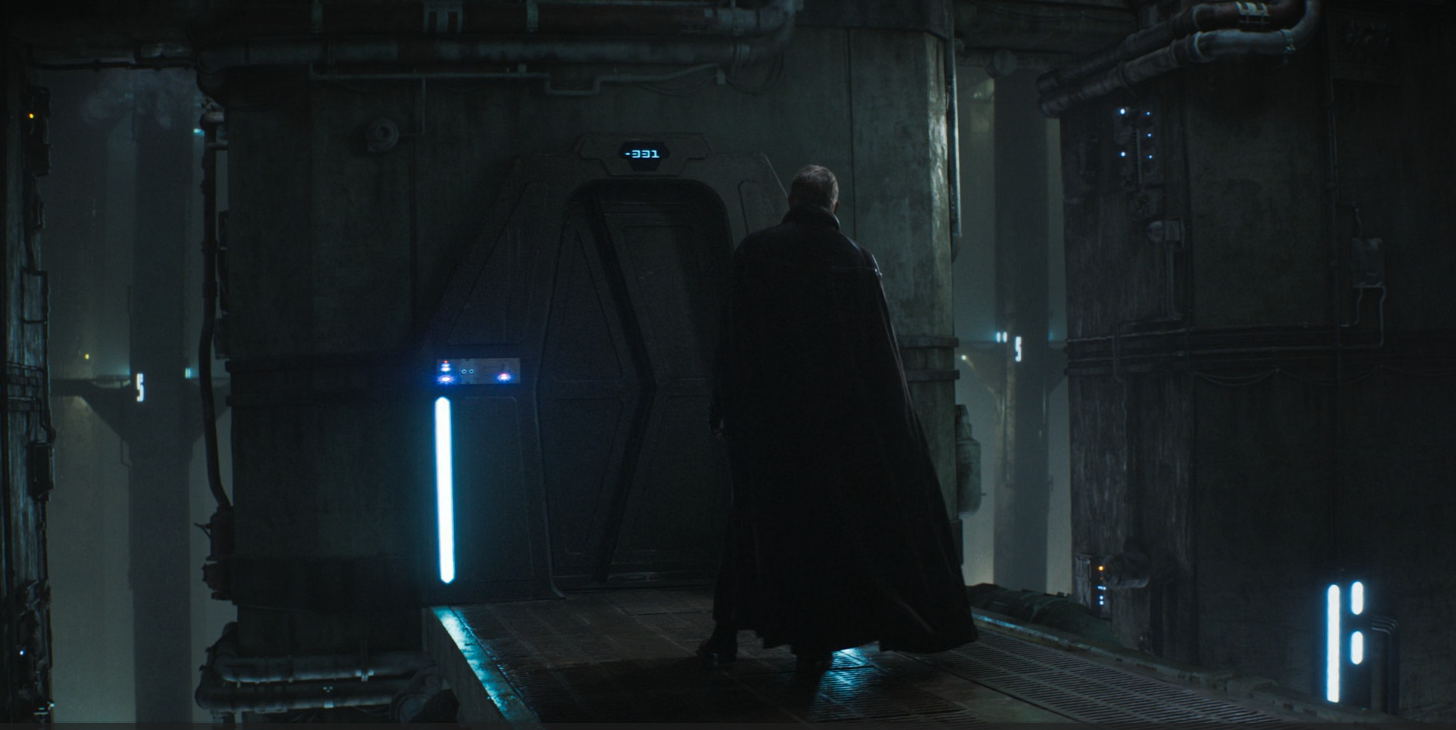
To be clear, these criticisms of Luthen are not criticisms of the story. He's a rich, interestingly flawed character, that's a good thing. l actually think that part of the point being made is that maybe moral laziness is unavoidable if you want to be a rebel spymaster and still retain enough sanity to be useful. Maybe the flaws Luthen has developed are the least bad outcome for a man in his place.
...
But, that said I also do have a criticism of the scene itself here. This being that - of all the people in the damned rebellion - I don't think Lonni is the one who should be listening to this.
We've seen enough of the ISB at this point to know how it operates. What its officers are expected to condone, order, and - in some cases - personally carry out as a matter of course. We had that darkly humorous moment where the head honcho nods understandingly when Dierdre bemoans how impossible it is to get information out of old people because torture will just kill them.
Lonni seems to be around the same rank as Dierdre, or just slightly lower. For him to have climbed to his current position, just think about the kinds of horrible shit he must be complicit in. How many different atrocities must - by sheer law of averages - have his fingerprints on them, in order for him to not break his cover.
Lonni is the absolute LAST person who needs to be lectured about moral sacrifices. If anything, this scene would make more sense if he was the one giving this speech to Luthen.
It is a great speech, don't get me wrong. Just, like a lot of other things about this episode, I feel like one more editing pass could have improved the context of its delivery.
...
The final scene of the episode is a brief, silent one. Cassa and some other escapees dashing across a beach lit by many moons. Struggling toward the dawn that many others - including Kino, who went into his death by drowning knowingly for the other's sakes - never got to see.
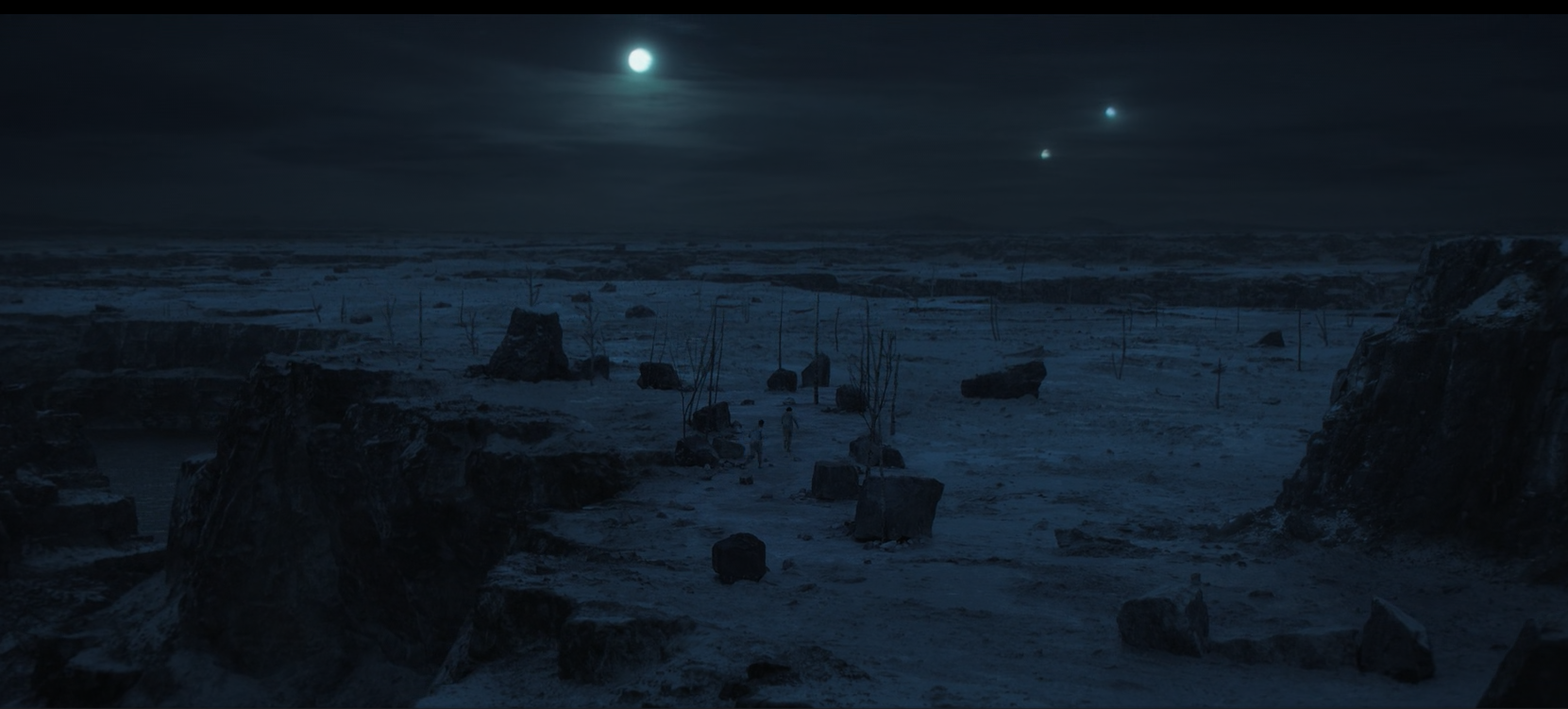
Honestly, I think "forced to use the tools of my enemy" is a much stronger parallel between Luthen and Kino. And, really, between Kino and Lonni.
Most of all, though, I think that Luthen's speech points back to the inciting incident of the entire series. Cassa being accosted by those rent-a-cops on that causeway. Honestly, that scene and this one are almost bookends.
Star Wars Andor has been accurately described as a scifi spy thriller, or political thriller, or dark adventure story. Looking at the ten episodes I've reviewed so far, I'm going to propose an alternate interpretation. Not as a replacement, to be clear, more of a supplement.
Andor is a horror story in which violence itself is the monster. Like many horror stories, this one sees the monster winning.
Throughout my critic career, I've reviewed a lot of existentialist-leaning media that explores the nature and importance of power. I am also a strong believer that - within the social arena - power is synonymous with the ability to cause violence to happen in the direction of one's choosing. Consequently, I've done a lot of prattling about the virtue of self-empowerment, and may have erred on the side of valorizing or even sanitizing power.
I will take this as an opportunity to correct that.
Power is inescapable. It is an emergent property of the laws of physics and biology that we live under. Power is also, fundamentally, evil. This is the reason that I can not and will not ever be convinced that a benevolent God exists.
Power is important because of how bad it is. Having power is desirable insofar as it will not persist in a vacuum, and if you don't take responsibility for the power inherent to your existence then it will instead be accumulated by someone who wants it.
Not using the power that you have is, itself, a use of power.
The least bad way to use power is preventing other power from being used. The best way to effectuate this usage is by distributing power more evenly.
Now, with that said, let's look at how the ultimate application of power - killing other people - is characterized in "Andor."
...
A man walks down a nighttime causeway. Two other men suddenly jump him, a serpent's fangs biting from the darkness. Violence is initiated eagerly, greedily, thoughtlessly, as they beat and prod him before going through his pockets.
The victim knows what these fools have just half-awoken. He doesn't want it to wake the rest of the way up. So, he tries to put the lid back on the box. He lets them rob him, hoping that cash is all that they're after. He doesn't need that cash to stay alive and free, and he is wise enough to know that his only other option will indeed jeopardize his life and freedom.
But then they keep prodding him. And then they find the gun. The coils pull tight.
A few seconds later, one of the attackers is dead. Nobody wanted this, but everybody caused it to happen. Now the erstwhile victim has a gun to the head of the surviving attacker. They feel the cold scales pressing in. Muscles squeezing tighter, tighter, tighter with every one of their laboring breaths. These two men were enemies a moment ago, but now they find themselves allies, working together to push back against the coils. They struggle against the vise, and in that struggle they lock eyes and meet minds.
And then the snake crushes them, and Cassa pulls the trigger. And then everything else just follows naturally from there.
The damned thing would have stayed asleep in its cage if not for two drunk idiots getting greedy.
...
The inciting incident of a horror story is a transgression. Someone does something that they shouldn't have done, and the monster is freed to wreak havoc. Sometimes that transgression is done with the intention of awakening the beast. Most often it is not.
Take a little more. Extract a little harder. Cut more corners. Drop more human lives into the wastebin. What eventually happens won't be an equal and opposite reaction. It will be a demon invited in.
At the beginning of episode one, we see Cassian trying to prevent that invitation from being made. At the end of episode ten, we hear Luthen describe what it's like being among the possessed. On this level, Luthen isn't just speaking for himself in that monologue. He's speaking for the entire rebellion, and everyone effected by it, and everyone effected by them in turn. It's not his fault for building the resistance network, though, any more than it was Cassa's fault for killing the rent-a-cops. They're in these positions because someone wanted to take just a little bit more, make the line go up a little bit higher, or have one more shiny medal pinned to the front of their uniform.
Like fat, brainless pigs, nibbling at a land mine.
Cassa is responsible for the deaths of those two guards, but they were responsible for making him responsible. Luthen and his colleagues are responsible for untold quantities of death and suffering, but Palpatine is responsible for making them responsible. They were the ones who let violence out of its cage just to sate their greed or egos. Such stupid, stupid, stupid fucking reasons to wake up a monster.
Unfortunately, once it's been woken up, the only way out is through.