All of Us Are Dead S1E2
The first half of this episode is about just how reluctant the machine is to recognize a problem, let alone respond to it. The social satire gets pushed a little too far for my SoD here; I appreciate what it's saying, but it overstates its point badly enough to stumble into some risible old B-horror cliches that the series has otherwise been better than. The second half deals mostly with the series' core theme of will to live, and - while there are some weak moments - it overall holds itself together much better than the first half.
The cinematography continues to be amazing throughout. There's a delicate blend of the long, sweeping, bird's eye shots on the one hand, and deliberately amateurish-looking scenes when we're up close and personal with the characters dealing with their situation that almost seems to be going for a Found Footage vibe on the other. The transition between the two types of camerawork are sometimes jarring in the moment, but once a scene gets going you get sucked IN to whatever atmosphere the show is going for right now. You're right there with the characters hiding in the classrooms and fleeing through the bloody corridors. You're also, alternatingly, flying over it all like an invisible spirit, observing the frail mortal creatures struggle against their mechanical prisons of concrete, wood, and flesh, wishing they could escape and come fly with you.
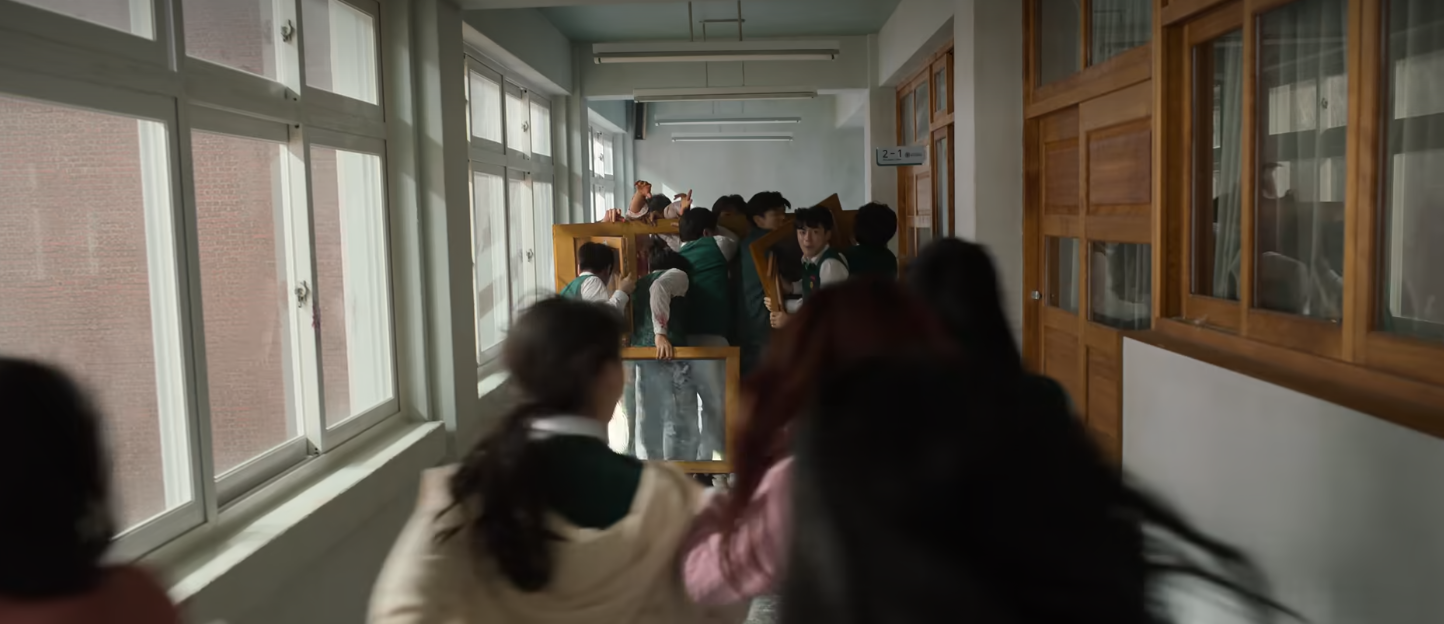
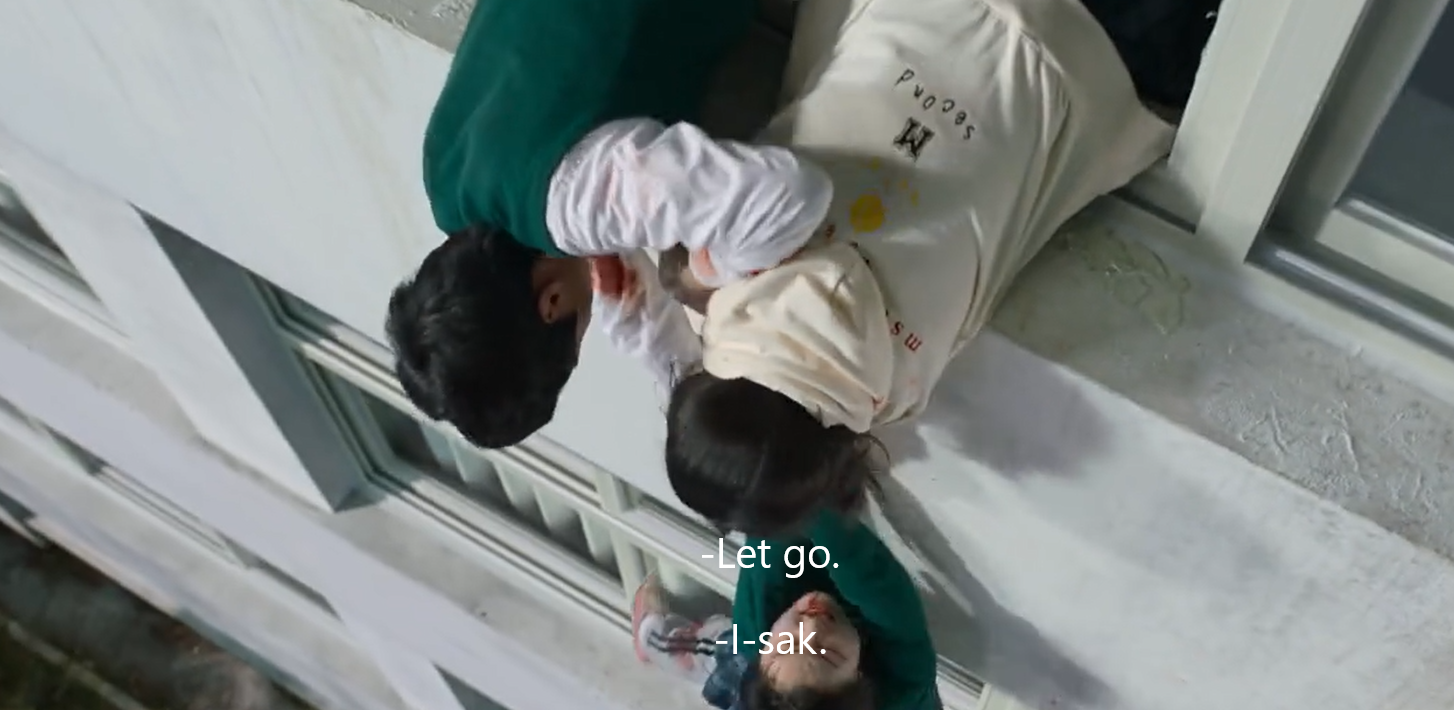
It isn't that often when the show manages to merge the two visual styles in a single shot, but there are a few moments in this episode where it does, and they're some of the most impressive bits of the show.
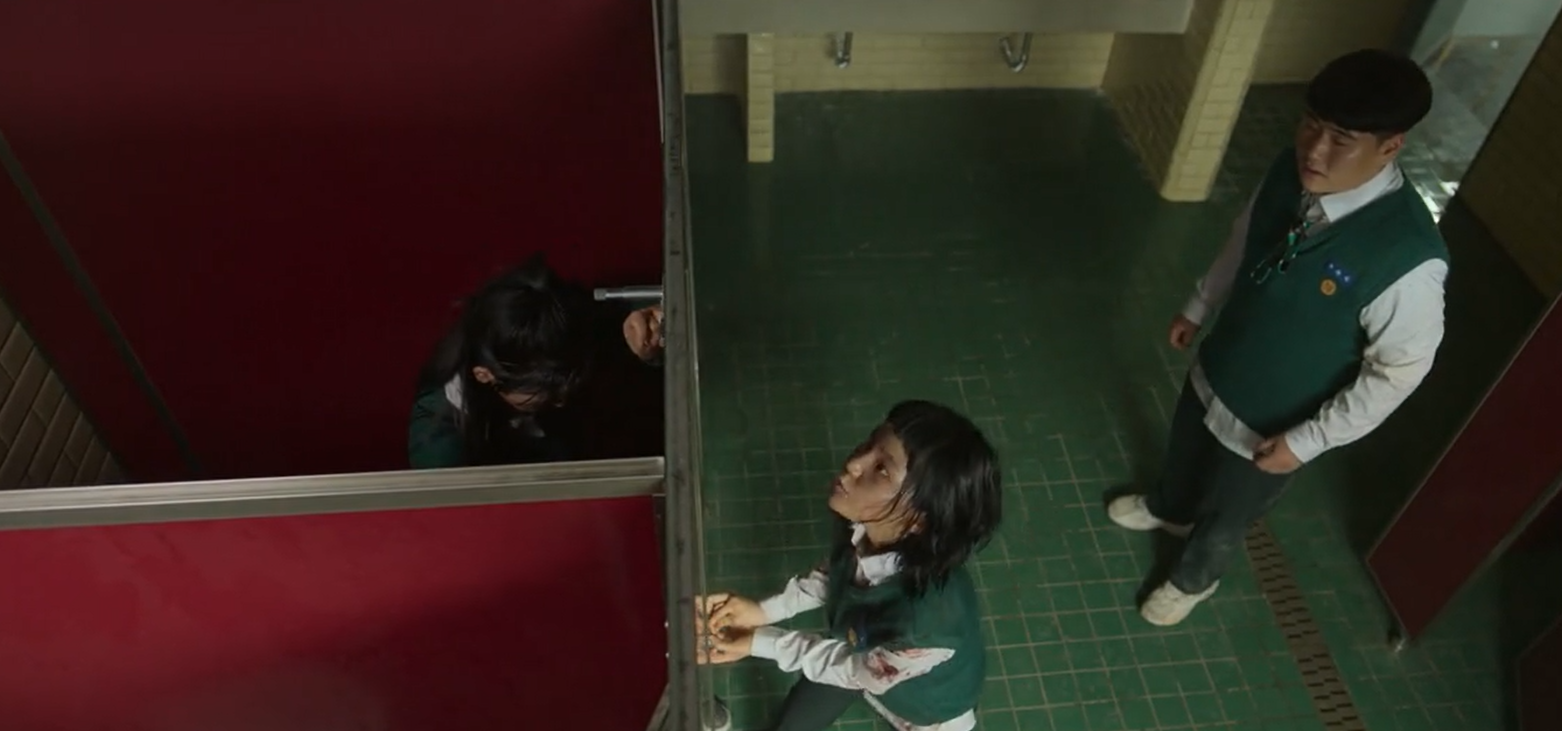
The soundtrack also starts to really come into its own in this episode. It was fine in the pilot, but there were a few scenes this time around where it really wormed its way into my brain and made me feel the atmosphere. I wouldn't have particularly thought "lo-fi zombies" would be a good combination, but it works here.
Well, as for what happens in it now.
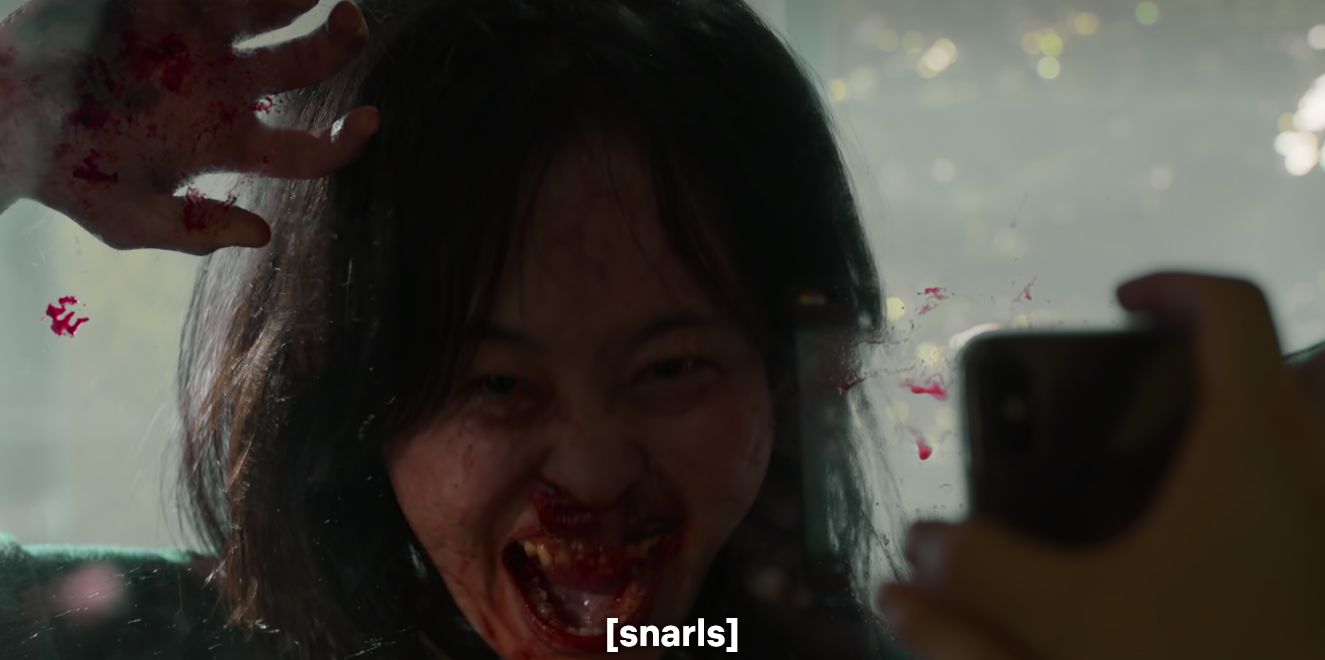
After some frantic scenes of the students (and a couple of staff members) struggling to escape from the sudden attack (including a standout action scene involving a cafeteria fire suppressant system), the episode takes some time to deal with outside response. Or, more accurately, the lack thereof. Toward the end of the previous episode, the story made a point of showing us that the homeroom teachers collect all the kids' smartphones before they begin classes for the day. With zombies prowling the halls and preventing access to the school's handful of office landlines, the modern world's ubiquitous communication networks are suddenly and unexpectedly yanked out of the students' reach. They do eventually manage to get their hands on a smartphone, which leads into a darkly comedic (and simultaneously very tense) scene where - in order to bypass the password protection - one of the kids has to find the phone's zombified owner growling at them through a hall window and bait her into holding still long enough for the phone camera's facial recognition to work.
It turns out that the onus isn't just on the kids to call for help, though. Several staff members and teachers have indeed survived the initial slaughter and have access to phones of their own. Which they use, eventually. It takes a little while though, because that principle still doesn't want to humiliate the school and his tenure over it by calling in outside agencies rather than handling the situation internally.
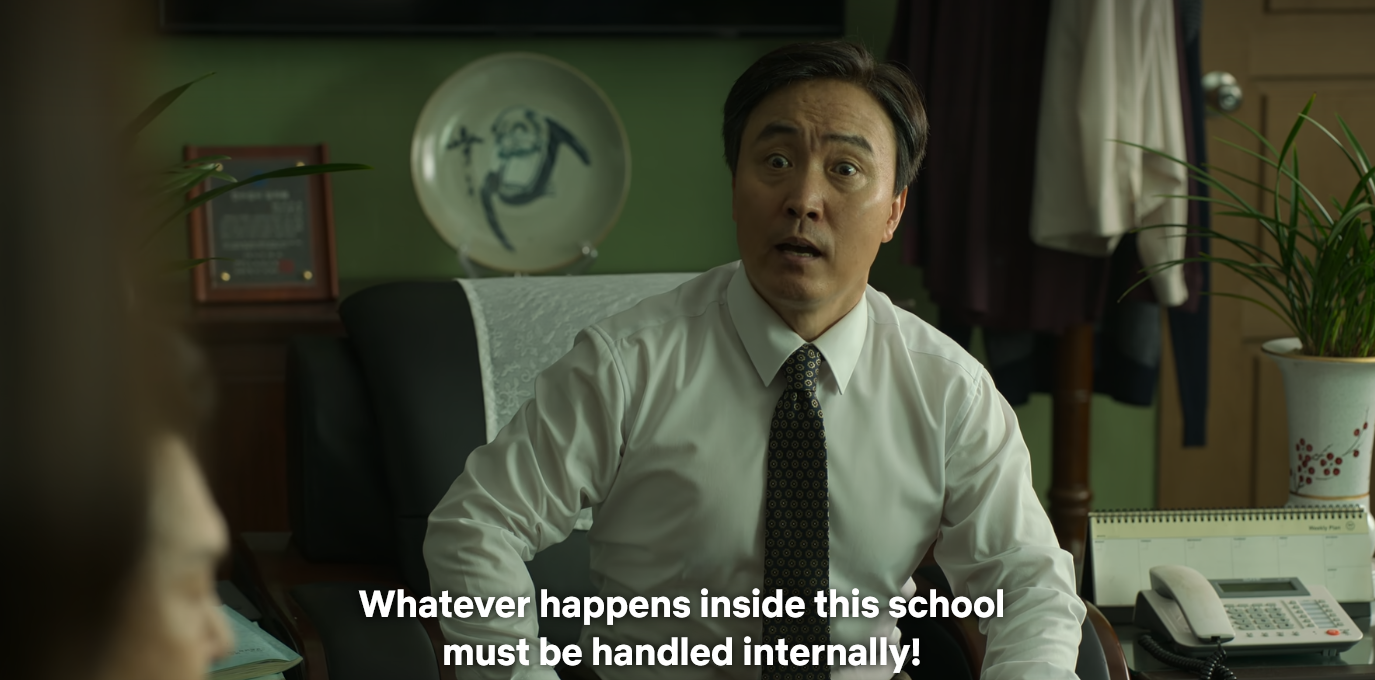
He even answers a call from the police to the school main office and assures the cops that anything they heard was a hoax, they should ignore it.
On one hand, he hasn't seen the blood or the zombies himself yet at this point. On the other, he knows that several of his staff are MIA, and several others are sitting in front of him unanimously telling him that violent, murderous mobs are rampaging through the hallways.
This is one of the moments where the show sacrifices verisimilitude in the name of satire. And like, sure, I get it, man is so obsessed with career and reputation that he'll literally lock himself and his coworkers into a cage full of monsters before asking for help. But the execution here goes too far into caricature for me to see this guy as a human being like the other cast members, and also..."useless authority figures trying to cover the outbreak up for no good reason" is just such a tired horror movie cliche. It serves a real thematic purpose this time around, but it's still textually indistinguishable from the hundreds of other instances throughout horror cinema where it's just a lazy plot device.
Fortunately, it's not a scene the plot hinges on, as several teachers and students do get calls out to the police, fire department, etc both before and after this scene. The response is still slow, though. First because, even without the principle's weird interference, it's hard to take any call containing the word "zombie" seriously until more reports start pouring in from both the school and the hospital. Then, later, because the outbreak is spreading so fast that first responders end up being spread thin.
...
I'm going to have to go on a tangent here, talking about the way characters in this show react to the zombies. Everyone knows about zombies from zombie media. They also - and this is the part that really makes me side-eye the show - are able to divine accurate information about how the zombies work from pop culture. Like, they intuitively grasp that it spreads by bite. They assume, correctly, that you need to destroy the brain to put a zombie down for real. Etc. And also seem to know that their situation has the same dumb writers' blind spots as other zombie media, like no one being worried about the infection spreading by blood spatter or the like (which, uh, real life bite-borne diseases - including the rabies virus that zombies take heavily after in general - most often DO).
As we're about to learn, these zombies were created - by accident - by a mad scientist working alone in the very recent past. There's no way that there could have been cross-pollination either way between his work and pop culture (if he'd created the zombies intentionally, that would perhaps be a different story). So like. What exactly is supposed to have happened here? There isn't a satisfying in-universe answer.
I didn't mention it at the time, since that show gave me so much else to talk about, but I really liked how "Midnight Mass" addressed a similar issue. The characters never talk about having seen vampire movies, or use pop culture vampire lore to fight back...but there's this one scene where the doctor lady says that she's been researching "folkloric parallels" alongside her medical studies of the blood samples. And bam, there we go! "Midnight Mass" takes place in a world where vampire mythology exists, but it didn't happen to explode into modern pop culture like it did IRL. Thus, the show doesn't have to deal with the characters constantly comparing their situation to other vampire media, and it also doesn't have to pretend that vampire mythology has never existed. It's a perfect balance, explained to the audience with incredible efficiency.
I'm not sure how "All Of Us Are Dead" could have pulled off something similar. But I do believe that it could have found a way. And that it would have been better for it.
...
While this is all going on, the local police precinct is also holding the science teacher, Byeong-chan, about that girl he apparently kept chained up in his lab storage room overnight. He is now, naturally, suspected of the recent disappearances of his son and wife as well.
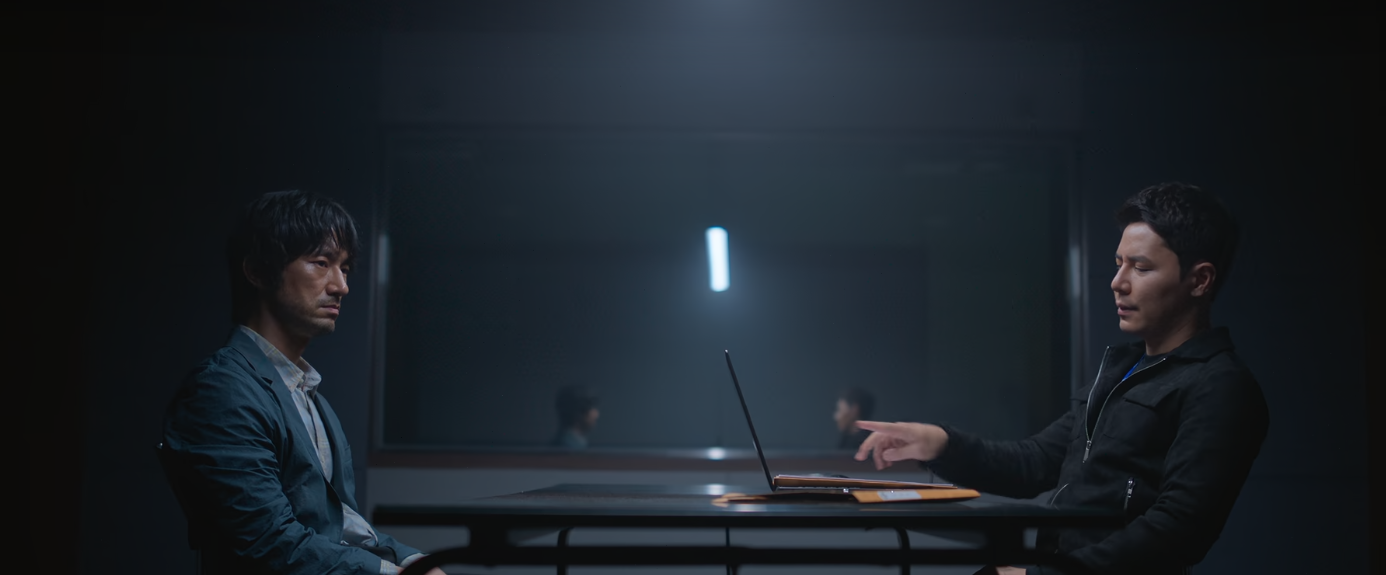
Apparently, Byeong-chan went to a high-flying university, graduated with honors, and spent some years doing some kind of secretive biochemical research in the United States before abruptly returning to Korea and becoming a high school biology teacher. He deflects all the interrogator's questions about why he left his research position, or why he was slumming it as a high school teacher instead of a university professor. Something something Umbrella Corporation, something something fake identity, you know the drill. He doesn't disclose this information to the police, but during the interrogation scene we also get a flashback for Byeong-chan that reveals some details about the zombie virus he created.
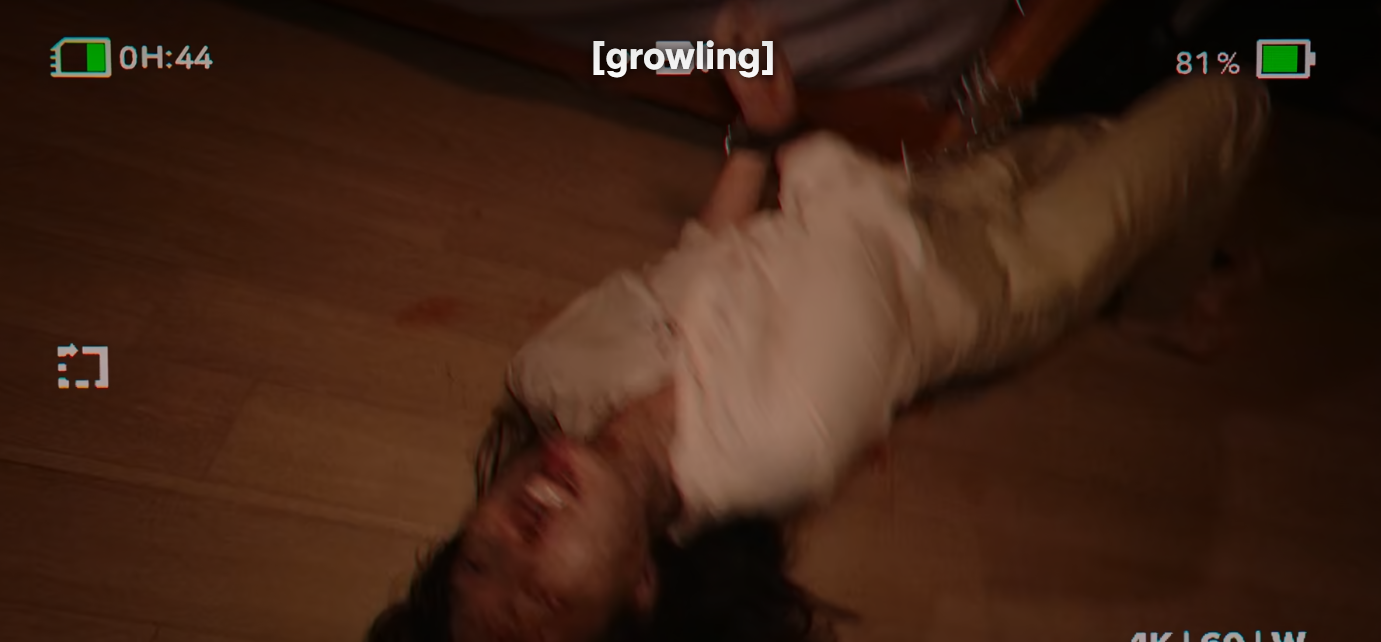
He was apparently studying the mechanism used by Toxoplasma gondii to effect its rodent hosts' behavior, making them attracted rather than fearful of cats. He discovered that the protozoa taps into a latent endocrine potential of the mouse's, causing it to produce a hormone that replaces fear with fury. This was the inspiration behind the synthetic virus that he would ultimately inject his son with after he barely survived his suicide attempt.
Of course, there must be much more to it than that. There's a hell of a lot about this zombie virus that has nothing whatsoever in common with toxoplasmosis, or hormone imbalances, or any of the other elements mentioned in the segment. But this being the inspiration behind it is informative about the character if nothing else. He apparently thought that his son's problem - the thing that drove him to crumple up and die in the face of relentless abuse - was an excess of fear and a deficit of anger.
Remember, even after experimenting on, savagely beating, and imprisoning multiple people, Byeong-chan was too chicken to stand up to his boss about his own son being tortured. And, it's strongly implied that he himself was infected with a carefully managed case of the virus when we saw that happen. He is the coward, not his son. All of the self-improvement that he should be doing, he's instead projecting onto his child and performing torturous experiments and downright savage beatings on him to "fix" him. And he didn't stop even when his wife got bitten and pulled down as well. Didn't even start trying to be brave himself while he was doing this. Not even after being infected with his own stupid "bravery" virus could he find it in himself to stand up to his balding benchwarmer of a boss, let alone threats to his person. All he can do is let the shit drip further down.
The detective accidentally touches on this when he hears Byeong-chan babble evasively about unfair systems and harsh worlds that need to be contended with, and points out that he's not taking personal responsibility for anything that goes on around him. To which the scientist just changes the subject yet again.
Meanwhile, back at the school, the "shit trickles down" theme is explored repeatedly, as the four friends deal with the ever-escalating outbreak at their school.
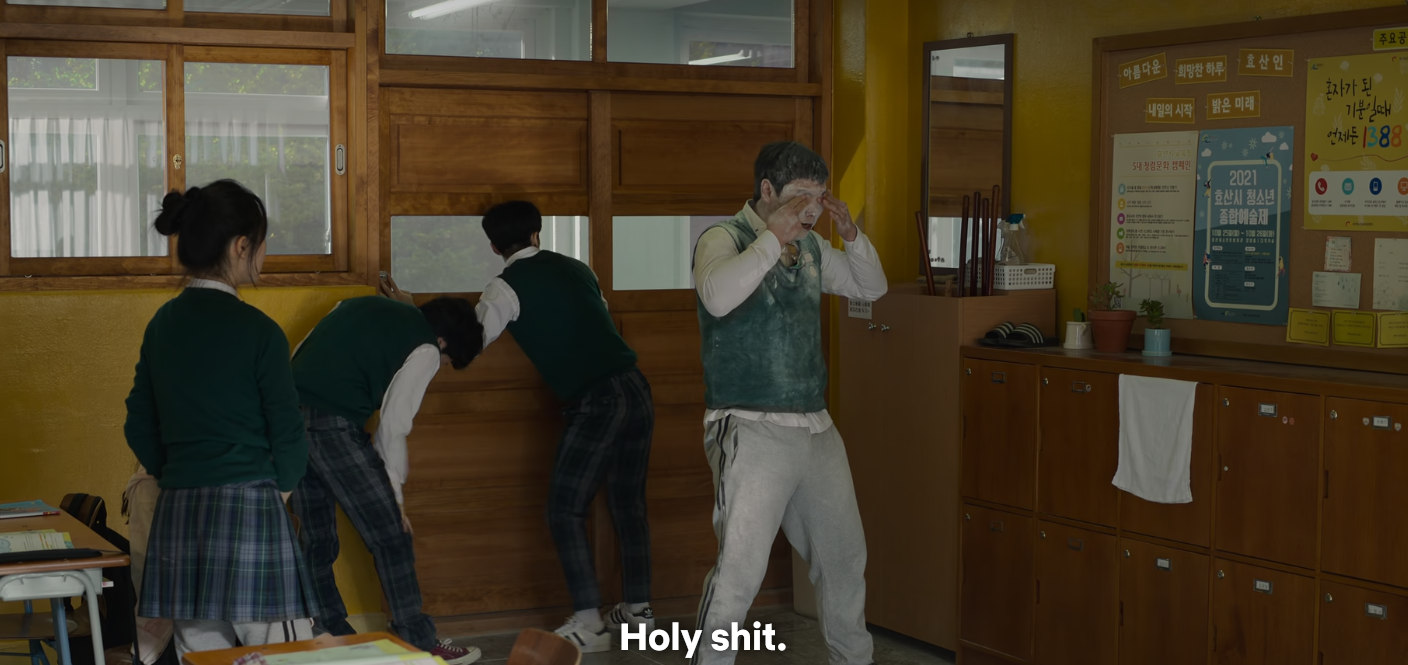
The part that stuck with me the most from this episode was a pair of scenes featuring a gym coach escorting the school's archery team back from a disappointing tournament. During the bus ride to the school, he relentlessly berates the students for their performance, singling out one underperforming girl in particular for his venom and going on - in front of everyone - about how she'll never have a future, she was stupid to waste her time on sports since she's so bad at them, now no college will want her for anything, etc. When the bus gets back to the school and gets mobbed by zombies, the team and coach are chased in different directions, and the latter ends up in a classroom where a group of other kids (including three of the four main characters) are sheltering. The kids notice that he's been bitten, and will inevitably turn in the coming minutes.
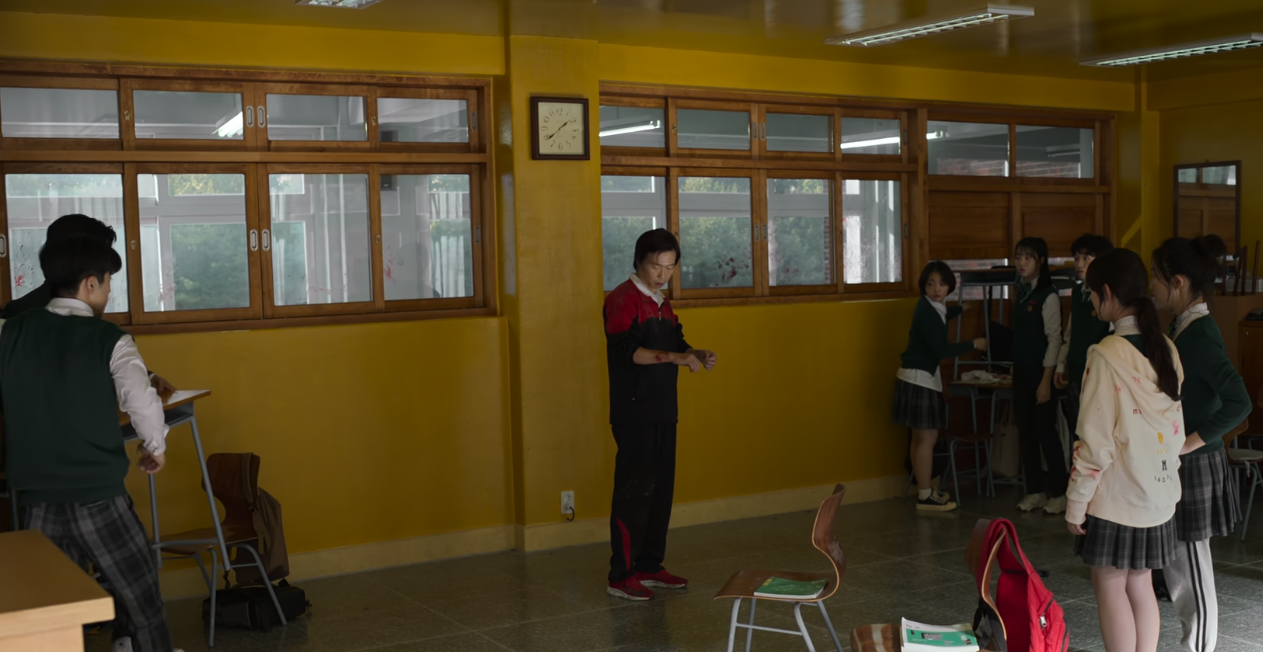
He first tries to tell them their eyes are deceiving them. Then starts roaring at them to obey him because he's an adult and their teacher, no matter what they think. Then, when that doesn't work, he starts getting, well...memetically South Korean.
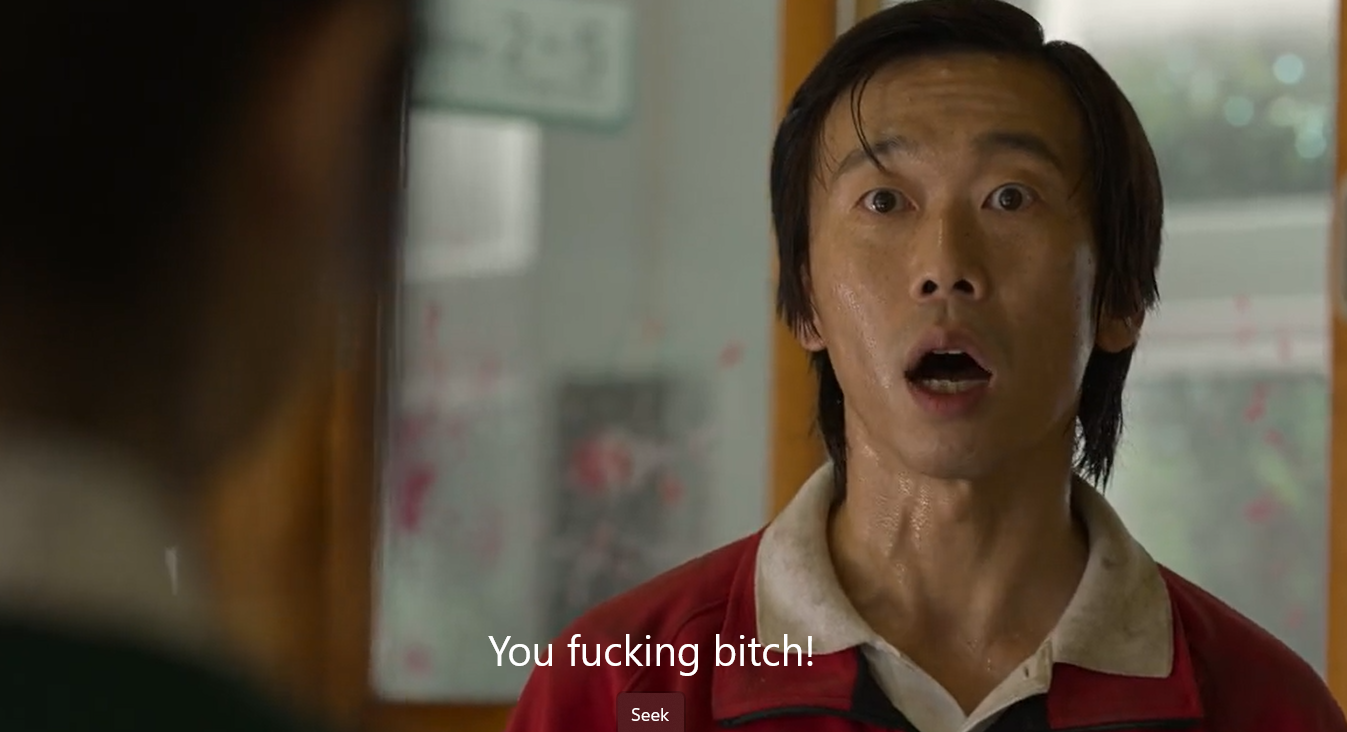
I've seen a different translation substitute bitch with the much more grotesquely misogynistic "cocksucker." I'm not sure which is more faithful to the original Korean. I'm also not sure if he was already supposed to be influenced by the virus when he says this, or if that wasn't a factor yet. It does seem like a natural escalation of his behavior on the bus either way, though.
...
Also, the archery team that he'd been bullying end up saving everyone's asses by headshotting some zombies later in the episode, heheh.
...
His refusal to leave and protect the kids from himself - and their reluctance to gang up and force an authoritative adult to do so - results in a student at getting bitten and infected in turn, and the others all needing to flee and find another classroom to fortify.
That fortification, itself, proves to be part of a vicious cycle. Early on in the hall-rushing sequences, we see the living students use doors, desks, etc to create shield walls and push the zombies back. Only for the zombies to eventually flank them, at which point the defences turn into a closing vice that appears to crush the defenders within. Much like the walls of the school building itself.
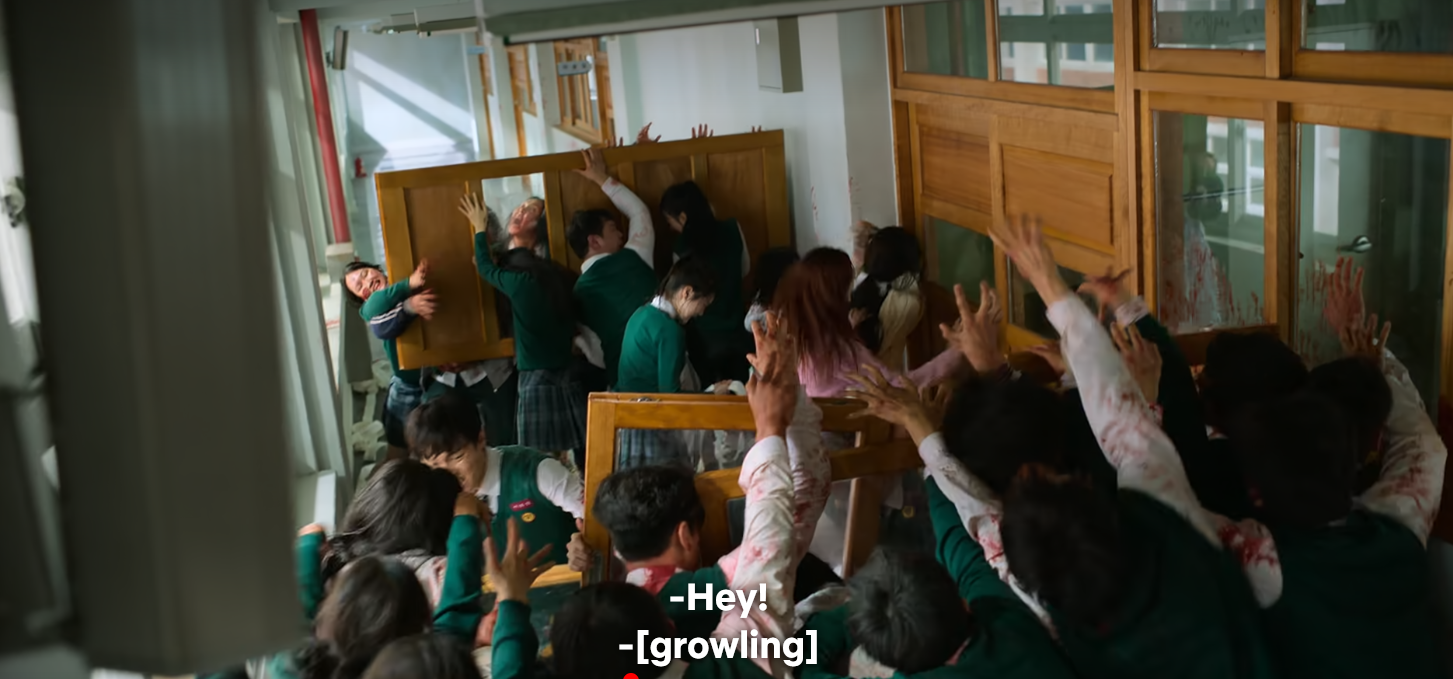
The cell phone confiscation that delayed their calls for help are just another, less visual, repetition of this theme.
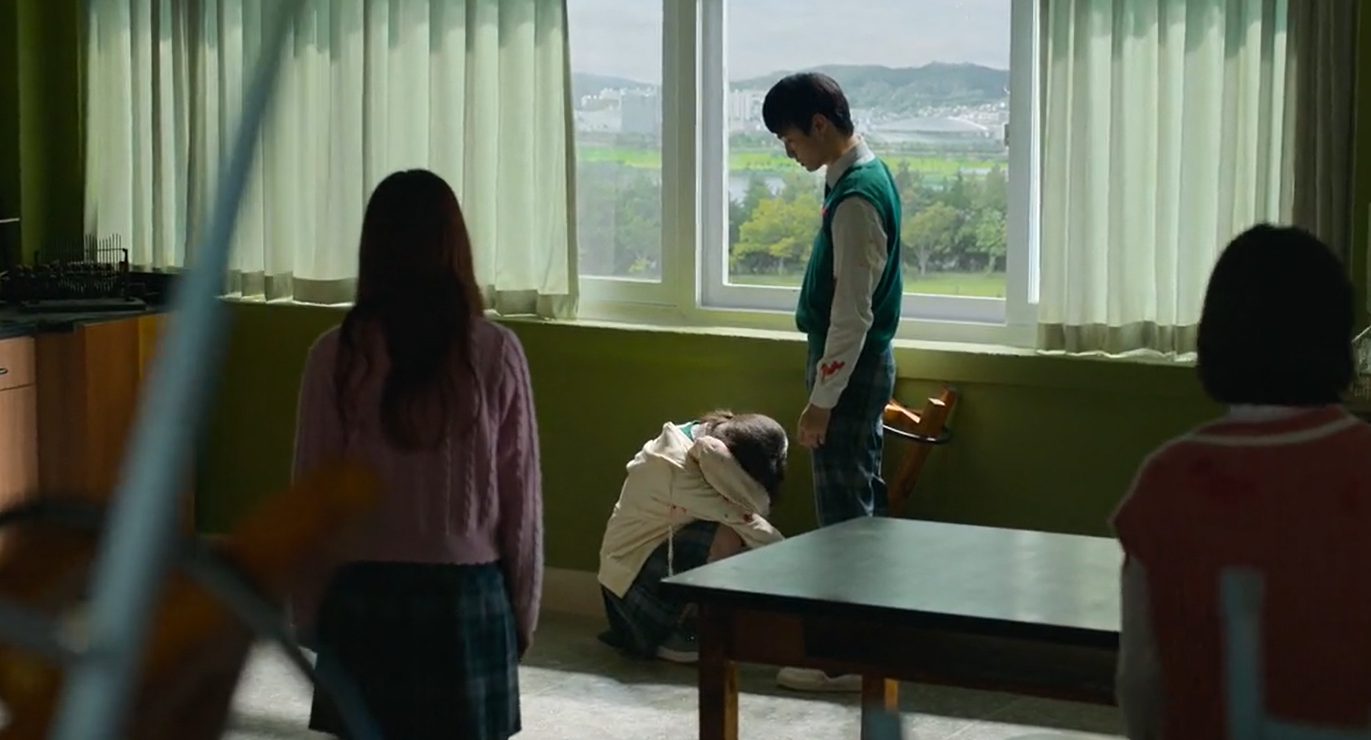
Probably the most poignant moment of the episode, though, is in the wake of this, after the group finds its way into another room they can seal themselves in. One of the main four friends, Su-hyeuk, got separated from the others during the hall chase, and is presumed lost. Another of the group, On-jo, who had a crush on him and was just perking up the courage to ask him out, is hit especially hard by his unseen loss. On-jo's friend I-sak tries to comfort her as the two stand by the window of the beseiged classroom, only for them to then notice that I-sak got bitten on the leg on their way in. I-sak goes from trying to comfort her friend after the loss, to being another, even greater, loss herself, in a matter of seconds. On-jo loses it completely and tries to cling on and save I-sak - even as the later is attempted to claw and bite her - when the other kids are forced to defenestrate the latter. On-jo nearly getting pulled down and/or bitten before she finally drops away.
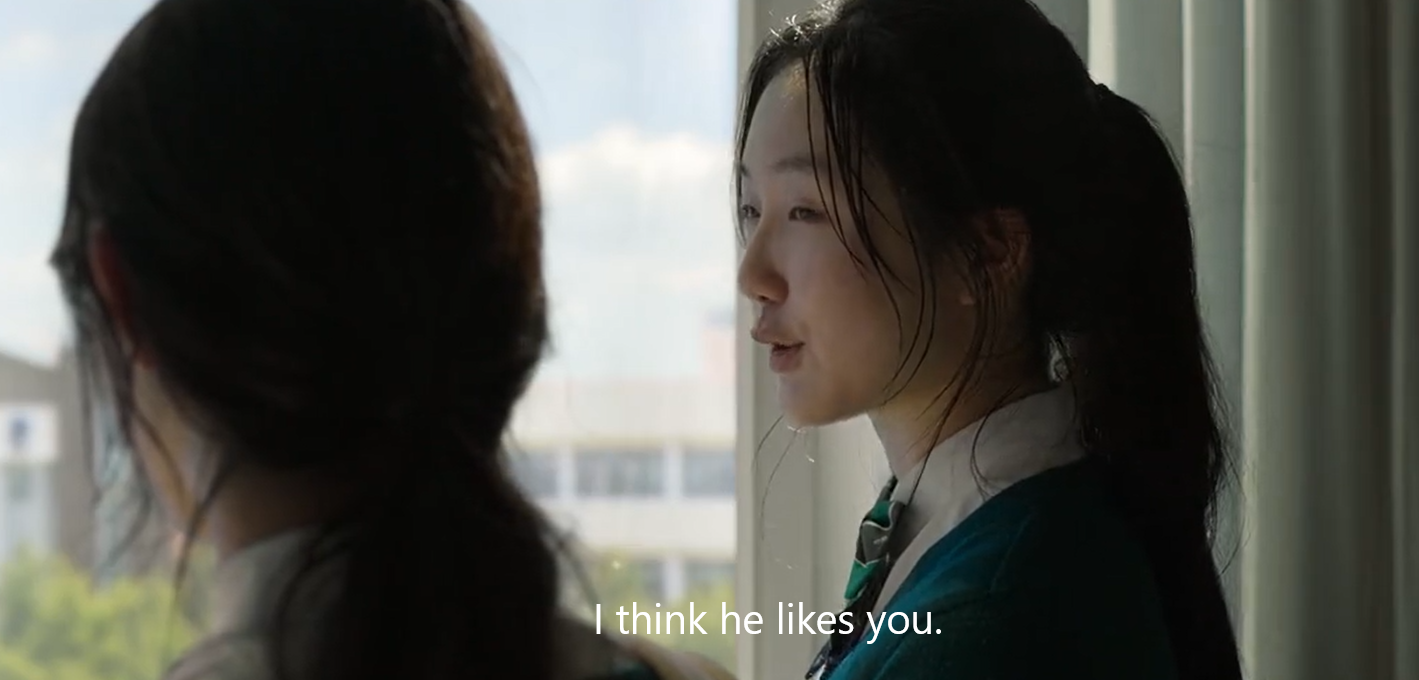
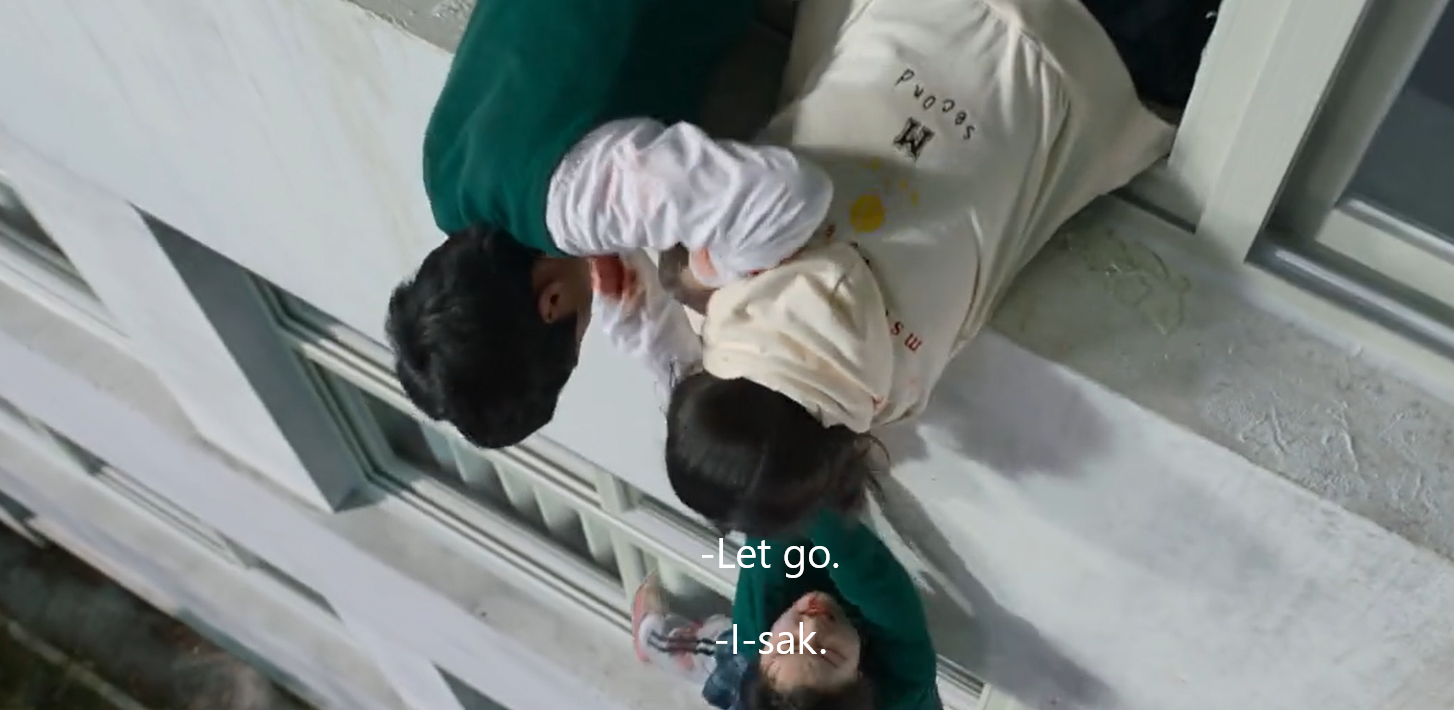
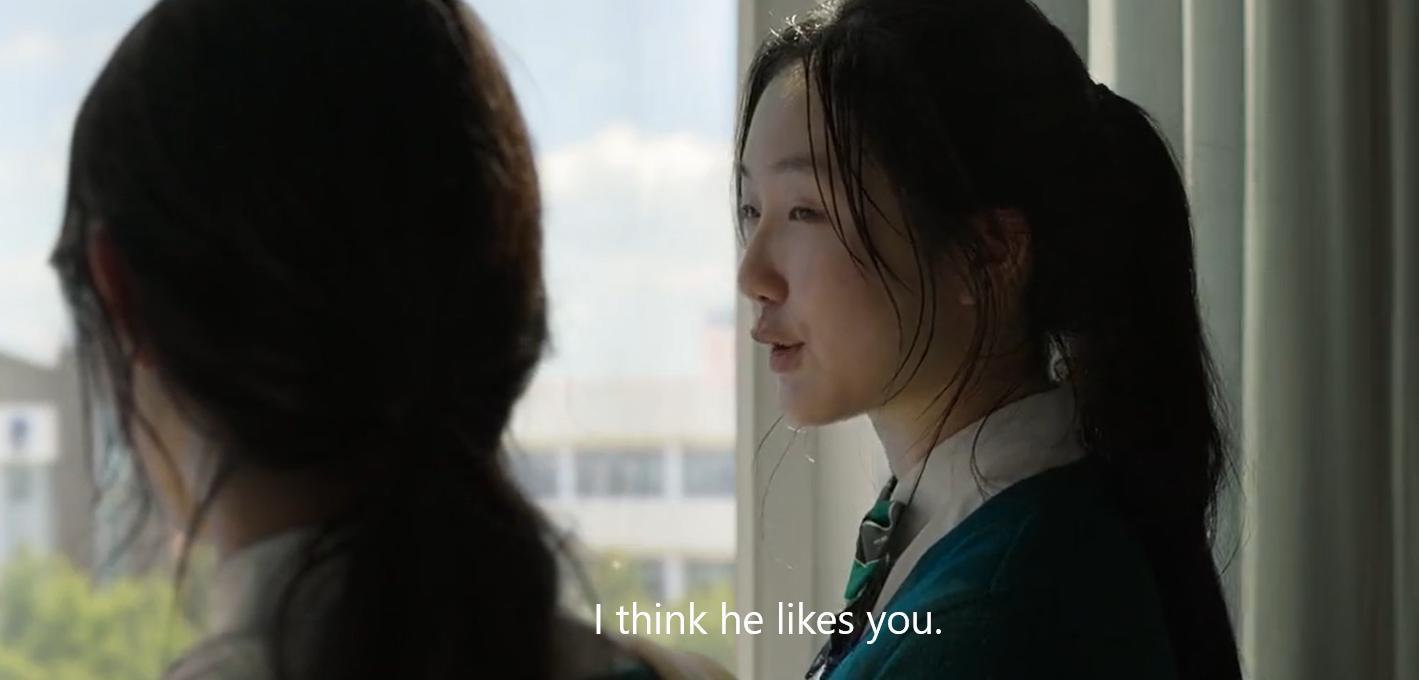
I guess I-sak wasn't a main character after all.
The boy who saved On-jo from the zombified I-sak, meanwhile, goes on to try to comfort On-jo in turn. The show doesn't need to tell us what's going through On-jo's head as he takes the spot I-sak had just been standing in and tries to comfort her the same way I-sak had been comforting her.
There are plenty more great scenes like that one throughout the episode. Including some great sequences involving one or more characters climbing up and down the outsides of the building to ellude the zombies and join other groups of survivors. And another short bit of the suicidal girl and her friend up on the rooftop, watching the devastation spread out below them and getting morbidly philosophical about it.
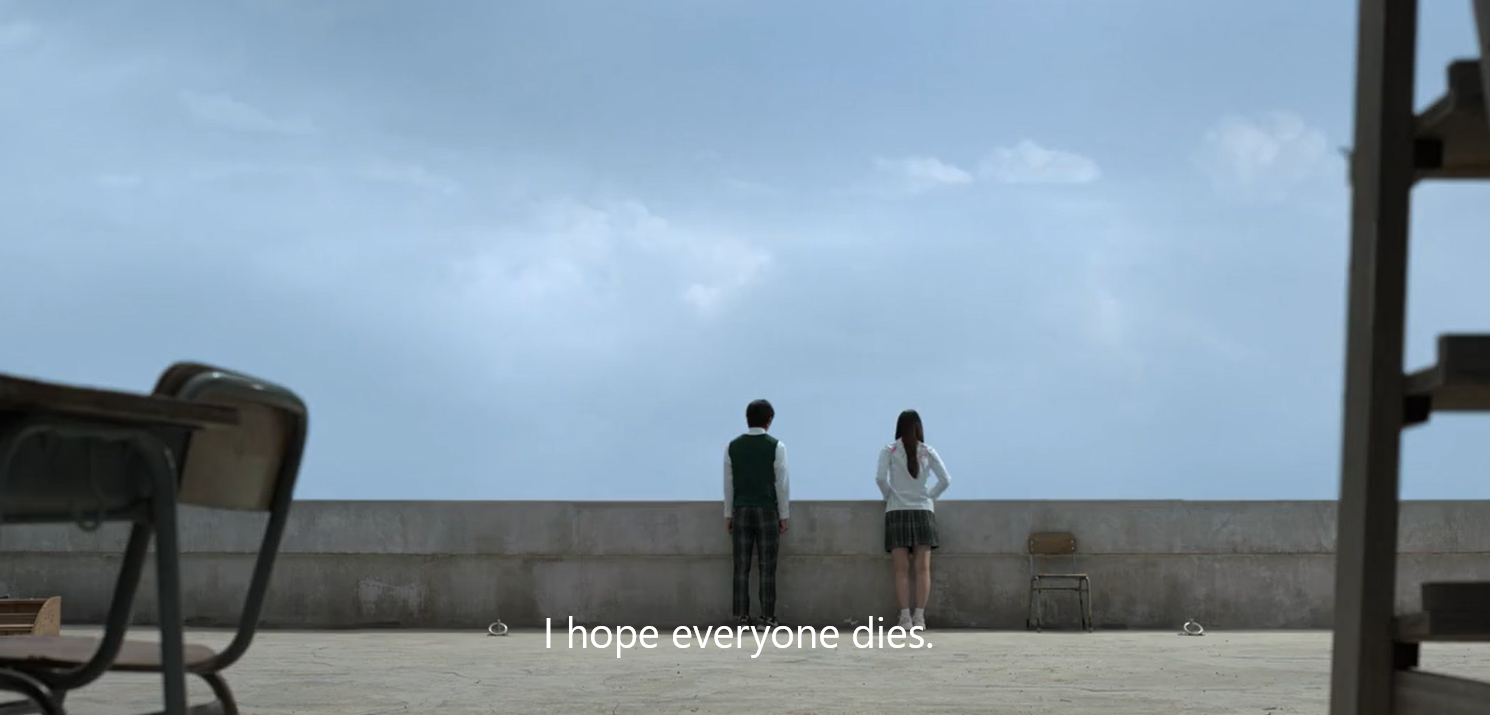
Not quite a title drop, but close.
That said, despite the individually great scenes and emotional moments, I feel like the greater shape of the story is eluding me. It keeps coming back to the love quadrangle between these (mostly) surviving students whenever there's time to come back to it, but I'm not sure why that's important right now. The character who the camera follows the most, a boy named Cheong-san whose parents own that chicken restaurant from the pilot, is still sitting on his own unspoken feelings for On-jo without it going anywhere yet (and also without me understanding why I should care about that when they have much more pressing issues to deal with, frankly). So, I'm still waiting for what appears to be the main character arcs to become really relevant to the plot. Two episodes in is kind of a long time to wait for more than crumbs of that.
Maybe I'm missing something. It doesn't help that it takes me a while to remember people's faces (a problem I don't have with animated works, but I do have in live action and unfortunately in my real life), and that Korean names are also hard for me to get down. So, the interpersonal drama is harder for me to follow than it would be for most people. That said, I can still tell when kids should be talking less about their unrequited crushes and more about the monsters trying to kill them, and this episode does indeed have such times within it.
We'll see what episode three brings.