Gaslight District (pilot)
This review was commissioned by @skaianDestiny
Glitch Productions, of "Murder Drones" and "The Amazing Digital Circus" fame, has been working hard on a bunch of new projects in the past couple of years. There's that "Knights of Guinevere" thing, pitched to the studio by "Owl House" creator Dana Terrance. There's also "Gaslight District," a series that I'd heard absolutely nothing about before looking it up for this review.
So far, Gaslight District is just an April 2025 pilot with promises of more to come. I'm well aware that pilots - especially indy studio pilots - tend to be much weaker and more kludged together than the shows that ensue. I think that that's the case for this one. I hope it is. Because, while there's a lot that interested me in this pilot, there are also a couple of things that rendered it nearly unwatchable.
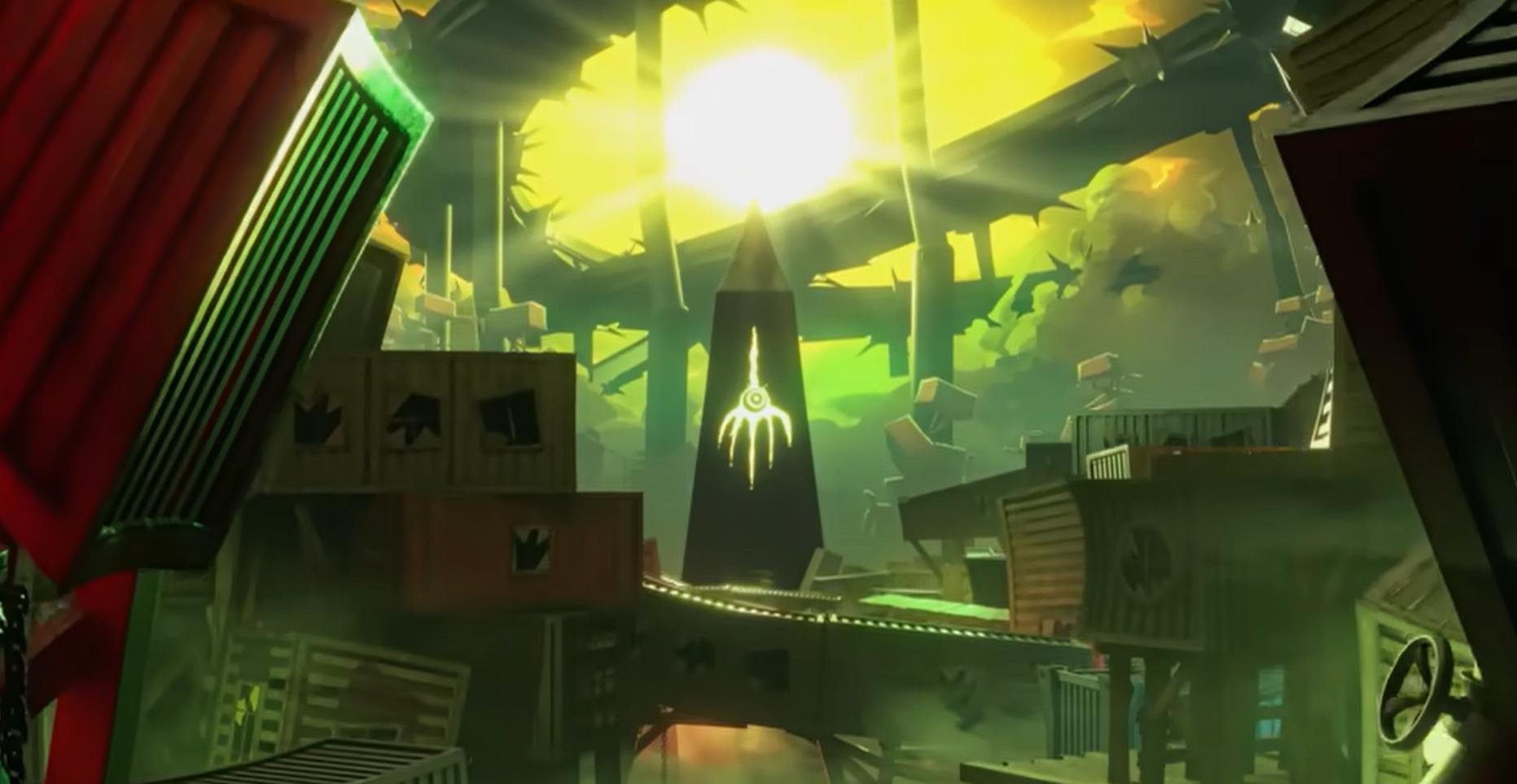
I'll get the negative out of the way first. Partly for the sake of charity. Partly because this mirrors my experience of watching the pilot; the bad stuff hit me hard and fast at the beginning, with the good slowly making itself apparent throughout the episode. So.
The ubiquitous gross-out aesthetic of this show is just 100% not my thing. I acknowledge that this is extremely subjective. Very much personal taste. If you have a higher tolerance for this sort of look and feel, then you'll naturally have a different experience of the pilot than I did. Everything is always erupting with snot, slime, eyeball fluid, you name it. The characters are mostly rotting undead zombies, which isn't a problem in and of itself, but the show just revels in detailing the decay and deformities above any other features.
This also, irritatingly, sometimes spreads beyond art style and into the direction as well. Like, for instance, the opening scene of the pilot spends an inordinate amount of time on showing close-ups of all the characters' putrifying faces as they laugh maniacally. Even though there's nothing for them to be laughing at. Even though at least one of these characters - the one who gets the MOST gratuitous gross-out cackling mugshot time - is quickly revealed to be participating in this action sequence very reluctantly and not at all thrilled about what he's having to do here. It gave me some real whiplash when I was trying to figure out what this person is actually supposed to be feeling, and as far as I can tell it was done purely in the name of edgy grossout meme imagery.The framerate. Ohhhhh fucking hell the framerate. When I first started watching, I was sure that I must have clicked on a fucked up mirror, or that there was something up with my YouTube settings, but nope. The animation itself is pretty good. Very good, in some sequences. But it feels like two out of every three frames has been surgically removed and the pilot reduced to a twitching wire-frame mockery of itself.
After rewatching, I think I understand what the creators are going for. The plastic-y, whimsical-goth look of the character models is very evocative of some late nineties and early aughts stop motion cartoons. Think Tim Burton back when every high school scene kid wanted to have his babies. The low framerate is probably meant to give the show that same sort of slightly twitchy quality that cheaper claymation tends to have, in keeping with its visual inspirations. I can respect that aesthetic choice, but the creators overshot it. They badly overshot it. It works well enough during dialogue scenes, and even lends a charmingly amateurish kind of jank to the walking-and-talking bits. The problem is that this pilot also has fast-paced, high-octane action scenes, and I had to rewind them multiple times each in order to tell the first thing about what was going on.
Watching the intro car chase scene as a choppy, spasmodic slideshow almost gave me a migraine. I am not being hyperbolic.
If the series tones down the gross-out factor and framerate fuckery by at least 30%, I'll probably be able to like it. Might even end up liking it a lot, depending on where exactly the story goes. But it needs to tone those two things down, or I will not be physically able to sit through it.
With that unpleasantness out of the way, on to the good stuff!
Despite beginning with an expository voice over, the world of "Gaslight District" is very much mysterious to the audience. We're told that human civilization fell hundreds of thousands of years ago, and that humanity's twisted remnants have given themselves over to total decadence and iniquity, but we're not told how or why this happened. We're also told that this state of affairs is prophesized to be ended by the birth of a baseline human from "an angel's egg," but again, not why or how. And then we open on a truly bizarre and complicated dark-fantasy-postapocalypse world that doesn't go out of its way to explain itself at all.
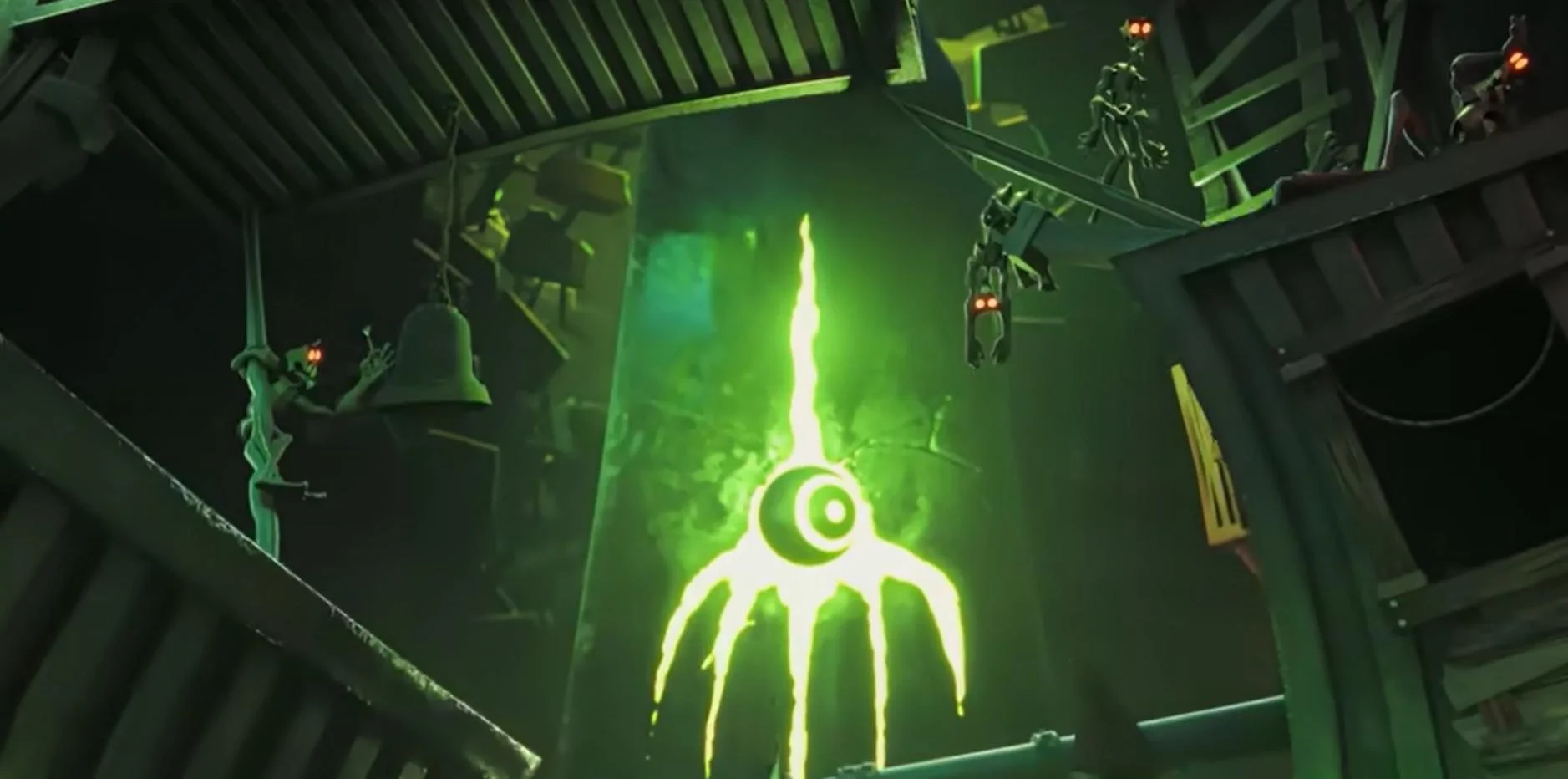
In a world of endless urban decay sprawled across a polluted black sea, deformed, zombie-like "rotlings" live unlives of constant violence. The rotlings are immortal in the worst way, their bodies accumulating injuries that all leave their marks, their flesh decaying and their skin constantly sloughing off, but they never stop moving. Any injury that should be lethal just stuns them for a moment before their now even-more-damaged bodies get back up and keep working around the latest disfigurement. This cursed immortality was bestowed by a force or entity called the Black Hand, that the rotlings regard as something sort of like (but not exactly) a god.
I think the rotlings used to be human, but I'm not completely sure. Especially in the case of certain characters. Like, there's one guy who has a loaf of bread with a hideous toothy face on one end for a head.
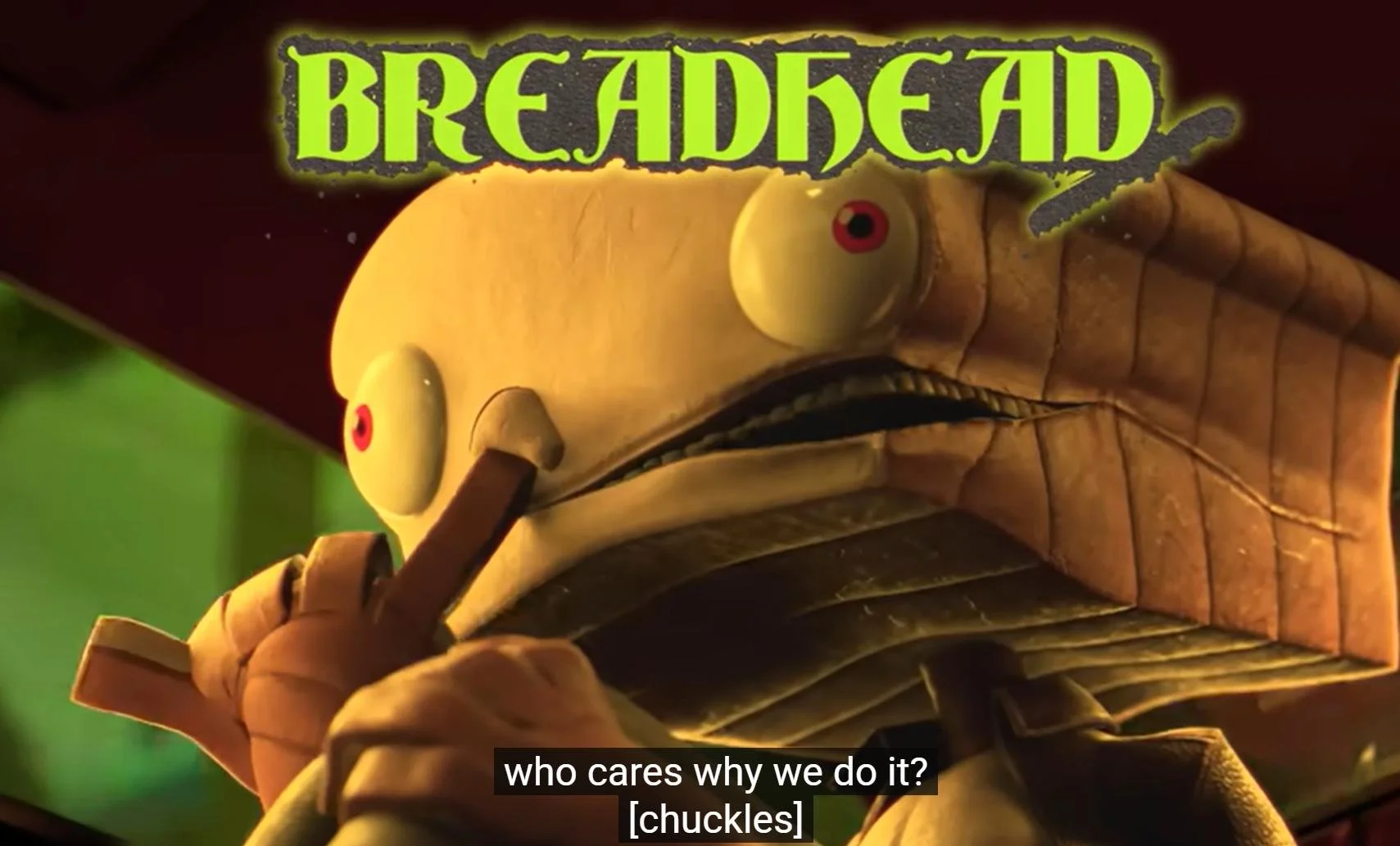
He can temporarily increase his size and strength by snorting packets of yeast like cocaine. Or become a small, stealthy creature by detaching his breadloaf head from its humanoid torso and wriggling around like some kind of slug. I don't think Breadhead is supposed to be a rotling, despite living among them, but there isn't a word about what the hell he IS supposed to be either.
There are also these...semi?...anthropomorphic?...flylike creatures that the rotlings kill (very violently and graphically) for food. Ambiguously sapient. No word on what these things are or where they came from either.
Most of the rotlings seem to live in a region called the Gaslight District. What other districts there are in this city-like hellscape, and who inhabits those districts, I couldn't tell you. The only other locations featured are a fortress-like complex called the Paradise Lost citadel, and an underground prison beneath it called the Inferno. The uniformed soldiers that man these facilities appear to be more rotlings who vaguely oppose the interests of the Gaslight District population, but their commanders are...something else.
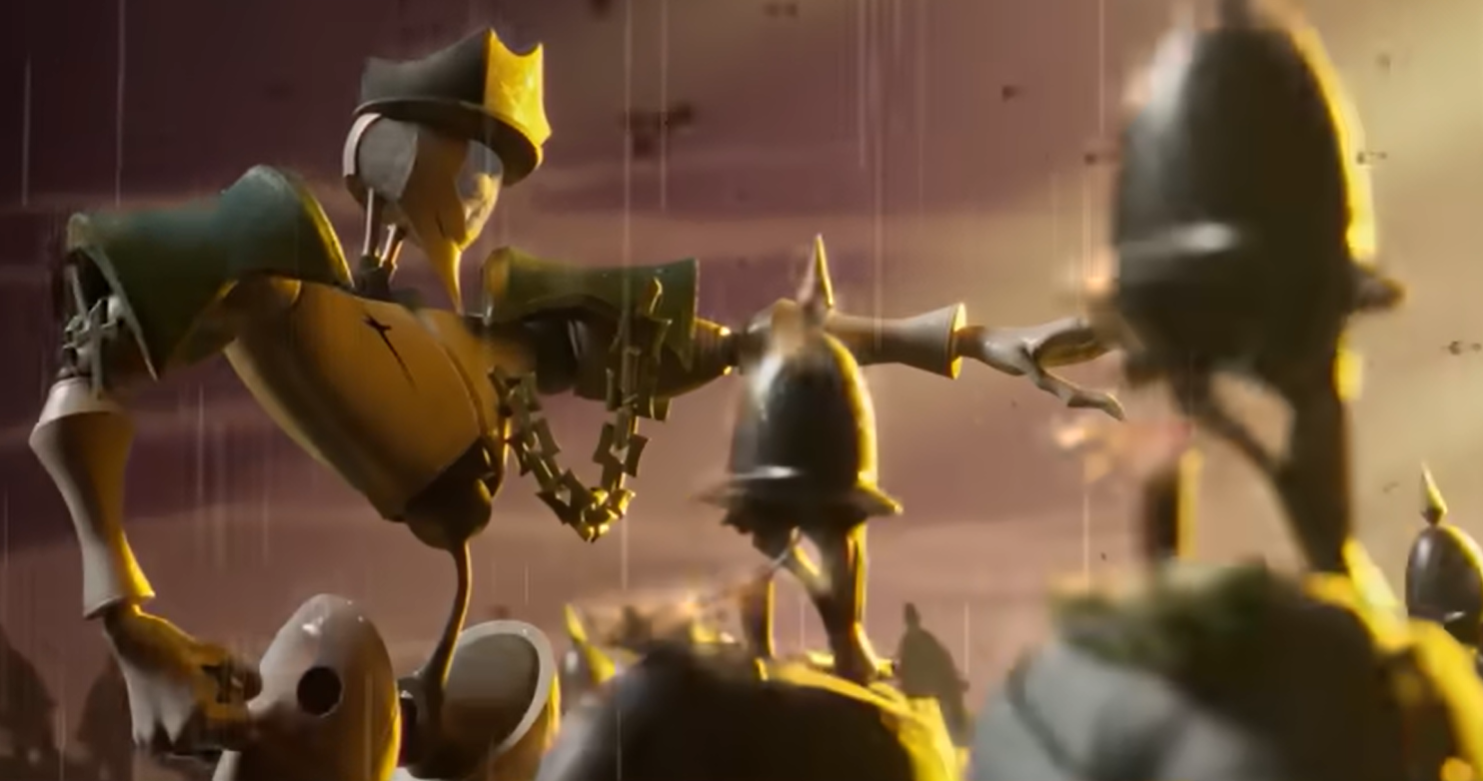
Isolated brains, seemingly with the same type of immortality as the rotlings, installed in robot bodies. These cyborg elites are called "virtues," and they treat their own rotling minions with undisguised contempt. The virtues are...protecting? imprisoning? It kinda seems like they're on the same side, but also kinda seems like they're not...another group of creatures called "angels." Most angels are basically just large crows with huge eyes, and seem to possess animal-level intelligence. A few powerful, sapient exceptions exist.
The biblical naming scheme doesn't align with the things being named in a way that helps make sense of them. Or, if it does, then the method behind the madness is only going to become apparent later in the upcoming series.
Also, a lot of these details are literal freeze-frame content. It's very much the Dark Souls school of storytelling.
As for the foreground, well. Our main character is Mel, a secret human living with her adoptive(?) father, the rotling gang leader Ken the Butcher.
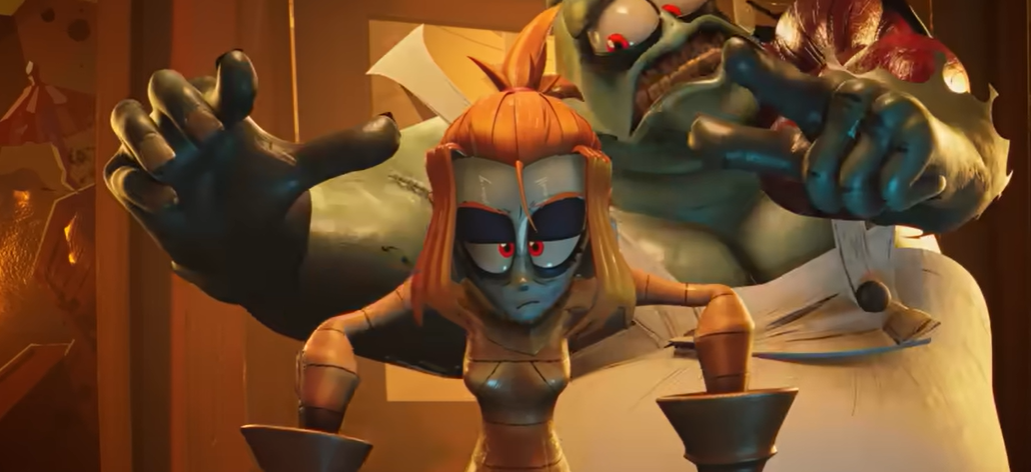
Granted, when I say that Mel is a "human," I'm only doing so because the show itself calls her that. She hatched out of an egg, and her blood is the same tarry black color as the angels', unlike the weird purple liquid that flows through rotling veins. So, "human," sure lol. Anyway, there's a prophecy that says that a human will destroy the Black Hand and end the rotlings' immortality, so most rotlings will try to kill her if they find out what she is. Mel wears green zombie makeup and fake bandages to disguise her true nature, and - despite the constant violence of her surroundings - needs to avoid getting injured where anyone can see what color her blood is. When this fails, the witnesses usually need to be hunted down and suppressed.
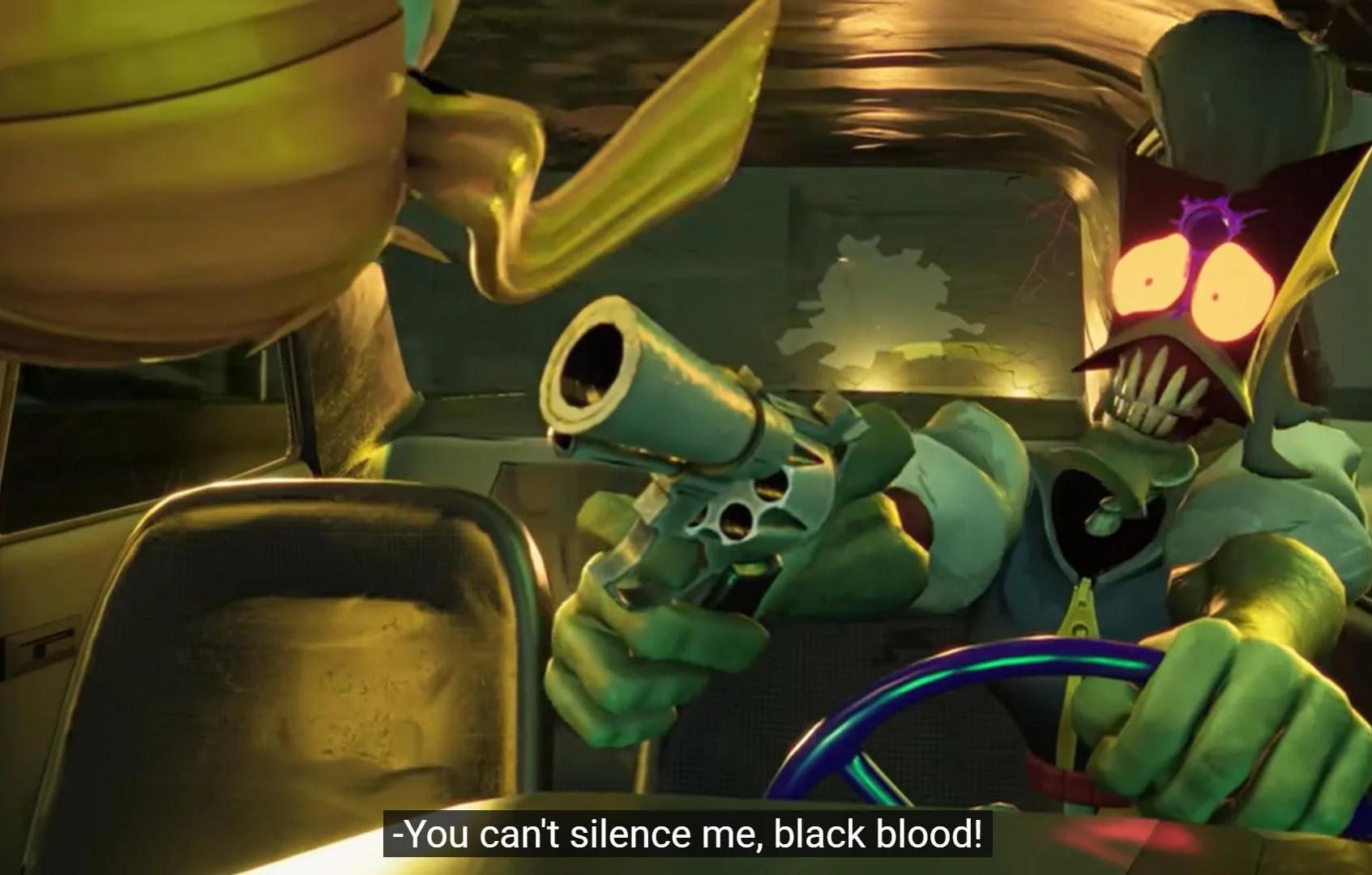
Suppression taking the form of putting them in cement shoes to be imprisoned on the ocean floor for the rest of eternity; there's not many other ways to keep a rotling from talking. Fortunately, Mel has Ken and the rest of his little gang very actively looking out for her. For which she owes him her life many times over, but the protectiveness - both of her secret, and of her distinctly mortal living human biology - also forces her to live a stifled, delicate existence amid beings who revel in violence and action.
This dynamic is the show's real selling point.
The show isn't coy about the rotlings being monsters. They look monstrous, they act monstrous, and they treat each other monstrously even for a world where injury doesn't matter. Within that context, the monstrous Ken the Butcher looked at a human child - in his own words, "a being unsullied by the rest of this putrid world" - and decided to do everything in his power to protect her from creatures like himself.
Mel, in turn, is lonely and frustrated as the lone living human in a world of undead monsters. She's learned to aspire to monstrosity. She's only too eager, in a very obviously performative way, to engage in the customs of violence and cruelty in whatever small ways she's able. She wishes she could freely hurt and be hurt, salving whatever pain is inflicted on her by dishing it out indiscriminately on people around her, like everyone else. Mel is innocent and impressionable in a world where over-the-top mutilation and thuggery are the unquestioned rule of the day, and she engages in them innocently and impressionably. She feels remorse at her objectively evil actions only because they make her father - who also performs those actions - worry for her. Which makes sense. What other kind of "conscience" could a person develop in an environment like this?
The relationship between Mel and Ken, as he desperately tries to raise her NOT to be like himself and the rest of her family, is the heart and soul of this story. It takes a laughably edgy premise and manages to give it some emotional weight and human realism. In a way that makes you ask questions about the real world and the way real families try to prepare children for it. It's still laughably edgy, don't get me wrong, but there's enough substance there that you have to think and feel things other than the derision such a setting would normally eliciit.
The main plot of the pilot has Ken's gang - following an inspiration of Mel's - engaging in a heist to steal an angelic egg from Paradise Lost. The motivations for this heist don't actually make any sense when you think about it, but the heist itself is well paced, characterful, and tense. Mel actually engaging in a high-risk crime with the rest of her "family" forces Ken to make hard decisions about how much he can keep protecting her now that he adamantly doesn't want to be protected, and it forces Mel to really reckon with her body not being immortal like most people's.
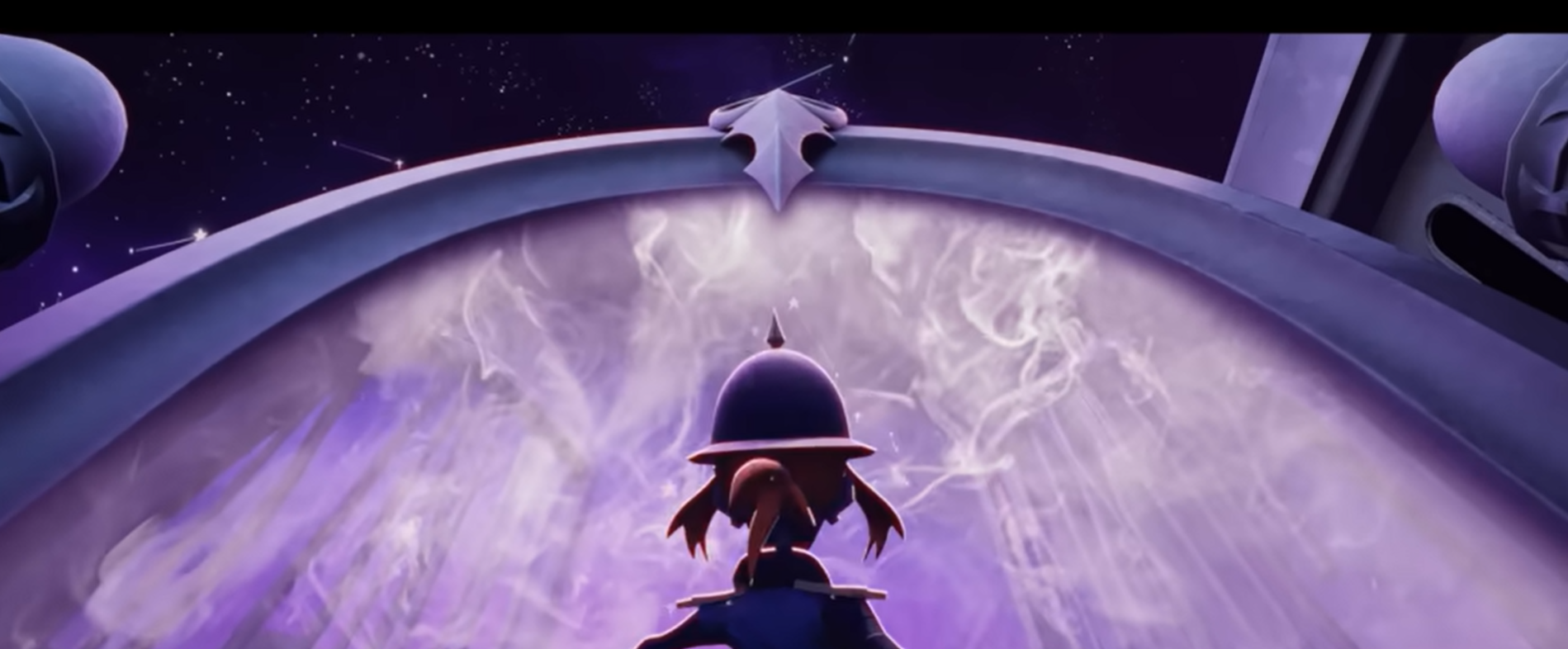
I got more out of this sequence on rewatch, on account of how many freeze-frame lore tidbits are hidden in it. Like, there are indications that Ken the Butcher discovered a newly-hatched Mel in this complex when he escaped from its underground prison some years ago. Tidbits about how the virtues and/or angels are gathering the body parts of ancient Catholic saints and using them for some kind of biological experiment. Clues about old grudges and promises between members of the supporting cast that I don't have time to go into in a 2.5k word review. It's almost more entertaining as a jigsaw puzzle or an easter egg hunt than it is for the story itself.
The heist's climax includes a confrontation between Mel and a large, powerful angelic creature that may or may not be her biological mother.
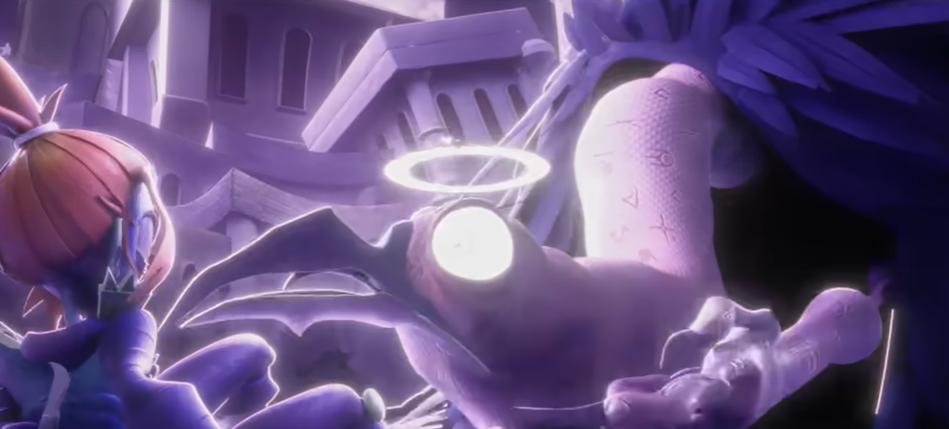
It recognizes her for what she is. Urges her to accept the destiny that she cannot avert, and bring about the destruction of the rotlings' world in fire and judgement. She'll never be part of that world. She shouldn't want to be part of that world. Why should she want that world to continue at all?
It's an effective scene, both as a frightening action setpiece and as a focus for the contradictions Mel's whole existence is built on. The question it asks remains unanswered at the end of the pilot, as renewed conflict between her and Ken's gang and other groups of rotlings seem about to make this world more antagonistic to Mel than it's ever been before.
Granted, it's also tempered by the fact that the motive behind this attempted heist is really nonsense. Like, the more I think about it, the worse it gets (though it would take a lot of words for me to explain why). Hopefully that's not a harbinger of plotting to come. Apart from this, the actual heist is really, really well done, and the character beats perfectly placed.
Overall, this show has a strong emotional core, and an intriguing setting whose cryptic presentation makes it fun rather than frustrating to try to piece together. It also has some plotting issues, though, as well as really serious visual missteps. Even if I loved everything about the story wholeheartedly, the ugliness, gratuitous gross-out efforts, and misguided framerate decisions would make this hard for me to get into. I hope they tone it down in the series proper, because I'd like to be able to enjoy this.