“Waller vs. Wildstorm” (part one)
This review was commissioned by @toxinvictory
Giving this comic a proper review is a challenge for me, on account of just how little familiarity I have with the names and personalities featured. I've done other weird comic book side-continuities before, but those ones were - to varying extents - written with an intentionally low barrier to entry. This one was not written like that. So, I'll give this my best shot, but I'm not sure how good that's going to end up being.
"Waller vs. Wildstorm" is a limited-run 2023 series co-written by multiple award winning political journalist Spencer Ackerman and longtime comic and video game writer Evan Narcisse, with art by Jesus Merino. It's about...well, part of the reason I had trouble getting into this is because the story has such a convoluted real-life lineage, so this might take a while.
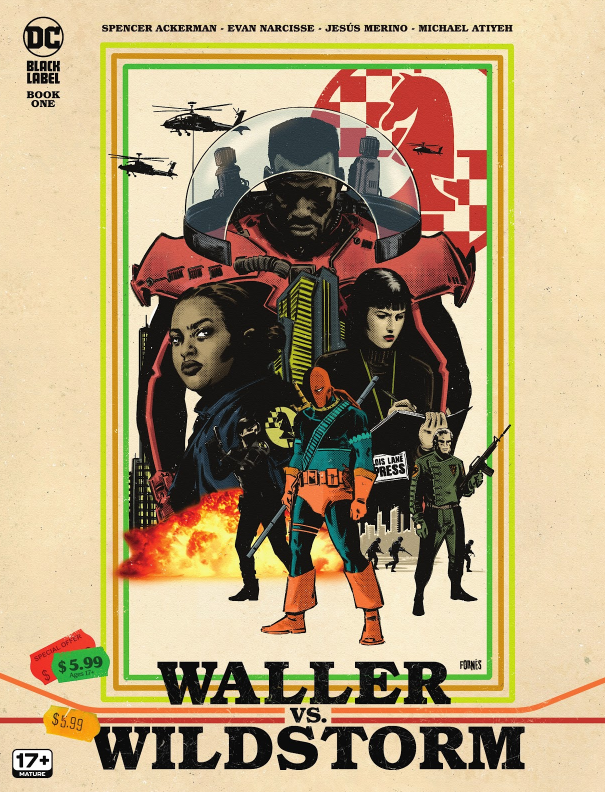
So, in the nineties there was this indy comic studio called WildStorm Productions. WildStorm had its own superhero setting - featuring a more international, geopolitics-focused take on the genre - that tried and failed to be a competitor to the Marvel and DC universes. In 1998, WildStorm got bought out by DC, but was allowed to continue publishing with some degree of editorial independence until 2010. After that, DC shuttered the Wildstorm continuity and started importing pieces of it into the mainline DC continuity as desired. Naturally, being DC, they had some sort of incomprehensible in-universe multiverse reset bullshit happen to justify these new players now being a thing.
Over a decade later, in 2023, DC put out this four-issue alternate continuity that basically rewinds to 2010 and tries a different, more holistic, integration of the Wildstorm and DC universes. "Waller vs. Wildstorm" is set in a world where the characters and events of both have always existed simultaneously (to a "best fit" degree, at least). Set in the 1980's, "Waller vs. Wildstorm" posits that the end of the Cold War might have brought WildStorm's supranational superhero team "Stormwatch" into conflict with the rising monolith of American hegemony, represented by characters from the shadier side of DC's cape adventures such as Suicide Squad commander Amanda Waller.
I didn't know WildStorm and its Stormwatch characters existed until today. And, unlike, eg, "Agents of Atlas," this comic isn't written for people unfamiliar with its back-from-the-dead B-listers. I don't know how many DC readers were already that familiar with Stormwatch before this came out, but there's definitely an expectation of there being plenty of them. I, on the other hand, barely even know the first thing about DC's mainline continuity besides the stuff that everyone absorbs through pop culture osmosis.
...
Well, I guess most people haven't dissected the original issues of Superman and Wonderwoman like I have. But those are far enough removed from what DC eventually became that I doubt it's all that relevant, heh.
...
So, I'll do the best I can here. This post will be covering the first half of "Waller vs. Wildstorm's" four issue run, with the second half coming soon.
As you'd expect from a comic co-written by Spencer Ackerman, "Waller vs. Wildstorm" wears its politics on its sleeve. My understanding is that the Wildstorm comics were always more overtly political than Marvel or DC, but this series dives in deep with the very first page and makes sure you know what it thinks about world affairs and why it thinks it. You can definitely tell that this and "The Power Fantasy" are products of the early 2020's.
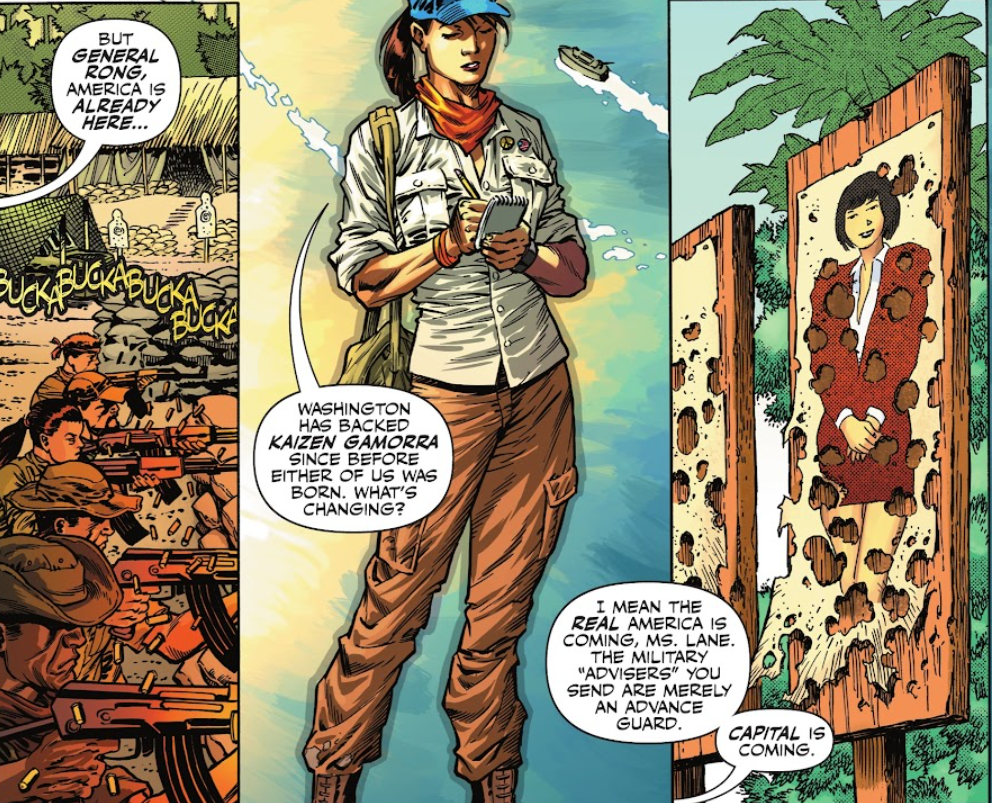
And, consequently, this is easily one of the darkest superhero comics I've read.
We open on Lois Lane (no mention of Clark Kent or his invincible alter ego in the issues I've read so far, just Lois so far) doing some hard-hitting journalism in a fictional Southeast Asian country of Parousia/Gamorra. Parousia being the historic name of this land and people. Gamorra being the American-backed dictator who renamed the place after himself a few decades ago in a hilariously unsubtle biblical allusion. Lois has managed to secure an interview with General Rong, the leader of a communist guerilla movement that's been fighting the Gamorra regime.
Lois' conversation with Rong establishes the backdrop and source of conflict for the story excellently. Basically, everyone can tell that the Cold War is going to end in the next few years, and capital is licking its chops and preparing to loot the world like it hasn't done since the 19th century. The multinationals, wearing the United States military and state department like a skinsuit, are moving everything into place to devour as soon as the USSR falls. Here in Gamorra, that transition is being marked especially clearly by the succession of traditional strongman dictator Kaizen Gamorra by his western-educated investment banker and girlboss-feminist icon Yumiko.
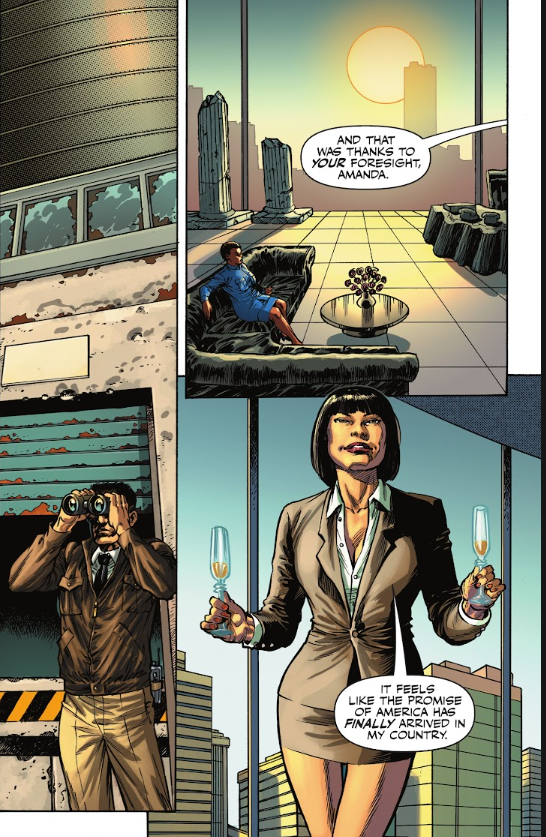
Leaving the rust and grime in place on the first couple floors of the skyscraper just to rub it in lol.
The strongest moment of this scene is probably when Lois expresses scepticism - either affected for the sake of her American audience, or genuine - at Rong's assertion that Yumiko will be thrice the butcher (by means of social murder, if not hands-on death squads) that her disreputable father was. Just, the choice of words that Lois uses here, and the expression that Rong responds with that - despite having two thirds of her face hidden - says more than any amount of words possibly could.
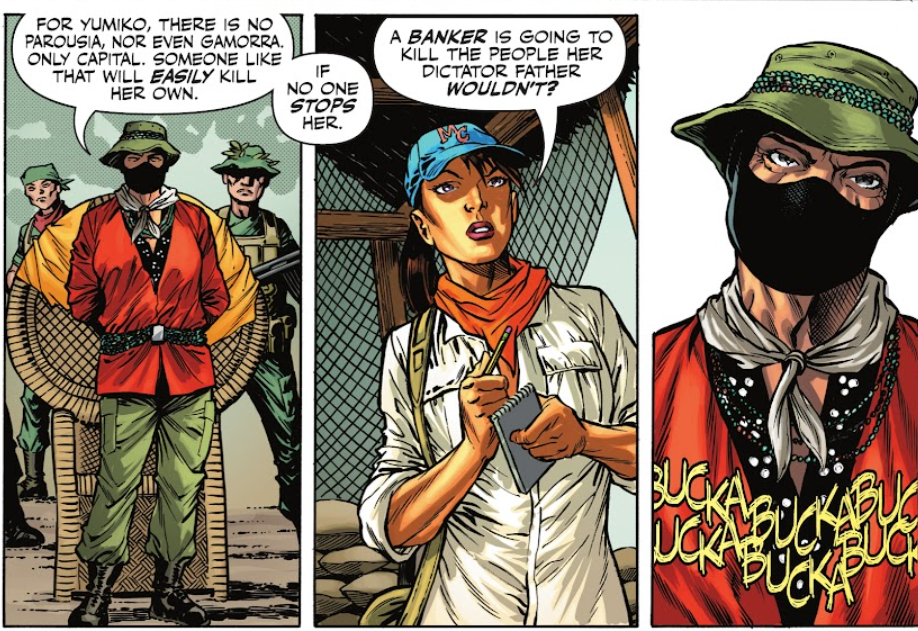
Once again, I don't know if Lois is new to covering the global south from this angle, or if she's just preemptively asking the stupid questions that she expects her American newsreaders to ask. Either way though, Rong has absolute negative patience for it.
Lane is pretty proud of this interview, but her bosses at the Daily Planet are - unsurprisingly - hesitant to publish it. With the stated reason being that Rong didn't say anything novel or informative or interesting, just the usual "bla bla, America bad, capitalism bad" that every lefty always says, the Planet isn't a propaganda platform. The unstated reason they won't publish it, though, is that the editor literally has an American NatSec ghoul in the room with him giving him an intimidating glare while he's on the phone with Lois.
So, that's the backdrop. The statement of intent for the comic. Unfortunately, based on what I've read so far, it's also the comic's high point. The cape plot that occupies the spotlight henceforth is...not bad, but it's definitely not good either.
While sulking back at her hotel in Gamorra City, Lois is suddenly contacted by one Jackson King, better known as the veteran superhero and Stormwatch field commander "Battalion."
...
As an aside, while the art in this comic is mostly decent enough, there are a few panels that just...it's weird. It's actually the more detailed, higher-effort drawings that have the problems, while the cartoonier, get-this-scene-done panels are way better.
Like, can somebody tell me what the fuck is going on with Battalion's silhouette in this panel?
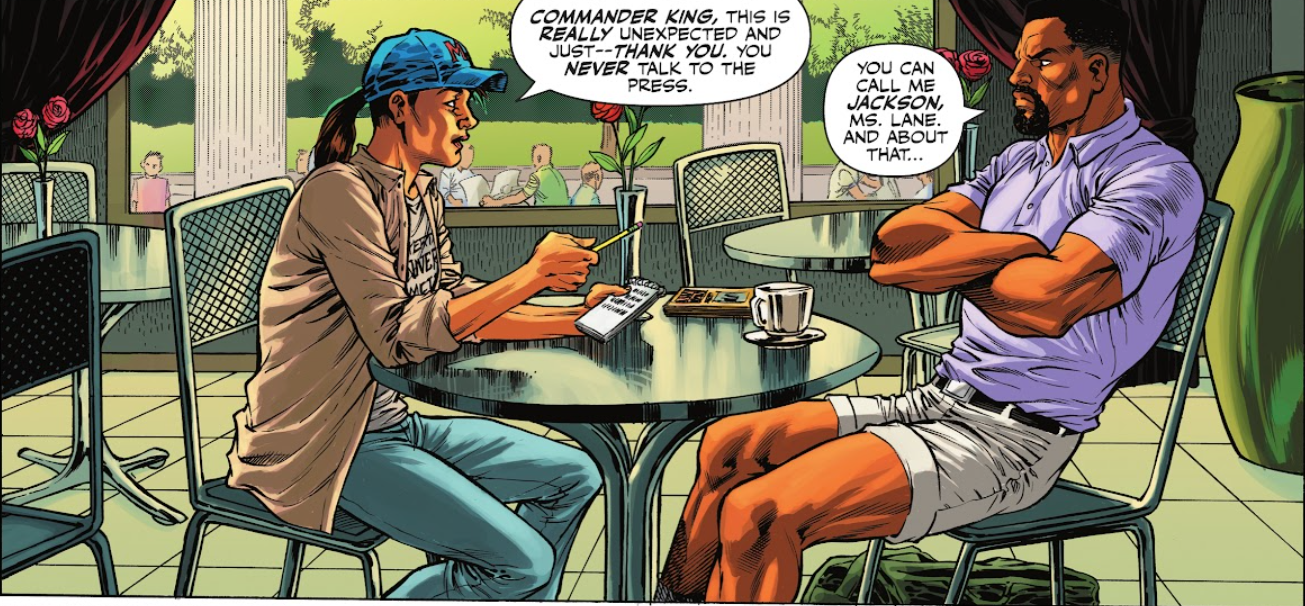
If he had Mr. Fantastic powers it would make sense, but that's not his powerset.
This panel also just...look at all those weird wrinkly shadows squirming all over people's faces and limbs. When the artist doesn't try to go into that much detail with the little shadows and bone contours, everything looks fine. When he tries to put in the extra effort, it looks like someone less talented than him came in and scribbled all over the characters after the fact.
On the bright side, the vintage late cold war style cover and credits pages are well-done and very flavorful.
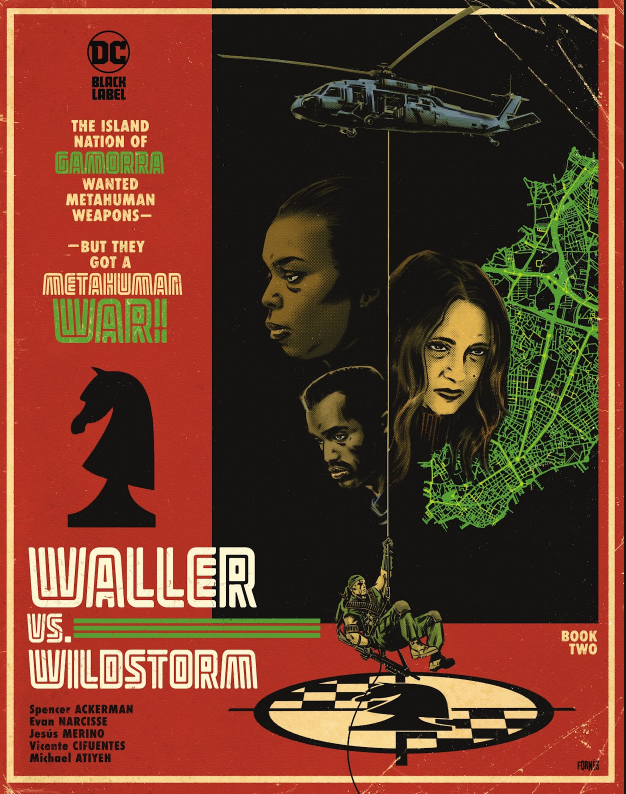
Real eighties techno-thriller vibe. Period-appropriate and nice to look at.
...
Battalion tells her about a conspiracy he just broke open, the complexities of which I have trouble parsing, but which basically boils down to the American metahuman security outfit "Checkmate" murdering metahumans and extracting the components - biological, cybernetic, whatever - that granted their powers so that they can be gifted to imperial proxies. He's here in Gamorra following the trail of an abducted metahuman known as Cybernary, who it turns out has had her unique cybernetic implants lethally removed and gifted to Yumiko Gamorra. She always wanted to be a superheroine, and she feels that her country really needs a hero of its very own to lead it into the new age of neocolonial "prosperity."
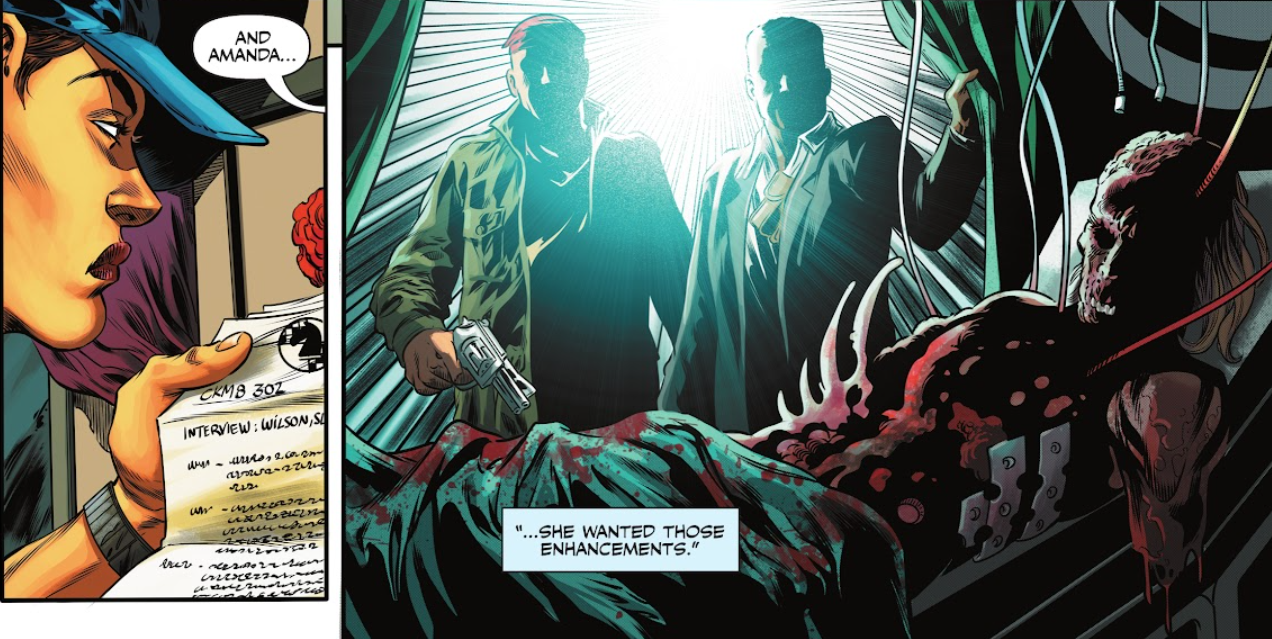
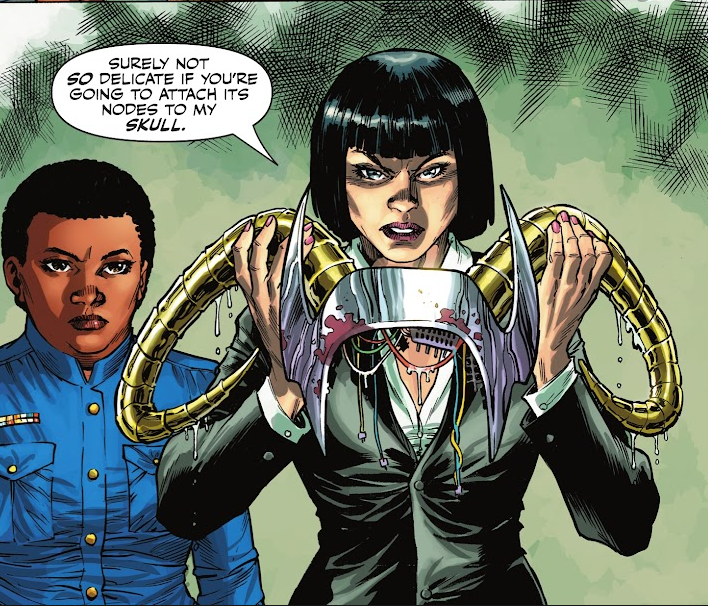
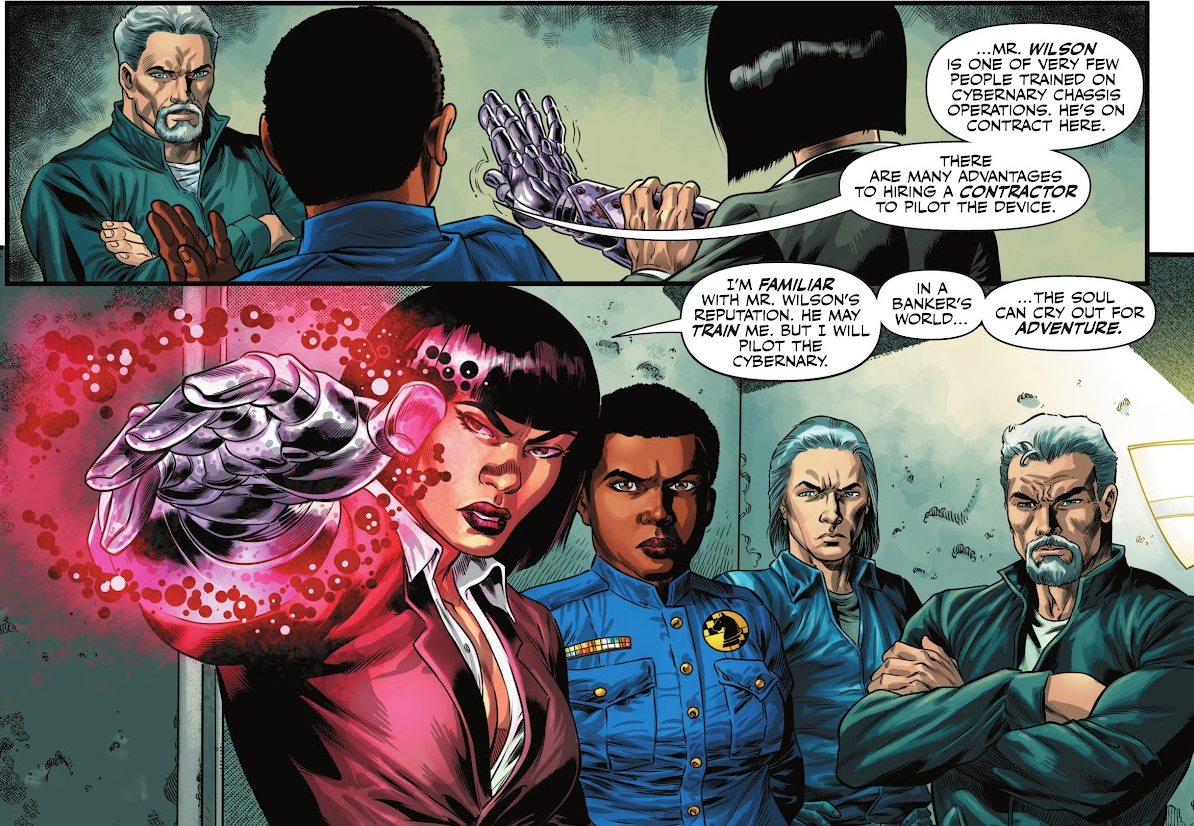
Quite a number of highly-placed people in the American government and the UN's supranational superhero oversight agency had to be complicit in this. However, the person actually responsible for executing the nitty gritty of all these black ops is one Amanda Waller (seen behind Yumiko in the above screenshot), a Checkmate official who's been rising through the agency with suspicious rapidity.
My understanding is that Amanda Waller is usually portrayed as a "darker shade of gray" sort of character in the DCU. Hard decisions while hard, leashed supervillains sent on suicide missions for the hope of a pardon, generally shady actions in the interest of a not-always-convincing public good. In this continuity, there's no moral ambiguity. She's just plain evil. And written as the absolutely most hateable kind of villain, manipulative and slippery and able to affect empathy and friendliness to get an advantage before wordlessly, unblinkingly putting a dagger in your back.
Much of the story-within-a-story that makes up these first two issues, as Battalion tells his tale to Lois, involves Battalion's history with Waller. There's a lot of interesting stuff here, but there's also a lot of holes. For instance, apparently the two of them had their first meeting a year or two ago when Battalion went hunting for a metahuman who murdered one of his Stormwatch teammates and found himself storming an American blacksite in Afghanistan where horrific research is being done under the guise of supplying the Mujahideen. Waller was the one running the place, and she pacified Battalion by hearing him out, complying with his requests, and convincingly fangirling over him while quietly probing for information she can use against him minutes later when her own superpowered reinforcements show up.
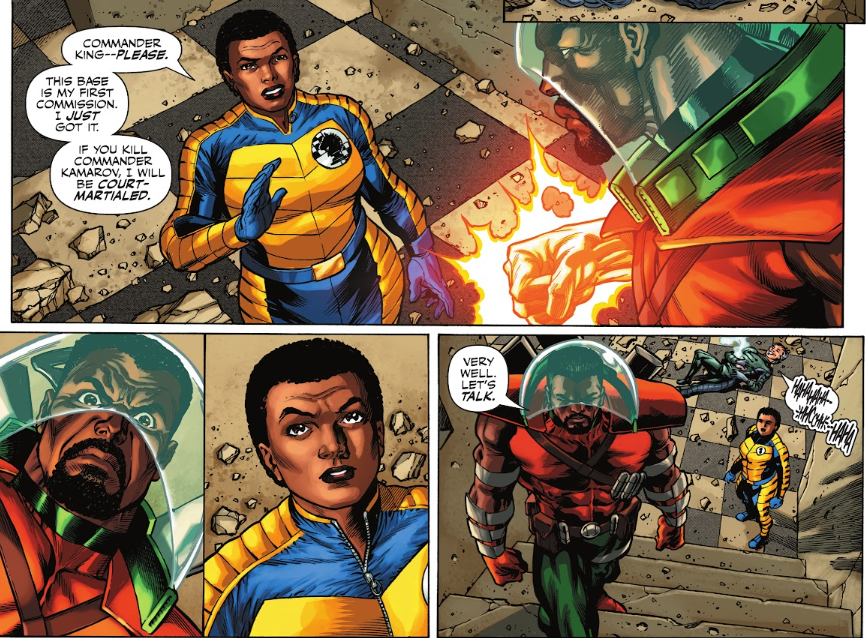
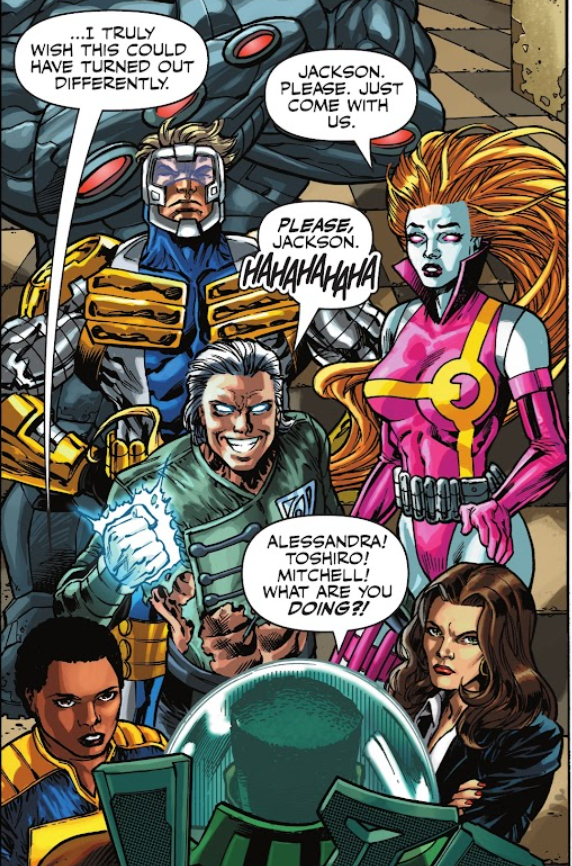
And, um...apparently this incident led to Jackson King being made to hand over his power suit, retire his "Battalion" persona, and...be given a desk job in a position that would let him investigate people like Waller and her cronies.
Which Waller and cronies themselves did, for want of other ways to get rid of him.
And then they end up being surprised when he makes trouble for them later.
-____-
Also, I'm getting repeated mixed messages about who Battalion and his fellow Stormwatch heroes even answer to. It's stated that they're a supranational superteam that answers to the UN, but apparently these American officials have the power to demote or reassign him? I don't know, some of these problems could definitely be on my end. But I don't think that all of them are. At the very least, I have trouble believing that there's any good explanation for the bad guys "getting rid" of a meddling hero by putting him in the department in charge of policing them lol.
I'm not going to go into the minutiae of the investigation King does. I just don't know how many more of the problems I'm seeing are actually nonsense, or just down to me not knowing or not understanding things that a DC/Wildstorm fan would. Fortunately, the plot itself is much less important than the characters and the politics.
As far as those go, Jackson "Battalion" King and Amanda Waller make up a very interesting duality. I haven't talked about it yet, but it's no coincidence that we have an African American superhero going up against an African American conspiracy villain. Or that the conflict between these two is brewing as the Cold War's outcome becomes clear.
Apparently, the Checkmate agency had its origins enforcing the American Civil Rights Act. It was because of the heavy involvement of metahumans in this struggle - including that of Battalion himself during his early heroing days - that Checkmate ended up becoming the main metahuman-facing agency of the US state department after the fact. And, while she may be lying or at least exaggerating in order to manipulate him, Waller claims that it was watching a black hero like Battalion on the news as a kid that inspired her to join Checkmate when she grew up.
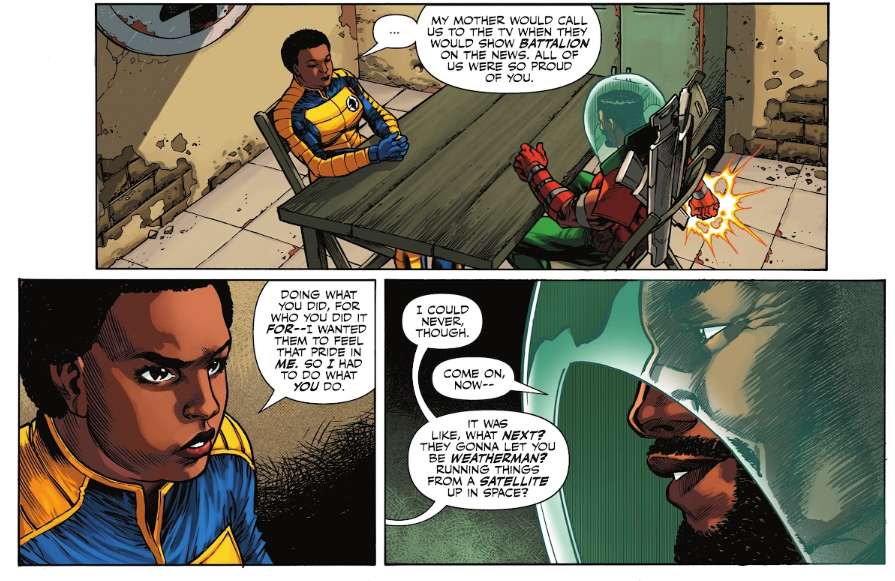
Also, here the high detail facial close-ups actually look good. Not sure what went right this time, but I approve.
In Amanda Waller's second encounter with Battalion, just a few days before the latter's meeting with Lois Lane in a Parousian cafe, he confronts her with his evidence of what she and her minions did to Cybernary. And, once again, Waller ends up cooperating with him while simultaneously fishing for information of her own and ultimately turning the site's security against him, forcing him to retreat with the help of his remaining Stormwatch superteam. Before that happens though, she gives him an explanation for her actions that - once again - may not be a complete fabrication.
It starts out with what seems like a plain old cackling neocon villain speech. Explaining the importance of keeping America on top of the rising power of capital as it surges forth rather than letting it be pulled under.
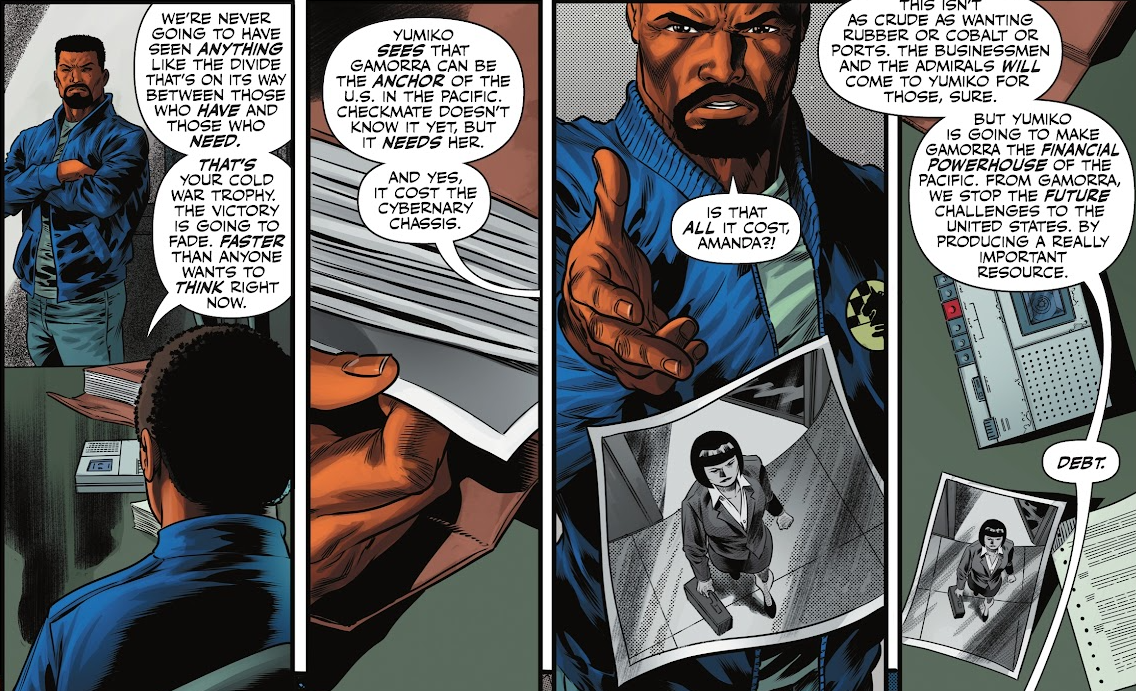
But then the rug pull comes in the form of Amanda's personal motivations for aligning herself with US imperialism. Motivations that - again, assuming she's telling the truth about this - go back to her watching the world's first African American superhero punching klansmen on TV. She just learned a different lesson from it than Battalion would have preferred.
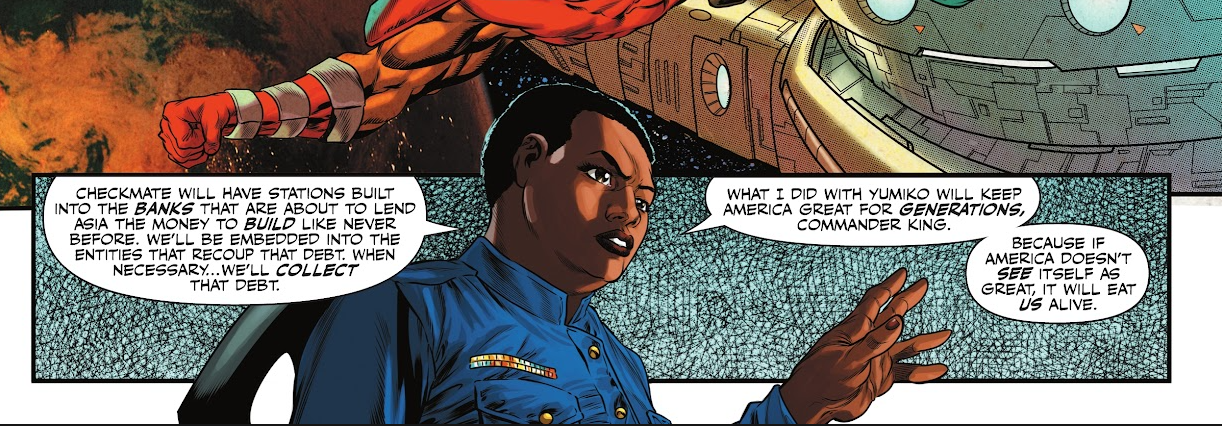
As Waller puts it, heroics like the Stormwatch's can only grab a few people out of the river's path before it floods. She, meanwhile, can redirect the river. Away from themselves. Make it flow somewhere else. Crush someone else. None of them have the power to stop the river.
"If America doesn't see itself as great, it will eat (African Americans) alive."
The wording there. So very, very on the nose, for a comic written in 2023, by a political journalist who covered the trajectory from Bush to Obama to Trump and an African American videogame/comicbook writer who worked through gamergate and its aftermath.
I'm too white to weigh in on whether Waller's assessment of American race relations and the levers that control them are on point or not. But I get the impression that the comic's authors (including the black one) don't think she's wrong in her assessment.
Not that the comic is condoning the way she acts on that assessment. It doesn't shy away from the gory details of what feeding the rest of the world to white America's capital to keep its racial supremacism asleep entails.
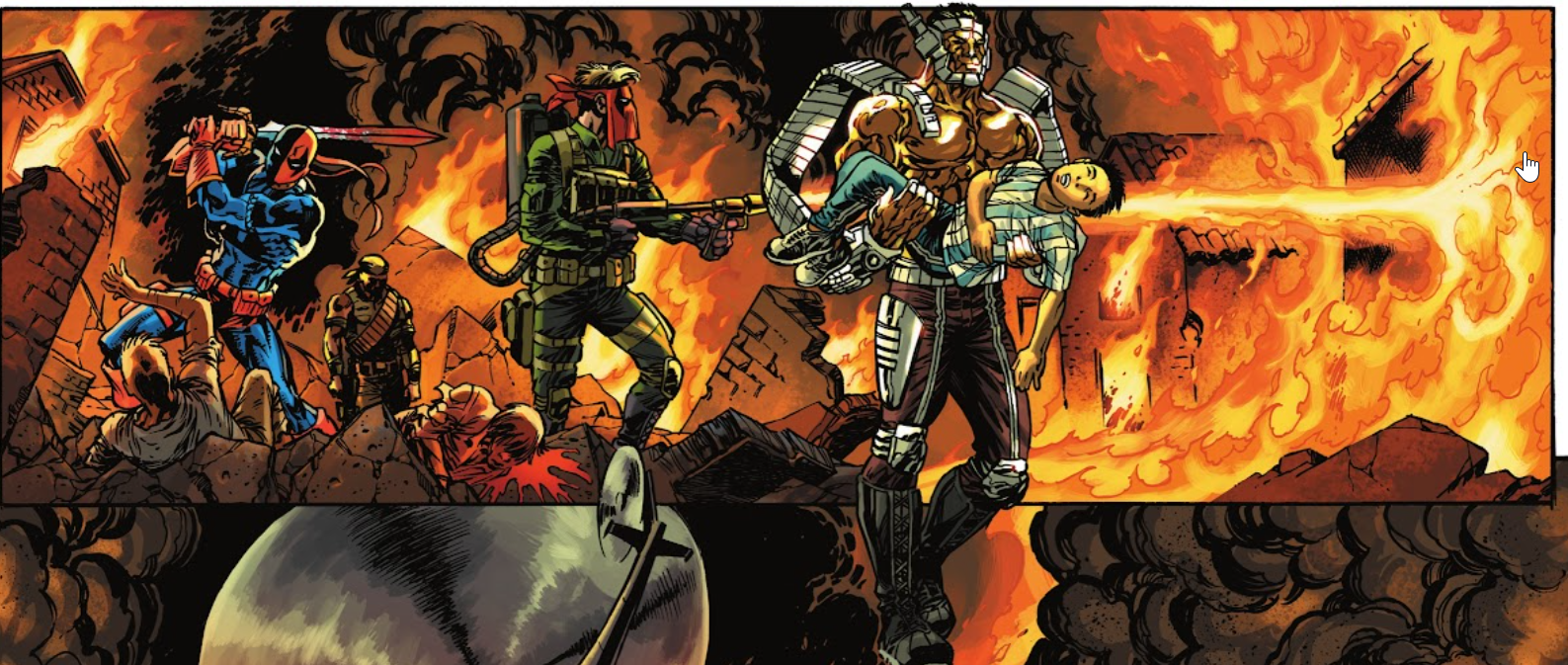
No, that kid is not being rescued, he's being stripped for parts.
Waller is unambiguously the villain of this story. But she's a villain with a sympathetic core, and one whose existence poses a real challenge to the hero who opposes her.
...
Is this what the American Civil Rights movement fought for? For black people to be allowed to feast on the plunder of the global south across the table from their white colleagues until the planet burns up?
For that matter, is this what the women's liberation movement fought for? For people named Amanda to work at Langley, and people named Yumiko to sit tinpot thrones?
If so, the joke is on them. The spoils of the cold war really did dry up faster than anyone would have guessed. And then America started feeling like it wasn't great anymore and needed to be made that way again.
In my review of The Power Fantasy, I said that it was the most anti-American superhero comic ever. I was wrong. It's this one. And, unlike TPF, this comic doesn't let being a period piece stop it from reaching right out to the modern day and grabbing it by the throat.
...
The other main character of the story so far is Lois Lane. She's an outsider to the discussion being had about America's racial politics, and so far she hasn't really gotten to do anything besides ask questions and get answers. However, the story definitely has plans for her, and is setting something up. For instance, there's this one scene where she has a panic attack after thinking she might have fumbled both of the major interviews she's had.
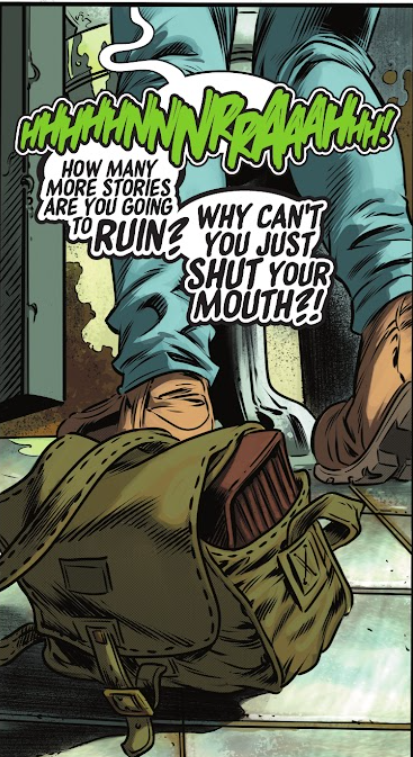
Between this, and the general youthful appearance and characterization, I actually wonder if maybe this is supposed to be a young version of Lois Lane who hasn't met Clark Kent yet. Or maybe he just isn't a thing in this crossover 'verse. But anyway, we're definitely going on a character arc with Lois. I suspect it'll involve the gender side of the conflict I outlined above, with Waller being posed to serve as a foil to her just as she is to King with the racial stuff. But, we'll see next time.
Overall, so far, I'm giving this story an A+ for politics, A for characters, and C for plotting. Artwork is variable.