Girls' Last Tour E1-2: "Starry Sky; War" and "Bath; Journal; Laundry" (part two)
Describing the "plot" of these episodes is difficult. In part because, as their titles imply, they're each based on several manga chapters, and those chapters form very distinct (demarcated by title screens, even) sections within each episode. In part because, while "slice of life" isn't a perfect fit for this series given the anxious survivalism at its core, it fits the way that the story is told and its events are paced.
The plot of the first sub-episode, "Starry Sky," can be summarized as "Chito and Yuuri have been driving through a giant, dark factory for days without finding their way out. After arguing a little about whose fault it is that they're lost in here, they go to sleep, hungry and forlorn, in their shared sleeping bag thing. During the night, Yuuri starts sucking on Chito's hand as she dreams about having enough food, and when they wake up Chito's annoyance quickly turns to joy as she realizes her wet skin can feel the faint air currents coming in from a factory exit. They wet their fingers, and together are able to navigate their way out." This takes up the first half of the first episode. Ten minutes of screentime. I could have summarized it in one sentence without leaving out anything critical, but I also feel like no summary at all would actually be sufficient because in this series every minute detail is critical.
The plot is whatever Chito and Yuuri do. No more, no less. They are the only moving pieces in the world shown to the audience. The show's pacing is neither slow nor fast; it's Chito and Yuuri speed.
Now, that said, the final chapter of the second episode, "Laundry," does give the duo something of a longterm goal to work toward that seems like at least the next couple of episodes might revolve around. After weathering a classic "this is why you don't fight a land war in Asia" blizzard inside an old industrial plant that still has hot water in its pipes (geothermal heating? Solar? An old generator that hasn't quite died yet?), the two drive outside and enjoy an early thaw. While using the snowmelt that comes flooding through an old dam system to wash their clothes and refill their drinking water bottles, they find a fish.
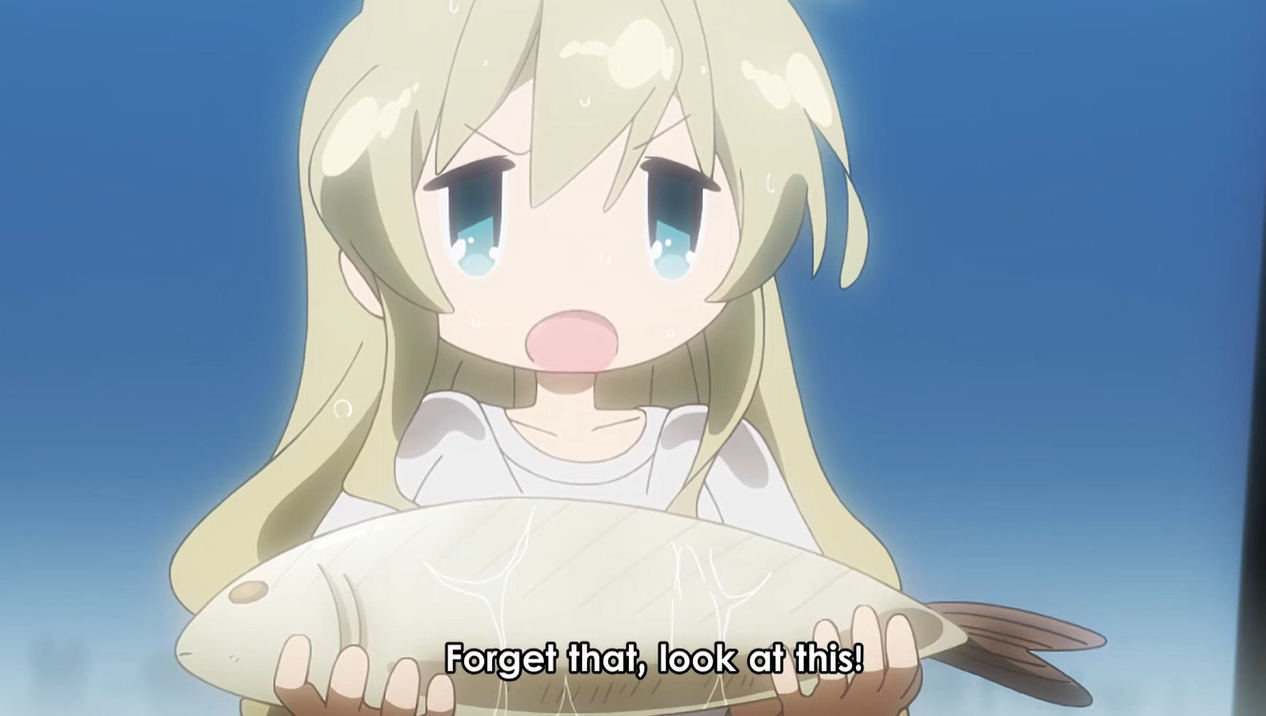
It's the first animal either of them have seen in years. It's the first fish that sheltered Yuuri has ever seen; she didn't even know that the type of processed foodstuffs that people call "fish" came from an animal at all. Chito hasn't seen a fish in a very long time, but she does at least know enough about them to recognize that while this specimen was dead when Yuuri found it, it hasn't started decomposing yet. She surmises that it must have been bashed to death against something during the floodwater overflow, and was alive and swimming just a couple of hours ago.
The idea that there are living animals - possibly a whole ecosystem, possibly even other humans - somewhere in this blasted cityscape gives the pair a direction. And also some primal motivation after they roast the fish and discover that even an unflavored, inexpertly cooked, none-too-fresh fish is beyond compare with the canned soup and boxed MRE's they've been living on for as long as they can remember.
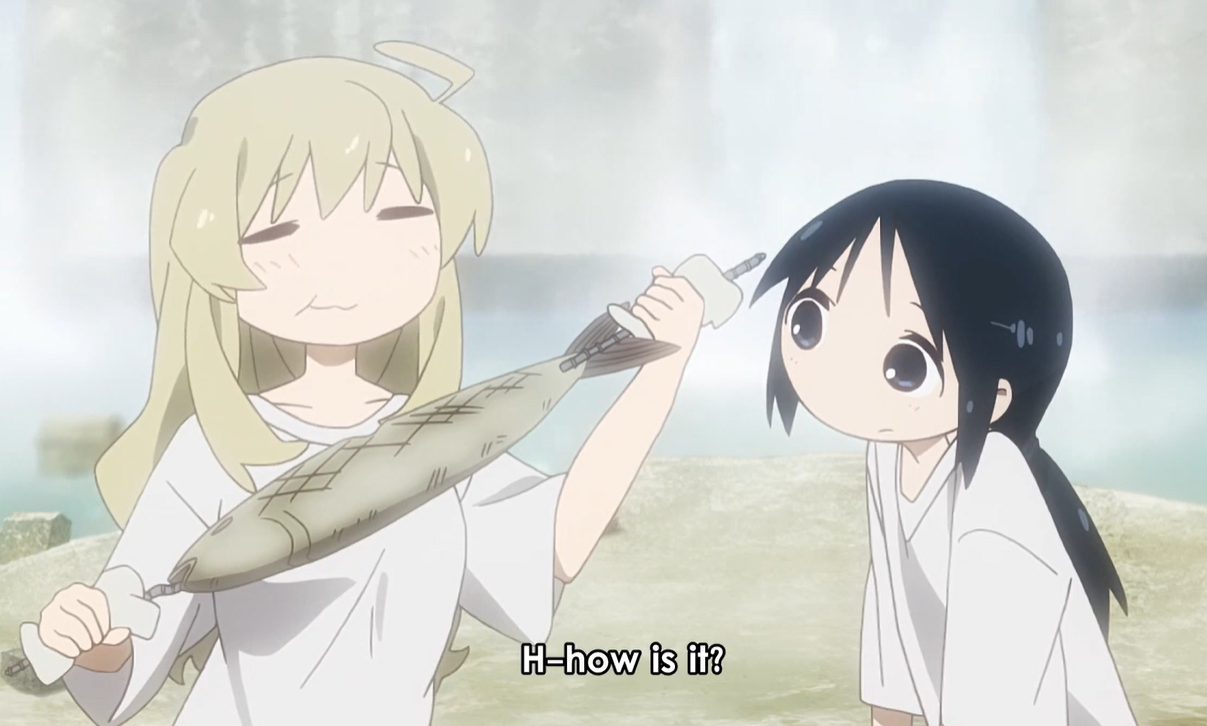
I think it's important that this is also the first time that we see the girls wearing anything besides their usual dirty, ill-fitting winter military uniforms. The premonition of spring. The flood of water washing away a bunch of the grime and debris filling this part of the ruins. It might not actually be springtime for real. This could just be an early thaw before another week of brutal cold. It might be a false hope, but even that is better than no hope at all.
This "laundry" chapter (the laundry itself kind of gets superseded by the fish pretty quickly in the segment, to be clear) ends with the girls determining that there must be a living fish population somewhere above the flood control system, in the higher levels of this fool-sized megacity whose corpse they're limping through.
So, going forward the series might be a bit more plot focused and a bit less "the story is whatever these two girls happen to do while wandering around." But, I don't want to give the impression that the fish discovery is framed as some kind of last ray of hope shining into a nightmare of misery and bleakness, because it's really not. The world the girls have spent these two episodes in is miserable and bleak, to be sure, but they already seem to make it warmer and less hopeless just by being in it.
Even flawed and clearly traumatized as they are. Even with their moments of pettiness and cruelty toward one another. These are still mostly just a pair of normal children, and they're able to find joy and happiness in their situation just like children always manage to do.
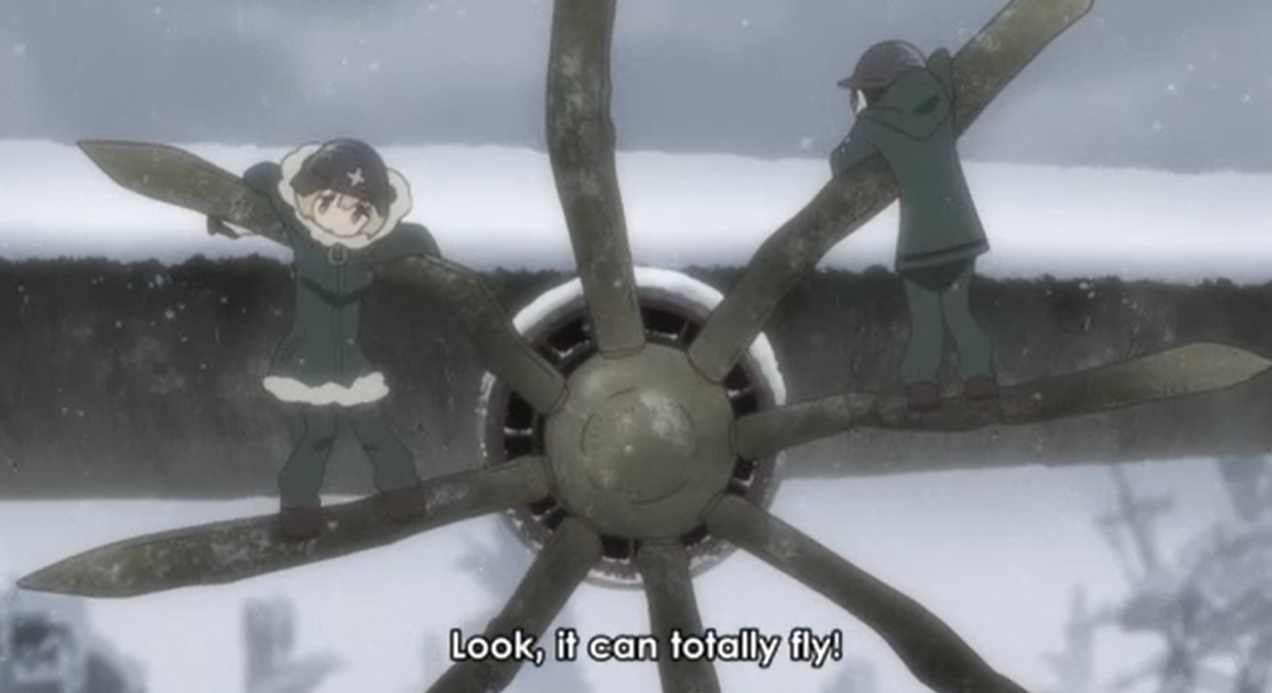
Whether that means playing on an old plane propeller and pretending they can fly:
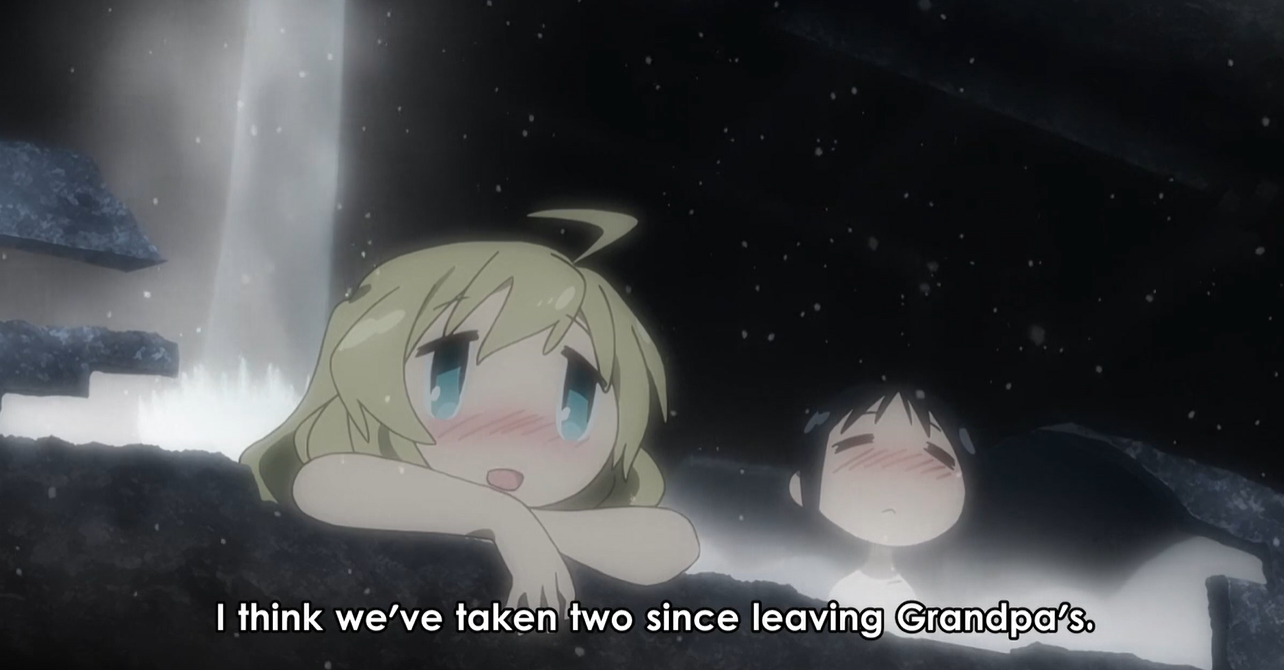
Dipping in a steaming hot tub they made by shooting open a hot water pipe into another, empty, pipe segment, safe from the blizzard outside:
Or just enjoying the simple thrill of having found a few more days' worth of supplies:
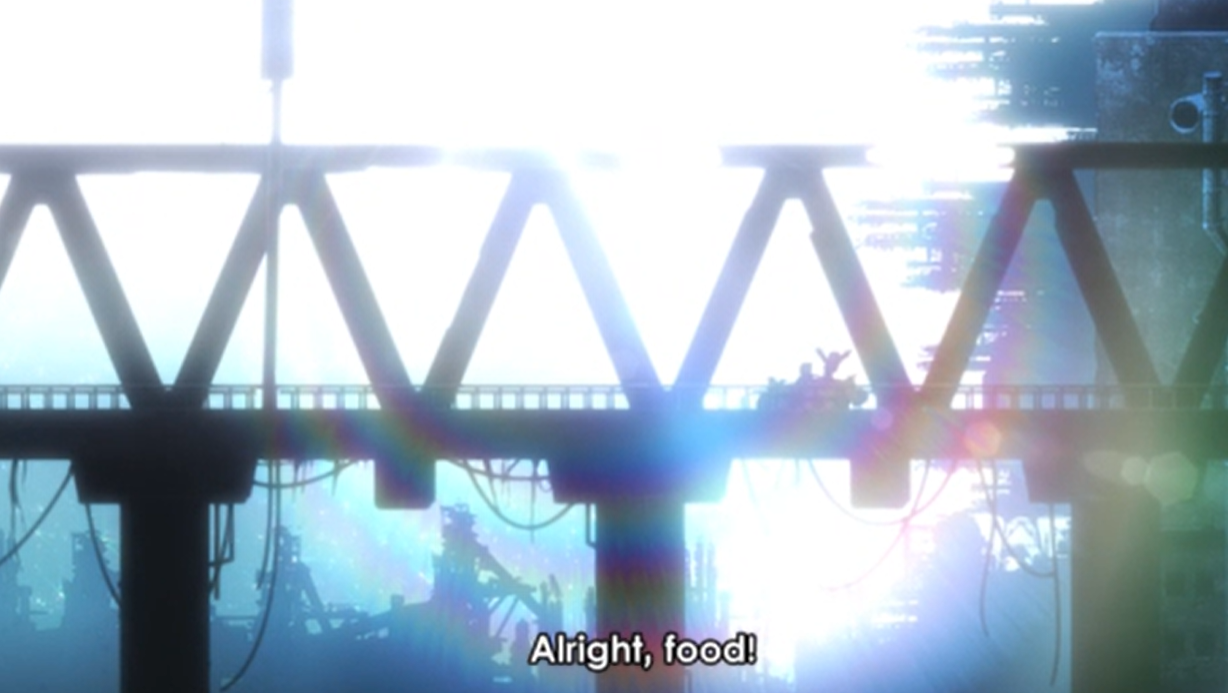
They're not as happy as children should be. Their world doesn't allow for that. But, somehow, despite all the discomfort and tragedy and fear, they ARE happy. At least, often enough. They have each other. They are alive. They aren't hurt or sick, for as long as that holds out. There's enough unknowns in their environment for them to think things might get better for them rather than worse. That's as good as a lot of people throughout history have had it.
Though of course, "for as long as that holds out" is an important caveat. The fact that Chito and Yuuri have a PRESENT is sweet and inspirational, but I'm not sure at all that they have a future. I suppose it depends on where that fish really did come from. Whether there are other survivors in this blasted metropolis. Whether there are other survivors outside of this blasted metropolis.
Then again...the fortuitous health and liveliness of this pair, combined with the dissonant way they're drawn and animated compared to everything around them, occasionally made me wonder if there are actually any survivors at all. There's even one moment where the girls themselves briefly wonder the same thing:
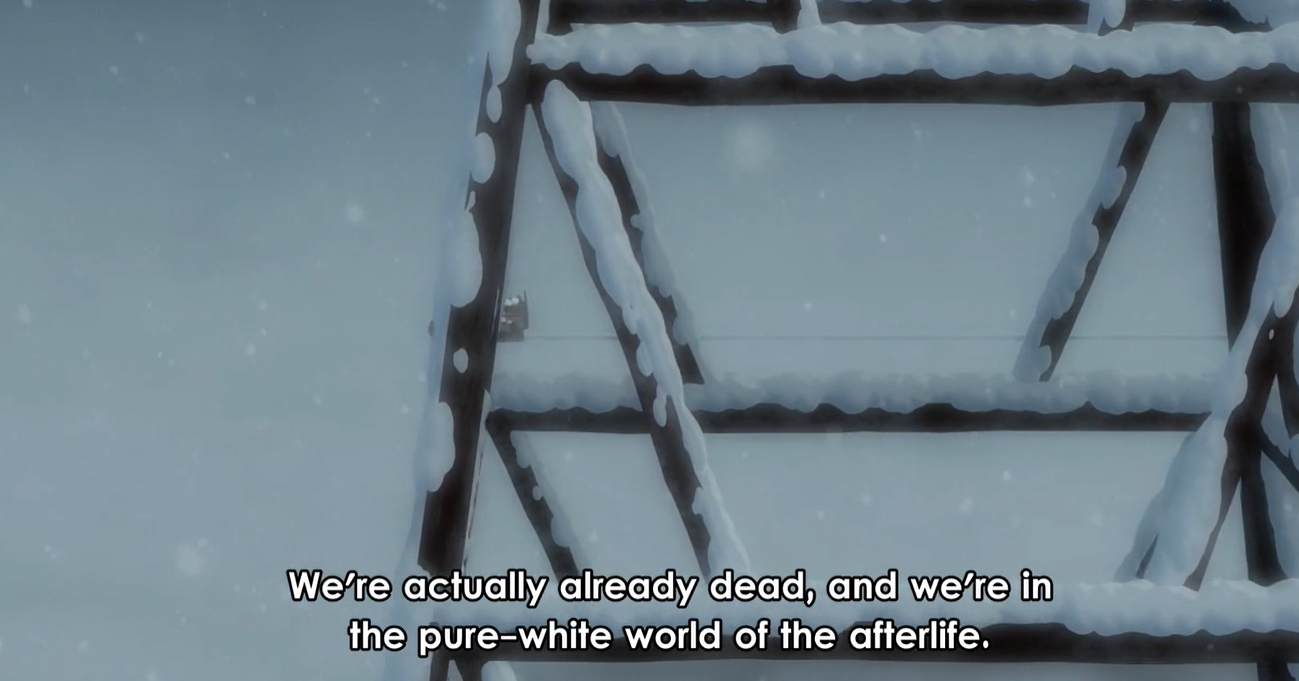
Are they actually a pair of ghosts, haunting the lifeless ruins of their old city? Two lives too blinded by hope and desperation to realize that they've ended, their remnants scavenging and striving eternally in each other's sole company?
I don't THINK that that's the creators' intent. If Yuuri and Chito are ghosts, then they are awfully "weighty" ghosts as far as tangibility and bodily needs and such, as specters tend to go. But, they do have that sort of feel to them. That liminal existence. That wistful, haunting quality that enchants even as it disheartens. They have aesthetic ghostliness.
Maybe they'd be better off if they really were ghosts doomed to stay this way forever, rather than living children doomed to eventually get sick or run out of food and fuel. But, on the other hand, maybe there are other people just over the next ruined district. Maybe they're eating fish, restoring buildings, and welcoming more survivors into their tribe with each passing week. That possibility makes it downright sinful to write Yuuri and Chito off as already dead.
This series probably wouldn't be as effective for me if I wasn't a new parent looking anxiously back and forth between my children and the state of the world. I'm actually a little curious as to how it would have hit if I'd seen it when it first came out in 2017. I don't know if people in my demographic are THE intended audience for this work, but I do think that we're AN intended audience for it.
It's not a comforting watch, at least based on the episodes I've seen, but I wouldn't quite call it doomer either. The theme of hope is too prevalent for it to be that. Hope, and the belief that even if it all falls apart, and we're all ultimately doomed, we'll at least be able to find moments of joy, tenderness, and beauty as we die out. And maybe, just maybe, we won't die out. No way to tell if we give up hope and stop trying.